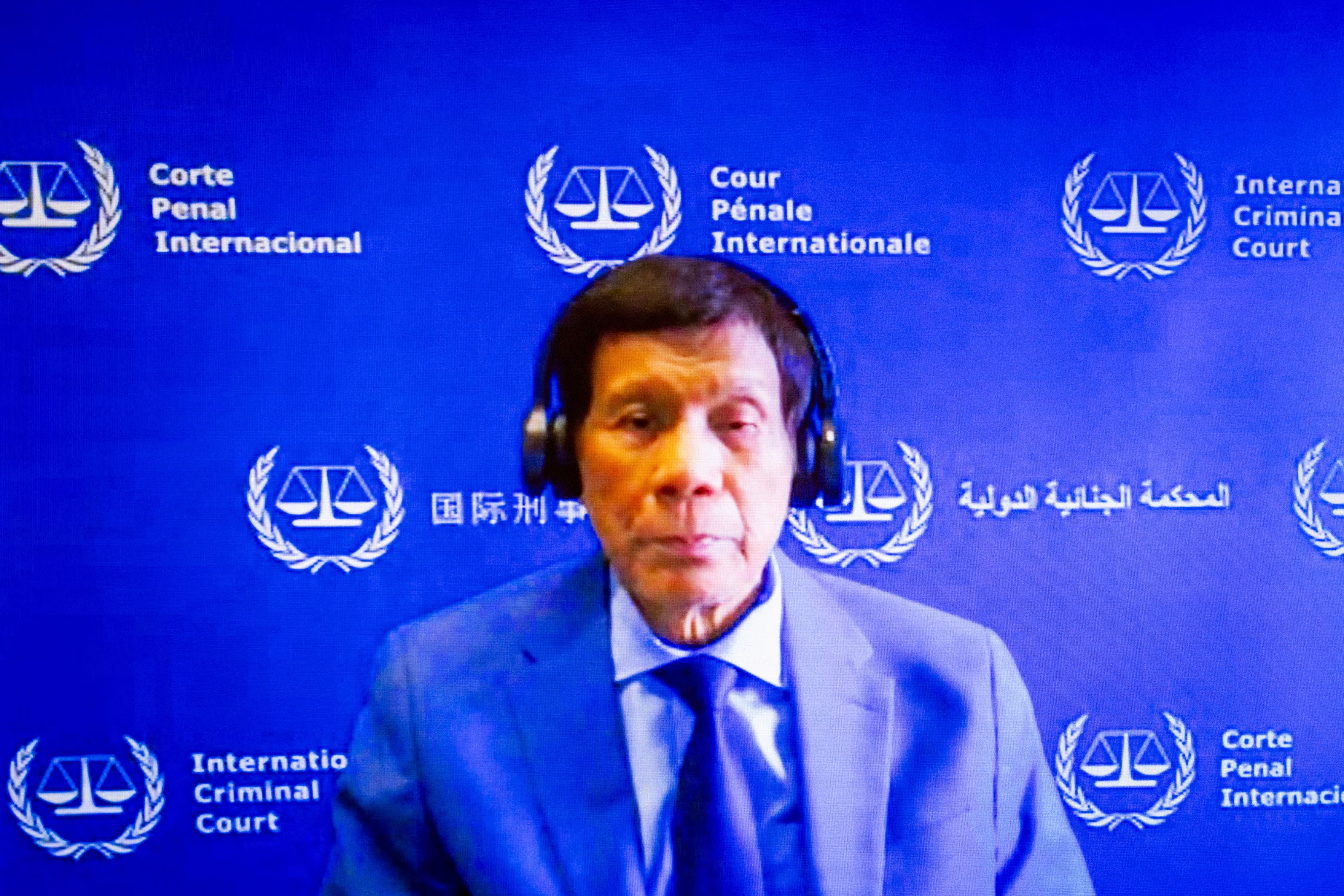
The Office of Public Counsel for Victims (OPCV), representing victims of the alleged extra-judicial killings under the War on Drugs by the Duterte administration, submitted formal observations on Monday to the Pre-Trial Chamber I of the International Criminal Court (ICC) in response to the jurisdiction challenge made by former President Rodrigo Roa Duterte.
The OPCV advocates on behalf of potential victims until a common legal representative is appointed, calling on the chamber to reject the challenge, emphasizing that the International Criminal Court (ICC) maintains clear and continuous jurisdiction over alleged crimes against humanity committed from November 1, 2011, to March 16, 2019.
The Philippines became a party to the Rome Statute on August 30, 2011.
The ICC Prosecutor launched a preliminary investigation into the Duterte administration’s war on drugs on February 8, 2018, shortly before the Philippines formally withdrew from the Statute on March 17, 2018 — a withdrawal that, under the Statute’s rules, only took effect one year later.
The prosecutor later sought authorization to launch a full investigation, which was both requested and approved in 2021. In 2022, the Philippines ordered the inquiry to be deferred, but in 2023, the ICC once again ruled in favor of the prosecutor, allowing the investigation to proceed.
In February 2025, the prosecutor applied for a warrant of arrest against Duterte, which was approved on March 7. Duterte was arrested on March 11, surrendered to ICC custody on March 12, and has been held at the Scheveningen detention center since.
According to the OPCV, the ICC’s rulings on the investigation and arrest warrant were grounded in a consistent application of the Rome Statute provisions that affirm the Court’s jurisdiction.
The OPCV further underscored the importance of victims’ rights, warning that suspending the case would “uphold impunity and deprive victims of justice.”
It also cautioned that the defense’s jurisdictional challenge could delay proceedings, potentially denying victims prompt access to justice.
“The Preamble of the Statute acknowledges the shared humanity and cultural heritage of all peoples, expresses concern over atrocities committed worldwide and recognises that international crimes threaten global peace and security. Most importantly, it affirms the need to ensure that said crimes do not go unpunished, calling for national and international cooperation to prosecute offenders and concludes with a firm commitment to end impunity and uphold lasting international justice,” the OPCV stressed.
“In this regard, as recently as 3 June 2025, the Appeals Chamber affirmed that the Statute’s overarching purpose or broader aim is to put an end to impunity.’ Thus, this constitutes the very object and purpose of the Statute which represents in many cases, as in the Situation in the Republic of the Philippines, the only possible recourse for Victims to see the impunity gap closed and pursue justice,” the OPCV added.
The OPCV added that the defense’s jurisdictional challenge undermines the very purpose of the Rome Statute, stressing that allowing such a move would mean serious crimes could go unpunished if states deliberately evade accountability by withdrawing from the Statute to avoid investigations.
“Most serious crimes of concern to the international community as a whole will go unpunished and the effective prosecution of atrocities committed against countless victims will never materialize,” the OPCV said.
“As a result, the Court will be prevented from putting an end to impunity for the perpetrators of international crimes and thus will fail to guarantee lasting respect for and the enforcement of international justice. This perspective is irreconcilable with the letter and spirit of the Statute, therefore cannot be accepted.”