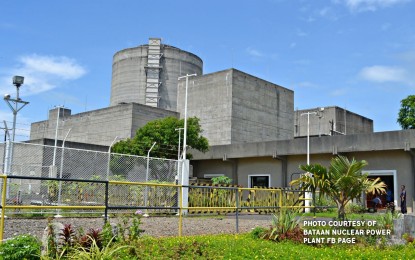
The Philippines ranks among the top three Southeast Asian countries advancing nuclear power, thanks to policies addressing rising energy demand, according to a BMI report from Fitch Solutions.
The report, shared with journalists on Friday, notes that the Philippines, Vietnam, and Malaysia have established nuclear programs, attracting investments. The Philippines aims for at least 1,200 MW of nuclear power by 2032 and is a signatory to key safety, security, safeguards, and liability frameworks.
“This regulatory maturity, combined with concrete policy support and established institutional capacity, positions the Philippines as the frontrunner in ASEAN’s nuclear race,” it said. “We believe there could be opportunities for an accelerated deployment given the Philippines’ capabilities and experience, as the Bataan province houses Southeast Asia’s only existing nuclear power plant, though it never became operational,” it added.
The Department of Energy (DOE) has issued a framework via Department Circular No. 2005-10-0019 to integrate nuclear energy into the power mix. The first commercial nuclear power plant (NPP) will serve as a baseload facility with priority dispatch, coordinated with the Independent Market Operator and System Operator.
It will also be certified as an Energy Project of National Significance (EPNS), granting incentives and fast-track processing under Executive Order No. 30. The Energy Regulatory Commission is tasked with implementing a Regulatory Asset Base-type model for capital recovery.
“By establishing clear rules for nuclear integration, we are giving confidence to investors, partners, and stakeholders that the Philippines is ready to responsibly and strategically adopt nuclear energy as part of its clean energy transition. Nuclear will complement renewables by providing reliable, stable baseload capacity—ensuring that our economy has the energy security it needs to grow while meeting climate goals,” Energy Secretary Sharon Garin said earlier.