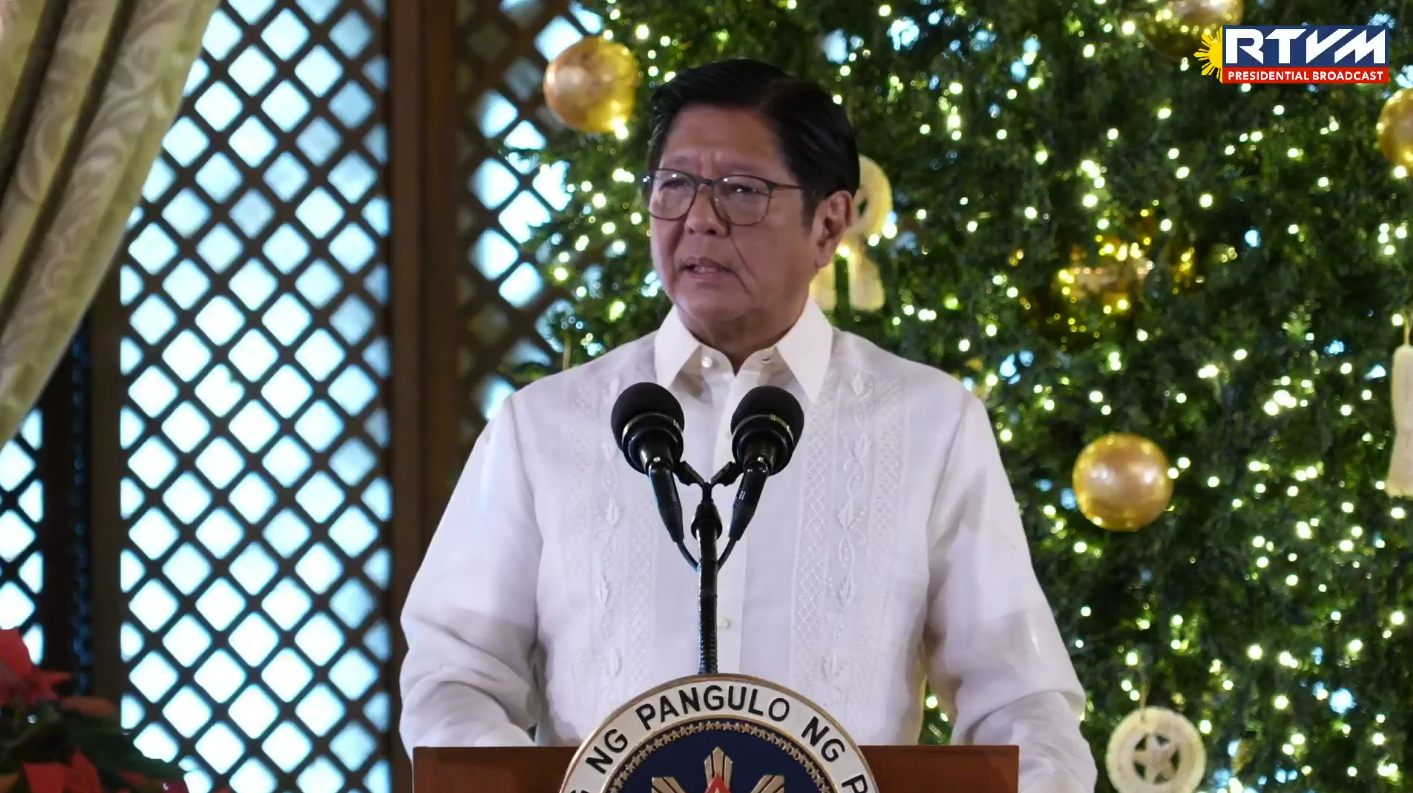
President Ferdinand Marcos Jr. has vowed that the Philippines will be a “principled and constructive” leader as it assumes the chairmanship of the Association of Southeast Asian Nations (ASEAN) for 2026.
Speaking during the traditional Vin d’honneur at Malacañan Palace, the President outlined a diplomatic agenda focused on regional security, economic integration, and the ethical use of emerging technologies.
Under the theme “Navigating Our Future Together,” Marcos emphasized that the Philippines aims to amplify the voices of small and middle powers on the global stage.
“If entrusted with this responsibility, the Philippines will be principled and constructive—a voice that will champion the rule of law, protect civilians, promote conflict prevention, and amplify the perspectives of small and middle powers,” Marcos told members of the diplomatic corps.
The President identified three central pillars for the Philippine chairship: peace and security anchors, prosperity corridors, and people empowerment.
He specifically highlighted the “safe, ethical, and sustainable” adoption of artificial intelligence (AI) as a priority to boost regional competitiveness and support small businesses.
Addressing the gathered foreign dignitaries, Marcos noted that while the world faces economic uncertainty and geopolitical tensions, the Philippines remains committed to forging “meaningful and mutually beneficial” partnerships.
The 2026 chairmanship comes at a critical time for the bloc as it navigates territorial disputes in the South China Sea and seeks deeper economic integration through innovation.
Marcos reaffirmed that the country’s leadership would be anchored in international law, including the United Nations Convention on the Law of the Sea (UNCLOS).
The Vin d’honneur, led by the President and Papal Nuncio Archbishop Charles John Brown, serves as a formal welcome to the new year and a signal of the Philippines’ proactive stance in regional diplomacy.
The Philippines officially takes over the rotating leadership from Malaysia, with a series of high-level summits and ministerial meetings expected to be hosted across the archipelago throughout 2026.