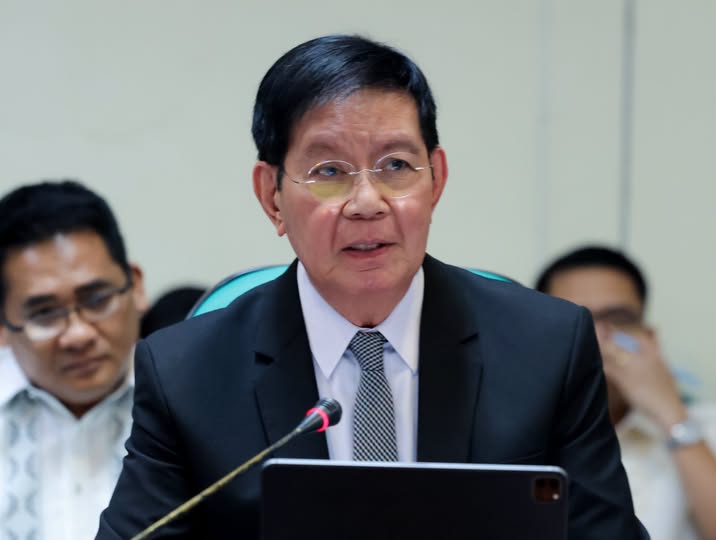

(Photo courtesy of OS Lacson)
Senator Panfilo “Ping” Lacson clarified Tuesday that his call for due process for Senator Ronald “Bato” dela Rosa was not intended to protect his former police subordinate from facing trial before the International Criminal Court (ICC).
Lacson said Dela Rosa should be allowed to answer the allegations against him before the international tribunal without risking violence or bloodshed during his arrest.
“To me, due process means allowing Senator Dela Rosa to face trial before the ICC rather than risk violence and worse, tragedy,” Lacson said in a statement.
The senator emphasized that due process is a fundamental right that must be upheld regardless of the seriousness of the accusations against an individual.
Dela Rosa previously served under Lacson in the Philippine National Police (PNP) and the Presidential Anti-Organized Crime Task Force.
Lacson issued the clarification as authorities intensified efforts to locate Dela Rosa following the Department of the Interior and Local Government’s announcement of a Php 50 million reward for information leading to his arrest.
The government has also organized a special police task force to track down the senator, who has largely remained out of public view since May.
The ICC issued an arrest warrant against Dela Rosa on November 6, 2025, which was subsequently unsealed on May 11, 2026.
The warrant concerns his alleged responsibility for the crime against humanity of murder in connection with at least 32 killings between July 2016 and April 2018, when he served as PNP chief under former President Rodrigo Duterte.
Dela Rosa briefly appeared at the Senate on May 11 to participate in the election of Senator Alan Peter Cayetano as Senate president before again withdrawing from public view.
His legal team has since sought intervention from the Supreme Court to prevent his arrest and surrender to the ICC.
Lacson maintained that respecting Dela Rosa’s constitutional rights should not be interpreted as obstructing efforts to bring him before the international court.
He stressed that ensuring due process and pursuing accountability are not mutually exclusive, emphasizing that the senator should be given the opportunity to defend himself against the allegations through legal proceedings.