
By Wilnard Bacelonia
The Department of Public Works and Highways (DPWH) is linking the proposed Parañaque spillway, upstream dams, retarding basins and local drainage systems into a broader flood-management plan for Metro Manila, officials told senators Friday.
During the Senate hearing on the agency’s proposed 2027 budget, DPWH Senior Undersecretary Emil Sadain said the remaining Pasig-Marikina River Channel Improvement works would serve as a backbone of the system, together with planned structures that would regulate floodwater before it reaches densely populated areas.
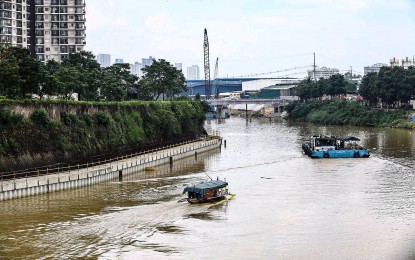
The ongoing Pasig-Marikina works include about 6 kilometers of river-channel improvement and control structures from downstream of Rosario toward Santo Niño, with completion targeted in 2030.
Sadain said the longer-term system would still require two dams in the upper Marikina River, four retarding basins and completion of the entire 35-kilometer Pasig-Marikina channel improvement program.
DPWH is also preparing detailed design work for the Parañaque spillway, envisioned as an underground tunnel of about 9 kilometers that would complement the Pasig-Marikina system and help move large volumes of floodwater toward Manila Bay.
Sadain said lowering flood levels along the Pasig River would allow it to receive more runoff from inland areas, including parts of Quezon City, Manila, San Juan, Makati and Mandaluyong.
“With this completion of this project… this can be a big relief for flooding of Metro Manila,” he said, while stressing that the river works alone would not solve the capital region’s flooding problem.
The department is also reviewing drainage systems across Metro Manila’s 17 local government units, where rapid urbanization has left some drainage networks undersized or clogged.
Sadain said the drainage study, being undertaken with assistance from development partners, is expected to be completed in November.
Public Works Secretary Vince Dizon said the same integrated approach is being applied outside Metro Manila, with flood projects now required to follow river basin, city or municipal drainage master plans instead of being proposed as isolated structures.
Among the projects lined up are five sabo dams in upstream areas of Nueva Ecija under the Pampanga River Basin master plan.
Dizon said the structures would help slow water and sediment flowing downstream, with DPWH coordinating with the National Irrigation Administration so impounded water could also be used for irrigation and other purposes.
The department is likewise seeking regular funding for nationwide river dredging after finding heavily silted waterways in several areas that have lost part of their capacity to carry floodwater.
“Importante po ito (This is important), but unfortunately it is not a regular part of the budget of the DPWH,” Dizon said.