
By Zaldy De Layola
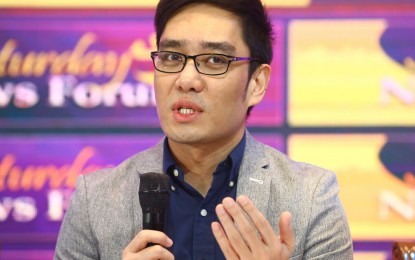
The Senate impeachment court carefully heard opposing positions before ruling on the two-thirds voting threshold, making it difficult to portray its decision as arbitrary, House prosecution legal spokesperson and private prosecutor Benjamin “Jay” Tolosa Jr. said in a press briefing Friday.
Tolosa made the statement in relation to the petition of lawyer Victor Rodriguez asking the Supreme Court to nullify the Senate court’s Sept. 23 ruling – that the two-thirds requirement for conviction will be computed from senators who remain legally and factually capable of participating when judgment is rendered.
The new interpretation was voted upon by the Senate Impeachment Court 13-1, with six senator-judges who did not participate in the voting.
The Rodriguez petition also seeks a temporary restraining order (TRO) or preliminary injunction.
Tolosa, however, said the impeachment proceedings must continue unless the Supreme Court issues a relief order stopping them.
His response centered on the process that produced the ruling: the impeachment court heard the prosecution and defense, then invited four former Supreme Court justices – Including three retired chief justices – to explain their competing constitutional interpretations.
“Klaro talagang pinag-isipan nang mabuti ang desisyon na ito. Pinakinggan ang magkabilang panig sa kanilang mga opinyon, pati ang mga disinterested persons (Clearly, this decision was really carefully thought of. Both parties were heard for their opinions, including disinterested persons),” Tolosa said.
He said those steps weigh directly against an allegation that the court acted on impulse or without a legal basis.
“Napakahirap sabihin na (It’s very difficult to say that) it was grave abuse of discretion,” he said.
Tolosa cited the amici curiae’s (friends of the court) position that the Senate holds the constitutional power to try and decide impeachment cases. He described the proper two-thirds denominator as an issue entrusted first to the impeachment court.
“Ang (The) determination ng (of) two-thirds threshold, it is a political question that only the Senate can determine,” he said.
Tolosa added that the Supreme Court does not sit as an ordinary appellate tribunal over the Senate’s judgment. He acknowledged, however, the court’s power to examine an allegation of grave abuse of discretion.
“Pwede lang iyan tingnan ng Supreme Court kung nagkaroon ng (The Supreme Court can only look upon that when there is) grave abuse of discretion in making this interpretation,” he said.
Meanwhile, House prosecutor and Manila Rep. Joel Chua noted that the impeachment court reinforced its process by seeking independent constitutional views before voting.
He also cited former Constitutional Commission member Christian Monsod, who publicly said the denominator – and therefore the numerical vote requirement – may change while the constitutional two-thirds fraction remains fixed.
“Hindi po sila nagdesisyon base lang sa kagustuhan o kapritso nila. Sila po ay nagdesisyon nang may basehan (They did not decide based on their desire or whim. They decided with basis),” Chua said.