
The Department of Transportation–Metro Rail Transit Line 3 (DOTr-MRT-3) unveiled plans to expand its fleet, upgrade its signaling system, and privatize railway operations and maintenance as part of efforts to improve capacity, reliability, and passenger services.
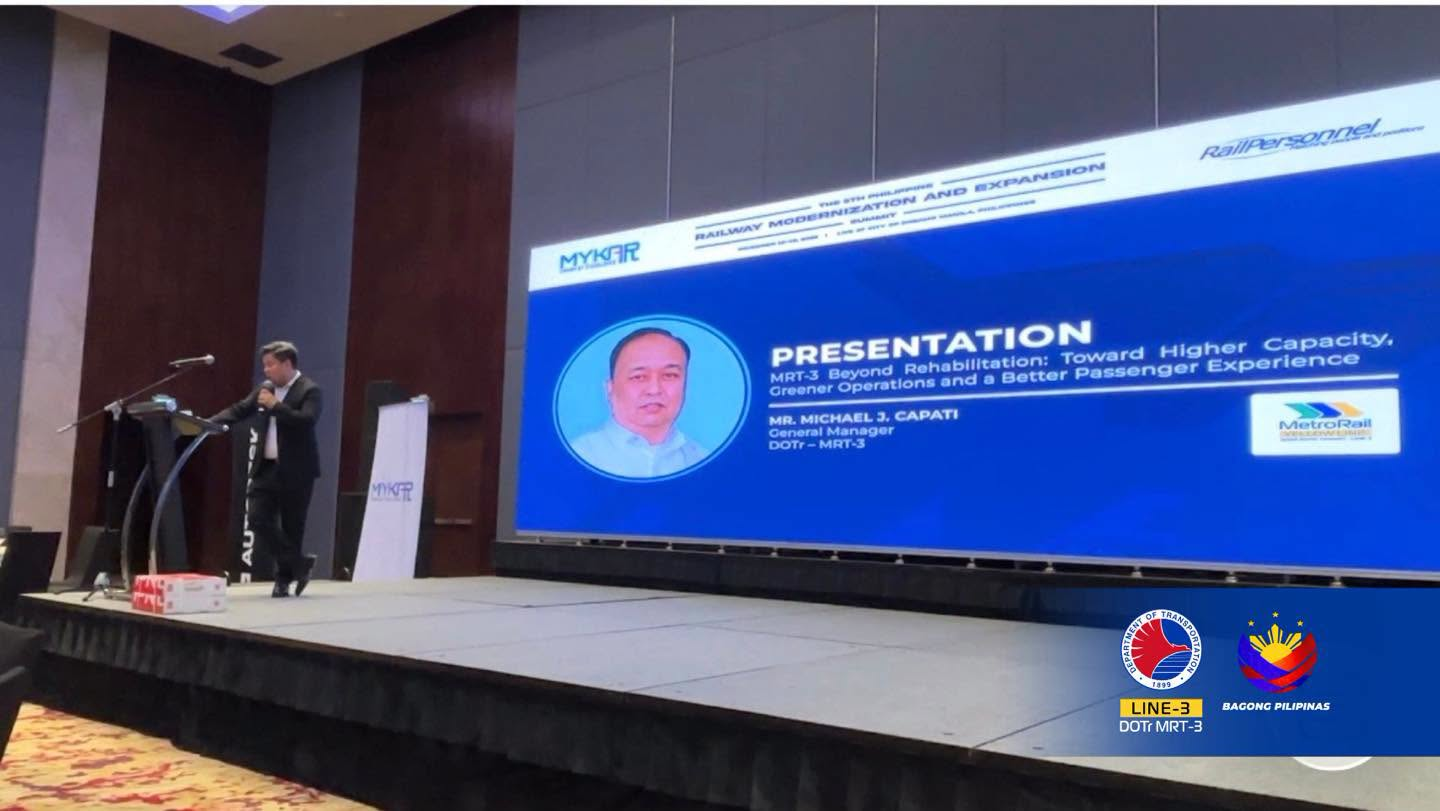
MRT-3 General Manager Michael Capati presented the proposed Capacity Expansion, Operations and Maintenance (CEOM) Public-Private Partnership (PPP) Project during the 8th Philippine Railway Modernization and Expansion Summit on November 18, 2026.
The summit, organized by MyKar Events Incorporated, gathered railway executives and industry experts to discuss modernization, sustainable transportation, and technological innovations in the country’s railway sector.
“As we continue our efforts to make MRT-3 more reliable, the government has decided to pursue a privatization project for the railway,” Capati said.
Under the proposal, the MRT-3 fleet will be expanded to 120 train sets, while its signaling system will be upgraded to Level 2 to support more efficient railway operations.
Capati clarified that despite the planned privatization of operations and maintenance, the government would retain ownership of railway assets and authority over fare-setting.
With technical assistance from the Asian Development Bank, the government is conducting market sounding activities to gather feedback from prospective operators, suppliers, and industry stakeholders before finalizing the project’s terms of reference.
The government targets the issuance of a Notice of Award in September 2027, followed by the transition to the new operations and maintenance arrangement in October 2027.
Capati also encouraged private sector participation in the project, emphasizing the importance of collaboration in improving the railway’s long-term performance.
The summit featured discussions on low-carbon and climate-resilient railway systems, digital technology, and innovations aimed at enhancing passenger experience.
Also representing MRT-3 were officials from its operations, engineering, station management, and transportation divisions.