
CEBU CITY — More than a month after the MICHELIN Guide officially arrived in the Philippines, Cebu’s culinary scene is already feeling the impact, with chefs and food entrepreneurs reporting fuller tables, rising revenues, and a renewed global interest in the island’s rich regional cuisine.
Tourism Secretary Christina Garcia Frasco heard these stories firsthand as she personally handed over MICHELIN plaques to 18 recognized restaurants and eateries across Cebu. Eight of these establishments were visited during the second leg of the Department of Tourism’s Resto-Run Caravan on Saturday, December 13, turning the event into both a celebration and a pulse check on how international recognition is translating into real economic gains on the ground.
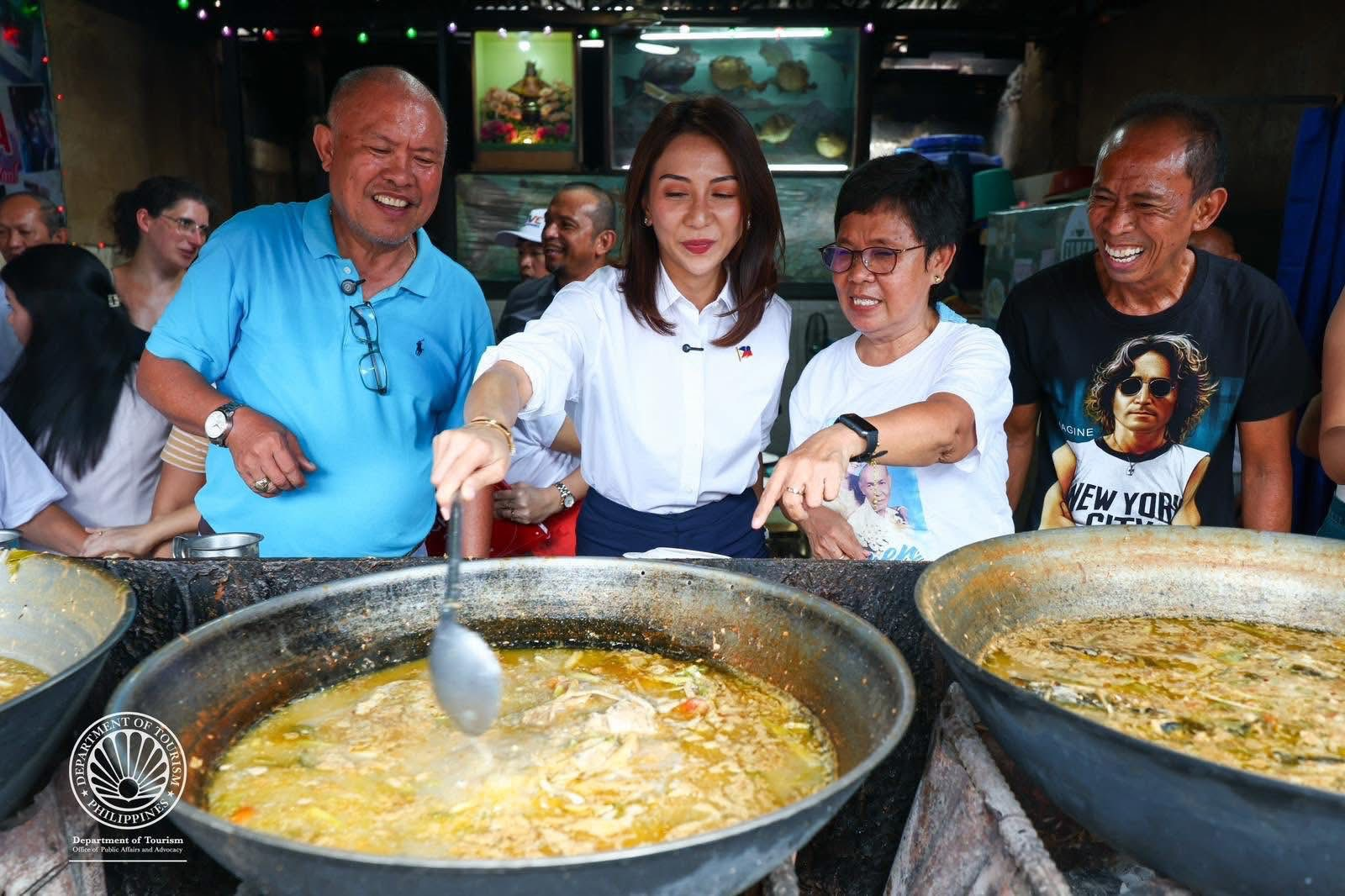
One of the most striking success stories comes from Esmen, a humble 60-year-old market-side eatery in Barangay Pasil. Long known among locals for its classic Cebuano dishes, Esmen has found itself thrust into the global spotlight after being included in the MICHELIN Guide. According to the Garcia family, the recognition has brought a surge in orders and daily sales.
French tourists Florence and Coline, who were visiting Cebu, said Esmen was already on their must-try list because of the Guide. After sampling the eatery’s famed soup, they agreed the reputation was well-earned. They described the dish as “really worth a try,” praising its depth of flavor and authenticity.
Before the MICHELIN announcement, Esmen typically cooked 11 batches a day. Today, the eatery often sells out 16 cauldrons of its signature linarang, a tangy porcupine fish soup prized for its rich, layered taste. Zeny Paglinawan, daughter of Esmen’s owners, said the influx of customers has been overwhelming in the best way possible, with diners now arriving from Korea, Japan, the United States, and beyond.
She noted that MICHELIN recognition has also encouraged visitors to explore traditional Cebuano dishes that might otherwise be overlooked.
For Sialo Chef Ronald Villavelez, inclusion in the MICHELIN Guide marked a turning point after years of struggle. He recalled how, in the restaurant’s early days, there were nights with no diners at all. The market was niche, survival uncertain. Then came the recognition. Almost immediately after the MICHELIN ceremony, reservations began pouring in—something he said had never happened before. Today, Sialo is booked solid until March of next year, a far cry from its fragile beginnings.
Similar stories are echoing across the province. Restaurant owners and managers speak of what they now call “good problems”: fully booked dining rooms, long reservation lists, and an increasing number of foreign tourists deliberately seeking out Cebu’s local flavors.
House of Lechon and Lantaw in Compostela, both under Pages Holdings Inc., have also seen a notable boost. Company chairman and chief executive officer Bunny Pages said customer expectations have risen alongside sales, with traffic increasing across their outlets.
The effect has been particularly strong for Lantaw in Compostela, which is located about 20 kilometers from the city. Despite the distance, diners are now more willing to make the drive simply to experience a MICHELIN-recognized restaurant.
At Pares Batchoy Food House, the challenge has become managing the sheer volume of customers. Supervisor Krishna Cabaron shared that since the announcement, the eatery has struggled with limited parking space as diners—many arriving straight from the airport—flock in just to try their food.
The Cebu Resto-Run Caravan followed a successful earlier leg in Metro Manila, where Secretary Frasco visited 15 MICHELIN-recognized establishments and led the ceremonial turnover of plaques to 69 more restaurants on December 5.
According to the tourism chief, a post-announcement survey conducted by the DOT revealed dramatic gains. In Cebu, establishments reported booking increases of up to 90 percent and revenue growth of as much as 80 percent. In Manila, some restaurants cited 100 percent increases in both sales and reservations.
Beyond the numbers, Secretary Frasco underscored the deeper cultural significance of the MICHELIN Guide’s arrival in the country. She described the inaugural selection as a powerful affirmation of Philippine culinary excellence and national identity, particularly in Manila, Cebu, and surrounding areas.
Looking ahead, Frasco said the DOT is committed to strengthening gastronomy tourism as a core pillar of the country’s tourism strategy. The department aims to institutionalize the presence of the MICHELIN Guide in the Philippines, aligning with the Marcos administration’s broader goal of positioning food and culture as drivers of sustainable tourism growth.
For Cebu’s chefs and cooks, the message is clear: local flavors, once known mainly to hometown diners, are now commanding global attention—and turning that recognition into opportunity.