
(Photo courtesy of PNA)
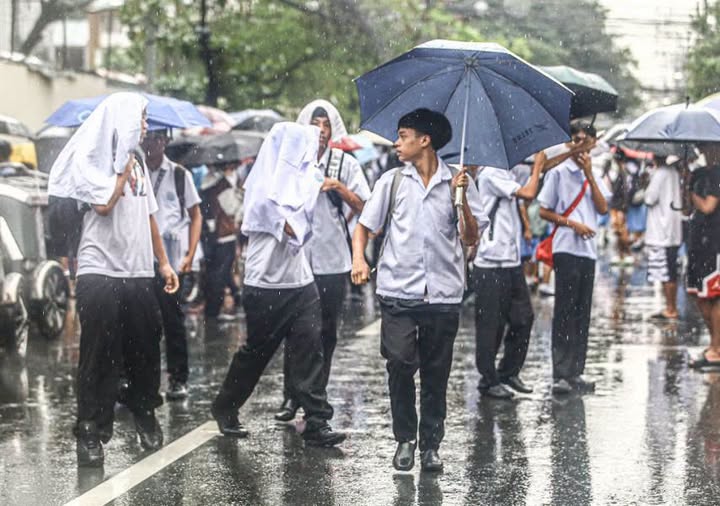
President Ferdinand Marcos Jr. has introduced a unified three-tier system for suspending and resuming in-person classes nationwide, establishing clear guidelines based on disaster warnings, local risk assessments, and school-specific safety conditions.
Under Executive Order (EO) 130, signed on October 28 and released Tuesday, class suspensions will follow three mechanisms: automatic suspension based on official hazard warnings, localized suspension declared by local chief executives, and granular suspension determined by individual schools and learning centers.
The directive aims to standardize decisions on class suspensions while allowing authorities and educational institutions to respond to specific threats affecting students, teachers, and school personnel.
Under the automatic suspension mechanism, in-person classes will be suspended without a separate declaration once official warnings, advisories, alert levels, or forecasts from authorized national agencies reach prescribed technical thresholds.
Meanwhile, local chief executives may order class suspensions in specific areas when prevailing conditions pose safety risks, even if the thresholds for automatic suspension have not been reached.
Such decisions must be supported by documented risk assessments and coordinated with concerned government agencies and the National Disaster Risk Reduction and Management Council (NDRRMC).
The third mechanism allows schools and learning centers to independently suspend in-person classes when documented, site-specific conditions indicate an actual or imminent threat to the safety, health, or welfare of learners and personnel.
However, schools may exercise this authority only when no applicable automatic or local suspension is already in effect.
EO 130 also establishes procedures for resuming classes. In-person learning may resume once the suspension period expires or the relevant hazard warning is lifted, downgraded, or expires, subject to required safety inspections.
Schools covered by a localized suspension may request earlier resumption if they submit a documented safety assessment confirming that conditions are safe and obtain approval from the concerned local chief executive.
The Department of Education (DepEd) will serve as the lead implementing agency responsible for overseeing the framework and developing its operational guidelines.
DepEd will coordinate with the Commission on Higher Education (CHED), Technical Education and Skills Development Authority (TESDA), Department of Science and Technology (DOST), PAGASA, PHIVOLCS, Department of Environment and Natural Resources (DENR), Department of the Interior and Local Government (DILG), Department of Public Works and Highways (DPWH), and other concerned agencies.
The executive order directs DepEd to issue implementing guidelines within 30 days, outlining specific hazard thresholds, risk assessment criteria, documentary requirements, timelines, and coordination procedures.
The new framework is intended to ensure that decisions on class suspensions and resumptions are guided by verified safety conditions while maintaining coordination among national agencies, local governments, and educational institutions.