
YGG Pilipinas and the Department of Information and Communications Technology (DICT) have marked a major milestone in regional digital talent development with the first graduating class of MFW City, a joint initiative designed to prepare Metaverse Filipino Workers (MFWs) for careers in the global digital economy.
Launched in partnership with the Sui Foundation, the program’s inaugural run in the MIMAROPA region trained aspiring developers in the Move programming language for the Sui blockchain, producing 50 graduates despite technical, logistical, and even natural challenges along the way.
From an initial pool of 127 participants, the majority were third-year or higher students pursuing degrees in computer science, information technology, computer engineering, and related fields. Nearly half already had one to two years of coding experience, but for many, blockchain development was uncharted territory.
Seventy-six percent entered the program with no prior exposure to blockchain technology, and none had experience with Move. The curriculum was intentionally rigorous, combining weekly online sessions with in-person classes in Puerto Princesa, alongside mentoring, code reviews, and feedback sessions led by Sui contributors and ecosystem partners.
The pilot drew a diverse cohort, with women accounting for one in five participants and students coming from institutions across the region, including Palawan State University, Holy Trinity University, Fulbright College, the Association of Computer Scientists, and STI College. Over several weeks, participants balanced academic demands with an intensive developer track that emphasized both technical mastery and real-world application.
James Wing, head of AAA gaming partnerships at Mysten Labs, the original contributor to Sui, said the results exceeded expectations. He noted that even as severe weather disrupted the program near its conclusion, students demonstrated resilience and adaptability that are increasingly essential in the global tech industry. Despite the challenges, the cohort delivered innovative projects and posted strong completion numbers for a voluntary blockchain developer program.
Those challenges came to a head when Typhoon Tino struck Puerto Princesa on November 4, triggering widespread flooding, power outages, and disruptions to internet and mobile connectivity. The final class had to be canceled, yet the program still achieved a 40 percent completion rate—an outcome organizers described as remarkable given both the technical demands of the curriculum and the timing of the disaster during the program’s final week.
The residency culminated in a capstone showcase, where teams were tasked with designing and deploying functional prototypes on the Sui blockchain and pitching their solutions to a judging panel. The challenge centered on creating trusted, verifiable ways to recognize and showcase community contributions across schools, guilds, and online communities—credentials that could later support job applications and professional advancement.
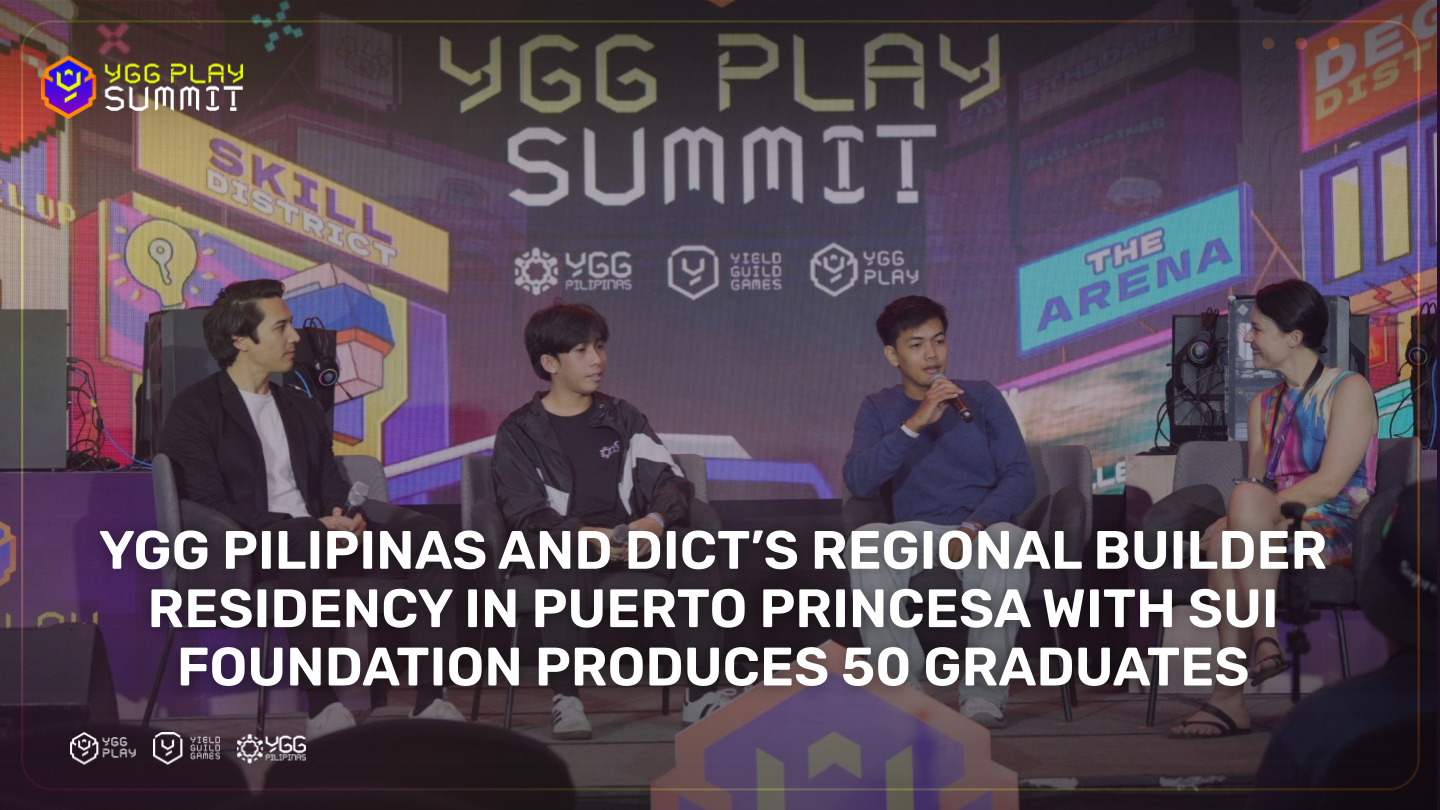
The winning team, The Scouts, developed Campfire, a platform that digitizes certificates while functioning as a gamified, NFT-based community hub. Two of its members, Nicholo Dela Rosa and JK Rabanal, were flown from Puerto Princesa to Manila to present their work at the YGG Play Summit held at SM Aura Premier in Bonifacio Global City from November 19 to 22, 2025. First runner-up Spot Me earned recognition for a web application that connects event organizers and participants through reward-based engagement.
Rabanal, a Palawan State University graduate who completed his degree during the pandemic, said the team never expected to win, especially after facing internet disruptions and class suspensions caused by the typhoon. Dela Rosa, a third-year student at the same university, said the experience fundamentally shifted how they viewed their futures, opening their eyes to larger possibilities within the Sui ecosystem and the broader Web3 space.
By piloting the program in Puerto Princesa, the collaboration demonstrated how regional hubs can serve as scalable models for delivering advanced digital skills outside Metro Manila. The initiative directly supports DICT’s broader goal of generating eight million digital jobs by 2028.
DICT MIMAROPA played a central role by providing training hubs, computer laboratories, and internet access—including Starlink connectivity for remote areas—while mobilizing participants through its regional networks and coordinating with local governments, schools, and community leaders. YGG Pilipinas, through its Metaversity platform, led program design and execution, overseeing curriculum development, mentorship, workshops, project sprints, demo days, and certification.
Organizers said the success of the pilot underscores the power of cross-sector collaboration in expanding access to emerging technologies. More than a single training cycle, they described the program as the beginning of long-term pathways for Filipinos to build sustainable careers in the global digital economy, with plans to bring similar opportunities to more communities nationwide.