
(Photo courtesy of Anadolu)
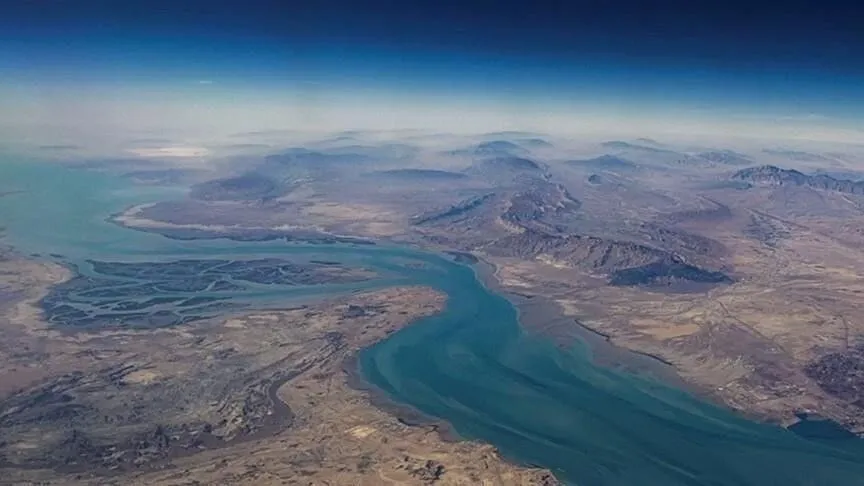
WASHINGTON – The United Nations has warned that escalating attacks on commercial vessels in the Strait of Hormuz and Bab al-Mandab threaten international security, regional stability and global trade, urging the restoration of safe maritime navigation in the strategically important waterways.
Khaled Khiari, UN assistant secretary-general for the Middle East, Asia and the Pacific, told the UN Security Council on Friday that maritime security incidents continued to increase, leaving numerous commercial ships and their crews stranded in the Gulf for months.
“Civilian vessels and commercial shipping must not become targets,” Khiari said during a virtual briefing requested by Bahrain.
He reiterated UN Secretary-General Antonio Guterres’ warning that continued tensions in the region could have serious consequences for international peace and security.
According to the International Maritime Organization (IMO), October recorded the highest monthly number of attacks and other incidents involving commercial shipping since February.
As of November 11, the IMO had documented 134 confirmed maritime incidents in the Strait of Hormuz and the wider Middle East maritime area.
At least 25 seafarers were killed, while others were injured or remained missing.
Khiari said restrictions on maritime navigation continued to disrupt international shipping despite the restoration of much of the region’s energy exports through alternative routes.
He cautioned that the recovery in energy exports should not be interpreted as a return to normal conditions, as maritime shipments remained below pre-conflict levels.
Maritime disruptions drive up global costs
The UN official warned that current shipping arrangements in the Middle East remained “costly, unpredictable and unsafe,” placing additional pressure on international trade and the global economy.
Disruptions in the Strait of Hormuz and surrounding waterways have increased energy prices, transportation expenses and insurance costs, contributing to inflation and threatening food security.
Khiari highlighted the impact on fertilizer shipments, which remained severely constrained by maritime restrictions.
“The longer these restrictions persist, the greater the economic costs and the more difficult it will become to restore commercial confidence and trade flows,” he said.
He stressed that the situation must not become “the new normal,” calling for the full restoration of maritime navigation and safe, unrestricted passage in accordance with international law.
The UN reiterated that strategic maritime chokepoints must not be used as instruments of coercion or to obstruct shipments of food, energy, fertilizer and other essential commodities.
UN urges US, Iran to pursue diplomatic settlement
Amid continuing regional tensions, Khiari welcomed the absence of major military exchanges between the United States and Iran since early September.
However, he expressed concern over statements suggesting the possibility of renewed military confrontation.
Despite setbacks in negotiations involving Iran’s nuclear program and international sanctions, Khiari welcomed renewed diplomatic engagements in Doha and other parts of the Middle East.
“We urge the parties to seize the current opportunities and negotiate in good faith. We hope that the mediators’ efforts will help Iran and the United States reach a peaceful and durable settlement,” he said.
The UN official also recognized efforts by regional governments to develop maritime security arrangements, saying these could complement broader diplomatic initiatives.
He urged countries in the region to strengthen confidence-building measures, maintain diplomatic engagement and encourage compromise to prevent further escalation.
Khiari warned that another round of hostilities could have devastating consequences for Iran, neighboring countries and the international community.
“The people of the region, and indeed the wider international community, cannot afford a prolonged conflict in one of the world’s most strategically important waterways,” he said.
Gulf states condemn attacks, seek UN action
Meanwhile, Gulf Cooperation Council (GCC) Secretary-General Jasem Mohamed Albudaiwi called on the UN Security Council to take stronger action against attacks threatening Gulf countries and international shipping.
Addressing the Council with what he described as a unified Gulf position, Albudaiwi emphasized the member states’ commitment to protecting their sovereignty and territorial integrity.
“The GCC states reject any infringement upon their security, sovereignty, and territorial integrity,” he said.
Albudaiwi maintained that attacks against GCC member countries violated international law and threatened international peace and security.
The regional bloc urged the Security Council to take measures to stop attacks attributed to Iran and the Houthis while ensuring the protection of commercial vessels, maritime crews and energy infrastructure.
The GCC also reaffirmed its commitment to regional stability, diplomatic mediation and international cooperation.
“In conclusion, I wish to affirm that the GCC states are an active and reliable partner in supporting regional and international security and stability, and a fundamental pillar of the global economy and energy security,” Albudaiwi said.
He added that GCC member states would continue supporting peace initiatives, humanitarian assistance and development efforts while working with international partners to prevent further instability in the region.
The UN maintained that restoring secure maritime passage and advancing diplomatic negotiations were essential to preventing further economic disruption and renewed military escalation in the Middle East.