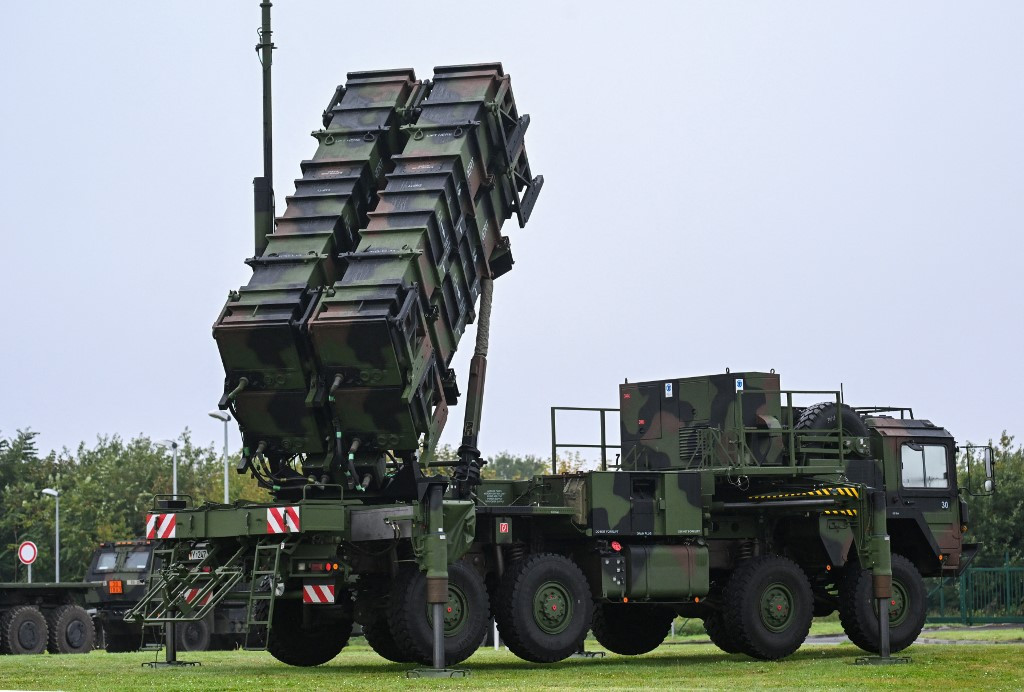

A quiet but significant shift is reshaping the strategic landscape of Southeast Asia. The United States has begun deploying advanced missile systems in the Philippines — a move that signals a deepening defense partnership and a broader shift in deterrence strategy in the face of China’s growing assertiveness in the region, particularly over Taiwan.
Two advanced U.S. missile platforms — the Typhon Mid-Range Capability (MRC) and the NMESIS (Navy Marine Expeditionary Ship Interdiction System) — are already stationed on Philippine soil, following joint military exercises. Now, American defense officials are signaling that more could be on the way, if Manila agrees.
“If the Philippine government says yes, more missile systems can come. If they say no, we’ll respect that,” a senior U.S. defense official told reporters at a briefing in Hawaii.
But this isn’t just about hardware — it’s about strategic messaging. And it’s one that China is certainly hearing loud and clear.
Why these missiles matter
The Typhon system, which was first deployed in Ilocos Norte in April, can strike targets up to 1,500 kilometers away — well within range of Taiwan and large swaths of the South China Sea. The NMESIS, positioned in Batanes just last month during the Kamandag drills, is capable of targeting enemy ships from land over 185 kilometers out.
Military planners say these systems are game-changers, not just for their reach, but for their mobility and ability to complicate China’s war plans.
“We’re creating a targeting dilemma for the Chinese,” the U.S. official explained. “Instead of a few fixed bases, we now have small, mobile launchers in jungle terrain. Tracking and neutralizing them is a different kind of problem.”
In short: they’re hard to find, harder to hit, and — from Beijing’s perspective — a growing thorn in the side of any hypothetical invasion of Taiwan.
The Taiwan factor
The strategic locations of these deployments are no accident. Ilocos Norte and Batanes are just a few hundred kilometers from Taiwan’s southern coast. Batanes’ Mavulis Island is only about 140 kilometers from Cape Eluanbi, the southernmost tip of Taiwan.
Beijing, which considers Taiwan a breakaway province, has made it clear that such deployments are provocative. China has accused the U.S. of “encircling” it and dragging the Philippines into the “Taiwan question” — claims the Philippine government has firmly rejected.
Yet experts believe that reaction is precisely the point.
“From Washington’s point of view, China’s outrage signals success,” said Denny Roy, senior fellow at the East-West Center. “These missile systems complicate any potential invasion plan of Taiwan. That’s deterrence at work.”
A shift in Philippine defense posture
The Philippines has long walked a tightrope between economic ties with China and its defense alliance with the U.S. But under the Marcos administration, the pivot back to Washington has become more pronounced — particularly with the expansion of the Enhanced Defense Cooperation Agreement (EDCA), granting the U.S. access to bases near Taiwan.
Now, the presence of missile systems on Philippine soil marks a new level of military integration, and perhaps, a quiet recalibration of Manila’s foreign policy priorities.
General Romeo Brawner Jr., the Armed Forces Chief of Staff, has even called for the Typhon system to stay permanently — a stance that, just years ago, would have been politically unthinkable.
“We want to maximize training and defense capability,” said Navy spokesperson Capt. John Percie Alcos. “As long as these opportunities exist, the systems will remain.”
Where was Jordan in all this?
Interestingly, as Iran recently launched a wave of drones and missiles over Iraq, Syria, and Jordanian airspace toward Israel, one missing player was Jordan. In past instances, Jordan intercepted some of those projectiles. This time, however, it remained silent.
Though unrelated to the U.S.-Philippine missile deployments, this signals a broader regional shift: the traditional lines of alliance and engagement are evolving, as states weigh the risks of entanglement in great-power competition.
As the U.S. continues to pivot to the Indo-Pacific, and China doubles down on its regional ambitions, the Philippines is increasingly finding itself at the geographic and strategic center of that competition.
Whether future deployments materialize depends on political will in Manila — but the strategic value is undeniable.
“This isn’t just about weapons,” the U.S. official said. “It’s about shaping the environment in a way that makes conflict less likely.”
For now, the missile launchers quietly stationed in northern Luzon and Batanes are doing just that — sending a signal not just to China, but to the region and the world: the game has changed.