
MANILA – Residents of areas proposed to host a nuclear power plant are supportive of the plan, backing the move to make this technology among the country’s major power sources, a Department of Energy (DOE) official said.
Acceptance rate, based on the two surveys already done is between 60 percent to 90 percent depending on the location, DOE Energy Utilization Management Bureau director Patrick Aquino said in a media interview in Makati City at the sidelines of the three-day Philippine Nuclear Regulatory Framework Workshop on Wednesday.
“What we can confirm is that there’s an upcoming survey that we’re also doing again to test again the sensitivity on the acceptance. We’re hopeful that the acceptance increases or at the very least is stable,” he said.
“Public engagement is still front and center for us, and we’re always willing to discuss with the local government units involved, in any of those locations, because we value the need to get the communities on board for any nuclear power plant to succeed.”
The DOE has identified seven potential nuclear power plant sites –two each in Bataan and Palawan, and one each in Masbate, Pangasinan, and Camarines Norte– all of which were selected based on standards set by the International Atomic Energy Agency (IAEA).
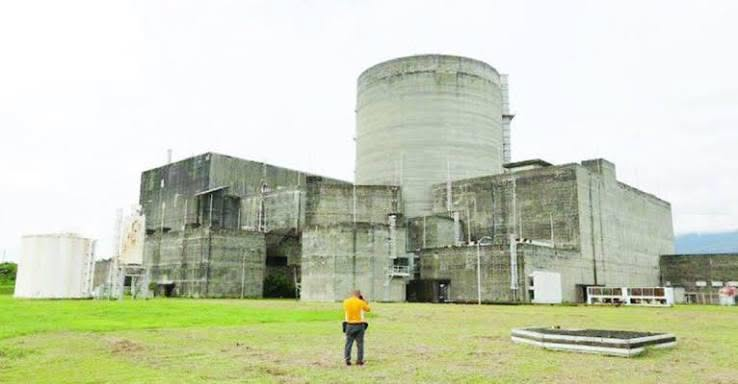
One of these options is the mothballed Bataan Nuclear Power Plant, which was completed in 1984 but was never commissioned for commercial operation.
The DOE aims to have around 1,200 megawatts (MW) of domestic nuclear capacity by 2032, 2,400 MW by 2035, and 4,800MW by 2050.
Republic Act (RA) 12305, signed into law on Sept. 18, 2025, established the legal framework for nuclear safety, security, and safeguards for the use of nuclear power in the country.
It also established the Philippine Atomic Energy Regulatory Authority (PhilATOM), which has yet to have its officials.
Aquino said DOE Secretary Sharon Garin “has actively reminded the Office of the President on the need to have appointments for the PhilATOM”, not just for the Director General position but all the four Deputy Director General who will represent the PhilATOM Council.
He said works on the RA 12305’s implementing rules and regulations (IRR) have been started since January this year, and constituent agencies are also being tapped.
PH capacity
Willam Magwood, Director General of US’ Nuclear Energy Agency (NEA), told journalists at the sidelines of same event, said the Philippines “is very well positioned” vis-a-vis on the utilization of nuclear energy.
“As I mentioned earlier, the most important thing that you will need is expert people. People who have the science and technology and engineering backgrounds to be able to make good decisions. And my experience in talking to people in the Philippines is that you have people like that,” he said.
“They will obviously need to be supplemented by outside expertise, at least initially. But I think you have, as a baseline the right kinds of people, the right kinds of expertise, and the right kind of leadership to be successful.”
Magwood said putting up of nuclear power plant takes time and needs several approvals, from regulators, communities that will host the power plants, and the private sector that will invest in it.
“The regulator is still very nascent. It’s just getting started. So no, it (putting up of nuclear reactor) won’t happen in five or six years but it will certainly happen within the foreseeable future if things stay on track,” he added. (Joann Santiago-Villanueva/PNA)