
(Photo courtesy of PNA)
The National Council on Disability Affairs (NCDA) has urged the Department of Transportation (DOTr) to investigate the alleged sexual harassment of a deaf woman aboard a bus in Tagbilaran City, Bohol, and pursue appropriate charges against those found responsible.
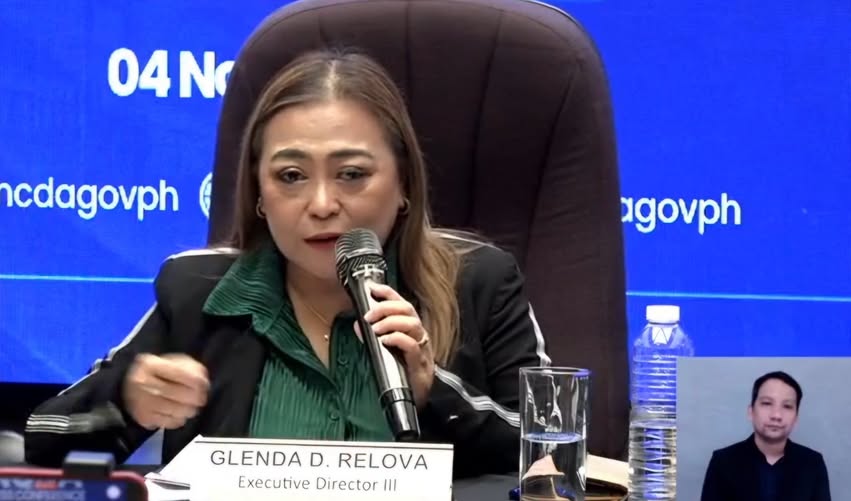
During a press briefing Wednesday, NCDA Executive Director Glenda Relova said the council was awaiting the DOTr’s response to its request for an immediate and impartial investigation.
Relova said the NCDA’s regional program coordinator was coordinating with regional social welfare officials and persons with disability affairs offices in Bohol and Tagbilaran City to arrange possible psychosocial and legal assistance for the woman.
The alleged incident occurred around 4 a.m. on November 1 while the woman and her minor child were traveling to church.
The woman accused a bus conductor of sexually harassing her inside the vehicle. She later posted her account and a video of the incident on Facebook to seek assistance and accountability.
Relova also addressed social media comments mocking the woman’s grammar, explaining that Filipino Sign Language (FSL) is an essential part of the deaf community’s culture and identity.
“Hindi ’yun topic. Ang topic ay ’yung sinapit niya,” Relova said, stressing that public attention should focus on the alleged harassment rather than how the woman expressed herself.
She emphasized that the woman has the right to share her experience and pursue legal remedies.
Relova also encouraged families of deaf individuals to learn FSL to improve communication and ensure that their relatives can seek assistance when necessary.
“Who would that person talk to if they were the only one who knew how to sign and nobody else in the family knew it?” she asked.
Disability sensitivity training pushed
Following the incident, the NCDA renewed its call for disability sensitivity training among bus operators and frontline transportation personnel.
Relova said the council had already coordinated with maritime and civil aviation authorities on disability awareness initiatives, although similar efforts involving bus operators had yet to make significant progress.
The NCDA offers a self-paced online disability sensitivity course that transportation workers can complete to better understand the needs and rights of persons with disabilities (PWDs).
The council’s board has also established a five-year target for personnel from its 16 member government agencies to complete the training.
Unified PWD ID system to address fake cards
Meanwhile, Relova raised concerns over the continued proliferation of fraudulent PWD identification cards, saying the problem has caused some establishments to question legitimate cardholders, particularly those with nonapparent disabilities.
1PWD Party-list first nominee John Darnell Castro said the misuse of PWD IDs undermines benefits intended for individuals who genuinely need financial assistance.
He noted that the 20-percent discount helps legitimate cardholders cover essential expenses, including maintenance medicines.
Castro urged individuals using fraudulent identification cards to stop the practice, warning that legitimate PWDs ultimately suffer the consequences.
Relova also clarified figures previously cited in discussions about fake PWD IDs.
She said the estimate of 8.5 million came from a Senate inquiry in December 2024, when approximately 1.9 million PWDs were registered nationwide.
A separate historical estimate placed the number of fraudulent PWD IDs at between 6 million and 6.5 million.
The Senate inquiry also cited an estimated Php 88.2 billion in foregone tax revenues in 2023, including losses associated with the 12-percent value-added tax exemption.
To address the problem, the NCDA began developing a unified PWD identification system in January 2025.
Under the new system, applicants will be registered in a centralized database, while each identification card will contain a unique identification number and QR code that establishments can scan to verify authenticity.
Local disability affairs offices may temporarily hold applications and refer questionable disability certificates to the NCDA for verification.
Relova said the system had undergone pilot testing in five municipalities, while personnel from 1,350 cities and municipalities had already received training.
“Kita po ng sistema kung sino ’yung nag-encode. Kita din po ng sistema kung sino po ’yung nag-approve,” she said.
She added that the system also records the personnel responsible for printing identification cards issued directly by local governments.
Existing PWD IDs remain valid
Under Administrative Order No. 001, series of 2026, establishments must continue recognizing existing PWD identification cards alongside the new unified IDs during a three-year transition period.
Relova said the NCDA board would announce the official schedule for phasing out older identification cards.
The council is also monitoring cases involving fraudulent PWD IDs in Quezon City, Manila and Marikina City.
Similar cases have been filed in Davao and Cebu, although these remain subject to legal proceedings.
As of Wednesday’s briefing, the NCDA said no penalties had been reported in connection with the cases.