
(Image grabbed from Dose of Disbelief Facebook page)
Forget oil — the new global gold rush is for the rare earth minerals buried under Philippine soil, and two superpowers are already circling like vultures.
Behind closed doors and away from TV cameras, Washington and Beijing are scrambling to secure the metals that make the world’s fighter jets fly, smartphones glow, and electric cars purr. And the Philippines — once just a quiet exporter of raw ore — has suddenly become the most fought-over treasure chest in Asia.
The game changed last month when U.S. Secretary of State Marco Rubio slipped into a discreet meeting in Kuala Lumpur with his Philippine counterpart. The message? Washington wants Manila to help break China’s iron grip on the global rare earth supply chain. It’s a grip so tight that one U.S. congresswoman compared it to a “stranglehold” on the West’s military and tech future.
China isn’t letting go without a fight. In April, Beijing quietly tightened export rules for rare earths and magnets — the critical guts of missiles, EVs, and high-tech gadgets — causing production chaos from Tokyo to Detroit. Chinese exports of rare earth magnets have since nosedived by a jaw-dropping 75%, forcing automakers and electronics giants into damage-control mode.
And the numbers are staggering: China processes more than 90% of the world’s rare earths, over 65% of lithium, 70% of battery-grade nickel and cobalt, and nearly every gram of gallium and germanium that modern tech depends on. In short, if China cuts the tap, the rest of the world’s high-tech dreams grind to a halt.
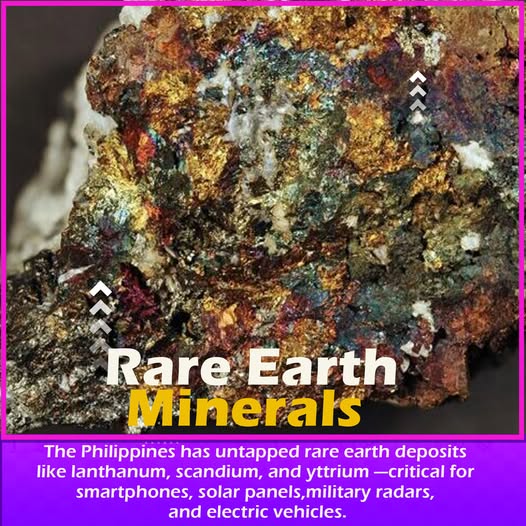
Enter the Philippines — a nation sitting on a geological jackpot. Nickel laterites in Zambales, scandium in Palawan, heavy rare earth clays in Samar, black sand beaches laced with light rare earths… it’s a billionaire’s wish list buried in volcanic soil. The catch? The Philippines has no processing plants, meaning it still ships most of its treasures to China for refining.
The White House wants that to change — fast. Sources say Washington is dusting off its “pandemic playbook” to guarantee prices for critical minerals, hoping to lure investors to build refineries on Philippine shores. Even Apple and Microsoft are reportedly watching closely, with tech executives quietly meeting U.S. trade officials in late July.
China, meanwhile, is playing its cards close to the chest. Its latest rare earth mining quotas were issued in near-total secrecy, and officials insist the new rules are about “sustainability” — not targeting any one country. But analysts say the message is clear: Beijing will defend its mineral empire at all costs.
For the Philippines, it’s a dangerous balancing act. Side with Washington, and it could gain billions in investment and a seat at the high-tech table. Lean toward Beijing, and it keeps its biggest trading partner happy — but risks becoming just another pit stop in China’s mineral machine.
President Ferdinand Marcos Jr. has already called critical minerals a “development priority,” but so far, he’s avoided saying whose side he’s on. The silence won’t last long. Because in this rare earth war, neutrality might be the most dangerous position of all.
The global tech race is no longer about who can innovate fastest — it’s about who can dig deepest. And right now, the shovels are pointing straight at the Philippines.