
The Philippines is repositioning itself in the global minerals race, signing a new agreement with the United States that shifts the country’s role from a raw ore exporter to a strategic processor of critical minerals essential to future technologies.
The deal, announced Friday by the Department of Environment and Natural Resources, outlines a partnership aimed at building domestic capacity for mineral processing, a move officials say could unlock higher-value investments, better-paying jobs, and deeper integration into global supply chains for electric vehicles, renewable energy, and advanced manufacturing.
Signed in Washington by Environment Secretary Raphael Lotilla and US Undersecretary of State Jacob Helberg, the memorandum of understanding reflects a broader strategic alignment between the Philippines and the United States as both governments seek to reduce dependence on dominant global suppliers of critical minerals.
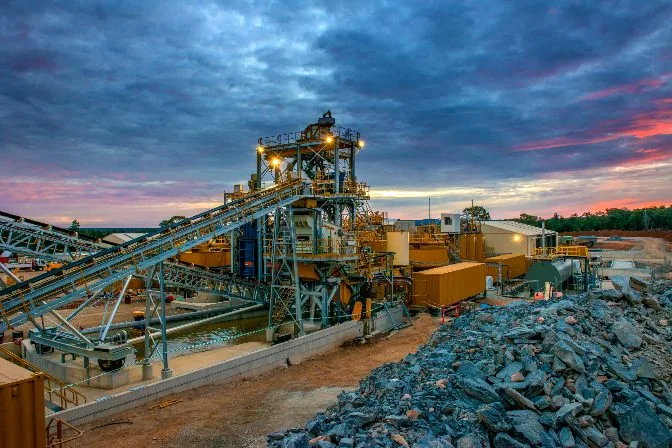
For decades, the Philippines—one of the world’s top producers of nickel and a significant source of copper—has largely shipped out unprocessed ores, capturing only a fraction of their eventual value. The new agreement signals a deliberate push to change that equation by encouraging downstream processing within the country, allowing more of the economic gains to stay local.
Lotilla said the partnership is designed to support a Filipino-led minerals industry that moves beyond extraction and into high-value processing, positioning the country as a reliable player in supply chains that power semiconductors, batteries, and clean energy systems. He stressed that the shift is not simply about scale, but about quality—creating skilled employment and building industrial capabilities that can compete globally.
Environmental safeguards are also a central part of the framework. Philippine officials underscored that expanding processing capacity would go hand in hand with stricter standards on environmental protection and community welfare, an assurance aimed at addressing long-standing concerns over the social and ecological costs of mining.
The agreement was signed on the sidelines of the 2026 Critical Minerals Ministerial, where resource-rich countries and advanced economies are increasingly coordinating policies to secure stable, diversified mineral supplies.
By aligning with other US partners such as Australia, Japan, and South Korea, Manila is signaling its intention to be more than just a source of raw materials—and instead become a strategic node in the global transition to green and digital technologies.
As competition for critical minerals intensifies worldwide, the Philippines’ latest move suggests a recalibration of its mining policy, one that places industrial development and strategic relevance at the center of its resource strategy.