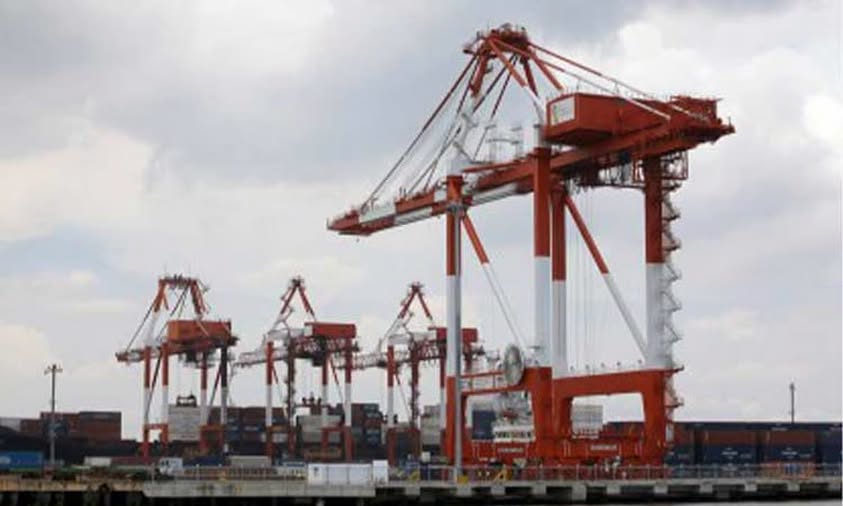

(Photo courtesy of PNA)
MANILA, Philippines – The recently concluded free trade agreement (FTA) negotiations between the Philippines and Canada could open more opportunities for Filipino exporters and investors to access North American markets, according to an economist.
Rizal Commercial Banking Corporation (RCBC) chief economist Michael Ricafort said the agreement, which is expected to be formally signed in 2027, could serve as an indirect gateway to the United States and other North American markets where the Philippines has no existing bilateral free trade agreement.
The two countries concluded negotiations on Saturday, marking a significant step toward strengthening bilateral trade and investment relations.
Ricafort described the proposed agreement as a potential trade bridge between the Philippines and other economies in the region.
The FTA “is a potential FTA proxy with the US and other North American countries that do not have yet an FTA with the Philippines,” he said.
“Thus, Philippine two-way international trade and investments with Canada will increase further, as a proxy/indirect trade through FDIs (foreign direct investments) in both countries, by capitalizing further on existing FTAs of both countries,” Ricafort added.
Government data showed that Canada ranked as the Philippines’ 16th-largest trading partner in 2025, with bilateral merchandise trade reaching USD 2.15 billion.
Ricafort said the agreement could provide significant opportunities for Philippine exporters by improving market access and encouraging greater investment flows between the two economies.
He added that the Philippines could also benefit from increased imports of Canadian petroleum products and other industrial goods.
According to Ricafort, expanding energy trade with Canada could help the Philippines diversify its fuel supply sources and reduce dependence on Middle Eastern oil amid elevated global petroleum prices linked to the US-Iran conflict.
The economist also noted that Canada has its own economic incentives to pursue additional free trade agreements as it seeks to reduce its heavy reliance on the United States as an export destination.
“Canada also needs to diversify its export markets through FTAs to diversify largely reliance on Canadian exports to the US amid tariff issues with Trump in recent months,” he said.
The proposed agreement is expected to strengthen economic cooperation between Manila and Ottawa, particularly in merchandise trade, investment and supply chain diversification.
While the FTA could create opportunities for indirect access to other North American markets, trade with third countries would remain subject to applicable rules of origin, tariffs and other trade regulations.
The Philippines and Canada are expected to proceed with the formal signing of the agreement in 2027, following the conclusion of negotiations.