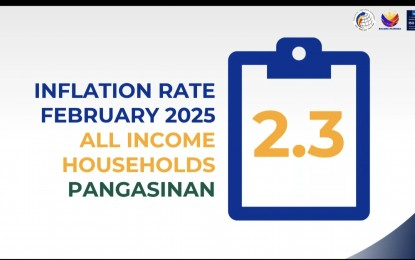

Pangasinan province’s inflation rate in February falls to 2.3 percent from 2.6 percent in January this year. The drop was due to lower prices of food and non-alcoholic beverages, transport. and clothing and footwear, according to the Philippine Statistics Authority. (Photo courtesy of PSA-Ilocos Region)
MALASIQUI, Pangasinan – This province’s inflation rate fell to 2.3 percent in February from 2.6 percent in January, driven by lower prices of food, non-alcoholic beverages, transport and clothing.
Philippine Statistics Authority-Pangasinan chief statistical specialist Edgar Norberte said food and non-alcoholic beverages contributed 85.8 percent to the decline, with inflation in this category dropping to 3.3 percent from 5.1 percent.
Prices of vegetables, tubers, plantains, and pulses saw a sharp decrease, with inflation falling to 6.3 percent from 37.8 percent. Cereals and cereal products also saw negative inflation at -1.7 percent, while water prices dropped from 8.7 percent to 4.9 percent.
Transport costs, particularly diesel, played a role in the decrease, with inflation dropping to -3.0 percent from 0.8 percent.
National Economic and Development Authority-Ilocos Region’s Richard Mel Caplis attributed this to increased fuel production in the United States and reduced demand in Asia. He noted that lower fuel costs also eased agricultural and transportation expenses.
Meanwhile, inflation in rice, oils and sugar remained negative, further slowing overall inflation. However, meat, fish and fruits recorded slight increases.
Despite fluctuations in some food prices, the overall trend indicates a stabilizing cost of living in Pangasinan. (PNA)