
MANILA, Philippines — The Philippines and Germany reaffirmed their commitment to expanding defense and security cooperation, particularly in maritime security, cybersecurity, intelligence-sharing, and the protection of critical underwater infrastructure, during high-level talks in Manila on Tuesday, November 17.
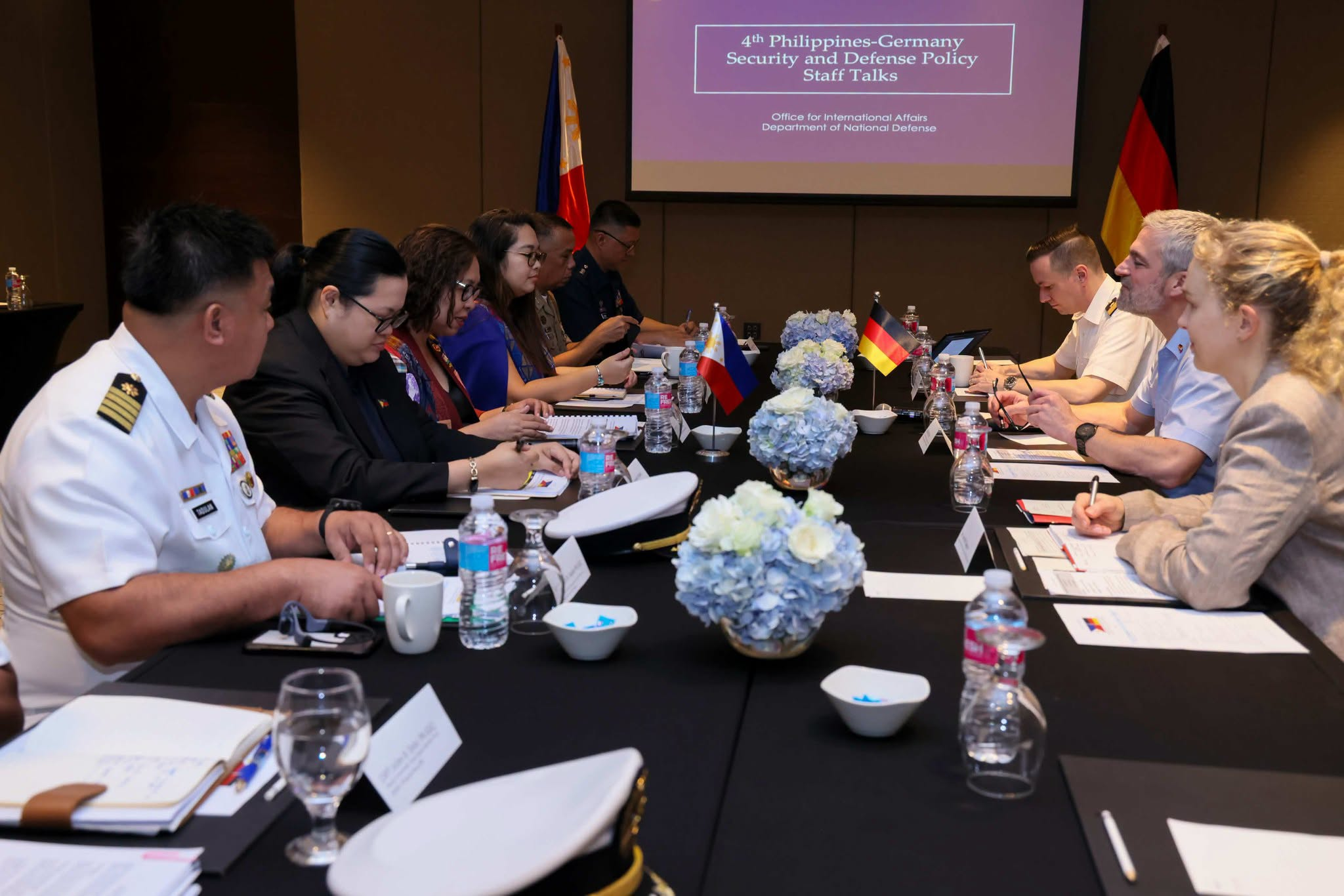
The Department of National Defense (DND) hosted the 4th Philippines-Germany Security and Defense Policy Staff Talks, which reviewed the progress and implementation of the bilateral defense cooperation arrangement signed in 2025.
DND Assistant Secretary for International Affairs Marita Yoro co-chaired the meeting with Col. Nils Hutter, head of the Political Section under the Sub-Directorate for Security and Defense Policy of Germany’s Federal Ministry of Defence.
The discussions provided an opportunity for both countries to assess ongoing defense engagements, identify areas for deeper cooperation, and address shared security concerns affecting the Indo-Pacific and Europe.
The 2025 Arrangement concerning Defence Co-operation established a framework for sustained defense engagement and institutional collaboration between Manila and Berlin.
During the meeting, both sides emphasized the interconnected nature of security challenges in Europe and the Indo-Pacific, recognizing the importance of closer cooperation in maintaining regional stability.
Among the priority areas discussed were information-sharing, maritime domain awareness, cybersecurity, and the protection of critical underwater infrastructure.
Maritime domain awareness involves monitoring and understanding activities within maritime areas, including vessel movements and potential security threats, to strengthen surveillance and response capabilities.
The protection of underwater infrastructure, including submarine communications cables and other critical installations, has also emerged as an important security concern because of its role in international communications, economic activity, and regional connectivity.
Both countries reaffirmed their support for a rules-based maritime order, emphasizing the importance of international law in maintaining peace, stability, and security at sea.
The discussions come as the Philippines continues to strengthen defense partnerships with countries outside the Indo-Pacific amid persistent maritime security challenges and growing concerns over emerging threats.
Germany has identified the Philippines as one of its “Active Partners,” reflecting the expanding scope of bilateral defense cooperation.
According to the DND, defense engagements between the two countries have tripled in volume over the years, demonstrating increased military-to-military exchanges and institutional coordination.
The department also welcomed expanded training opportunities for Armed Forces of the Philippines (AFP) personnel in Germany.
These training programs are expected to support professional development, strengthen military capabilities, and provide Filipino personnel with greater exposure to international defense practices.
Another area of cooperation discussed was Germany’s upcoming participation in the Philippines-US Exercise Balikatan, one of the country’s major annual military exercises.
Germany’s involvement is expected to provide additional opportunities for military coordination and interoperability with participating forces.
The two sides also discussed future Maritime Cooperative Activities in the Philippines, which are intended to strengthen operational cooperation and promote maritime security.
The planned engagements reflect Germany’s growing defense involvement in the Indo-Pacific and the Philippines’ efforts to broaden its network of international security partners.
For Manila, closer cooperation with European partners provides additional opportunities for military training, information exchange, and capacity-building in areas such as maritime surveillance and cybersecurity.
The talks also highlighted the importance of maintaining regular defense consultations to ensure that commitments under the 2025 arrangement translate into practical programs and sustained cooperation.
However, the DND announcement did not specify new defense equipment agreements, additional funding commitments, or detailed schedules for the proposed military engagements.
Further coordination between Philippine and German defense authorities will be necessary to implement the initiatives discussed during the meeting.
The DND said the fourth round of staff talks reaffirmed the Philippines’ commitment to developing meaningful defense partnerships with European countries and strengthening cooperation in addressing shared security challenges.
The continued engagement between Manila and Berlin is expected to support efforts to enhance defense readiness, protect maritime interests, and promote stability in the Indo-Pacific.