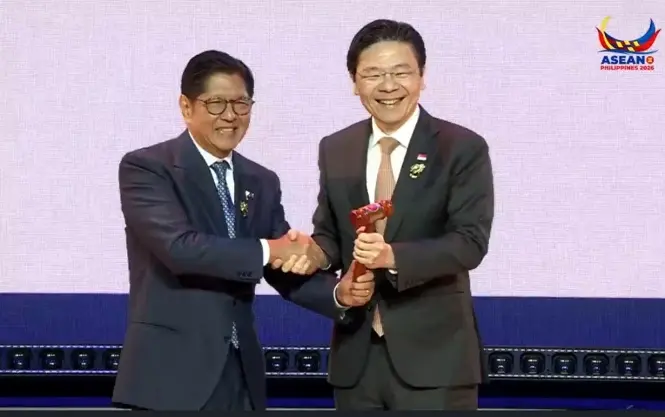

MANILA – The Philippines on Tuesday formally turned over the chairship of the Association of Southeast Asian Nations (ASEAN) to Singapore, ending its year-long leadership of the regional bloc.
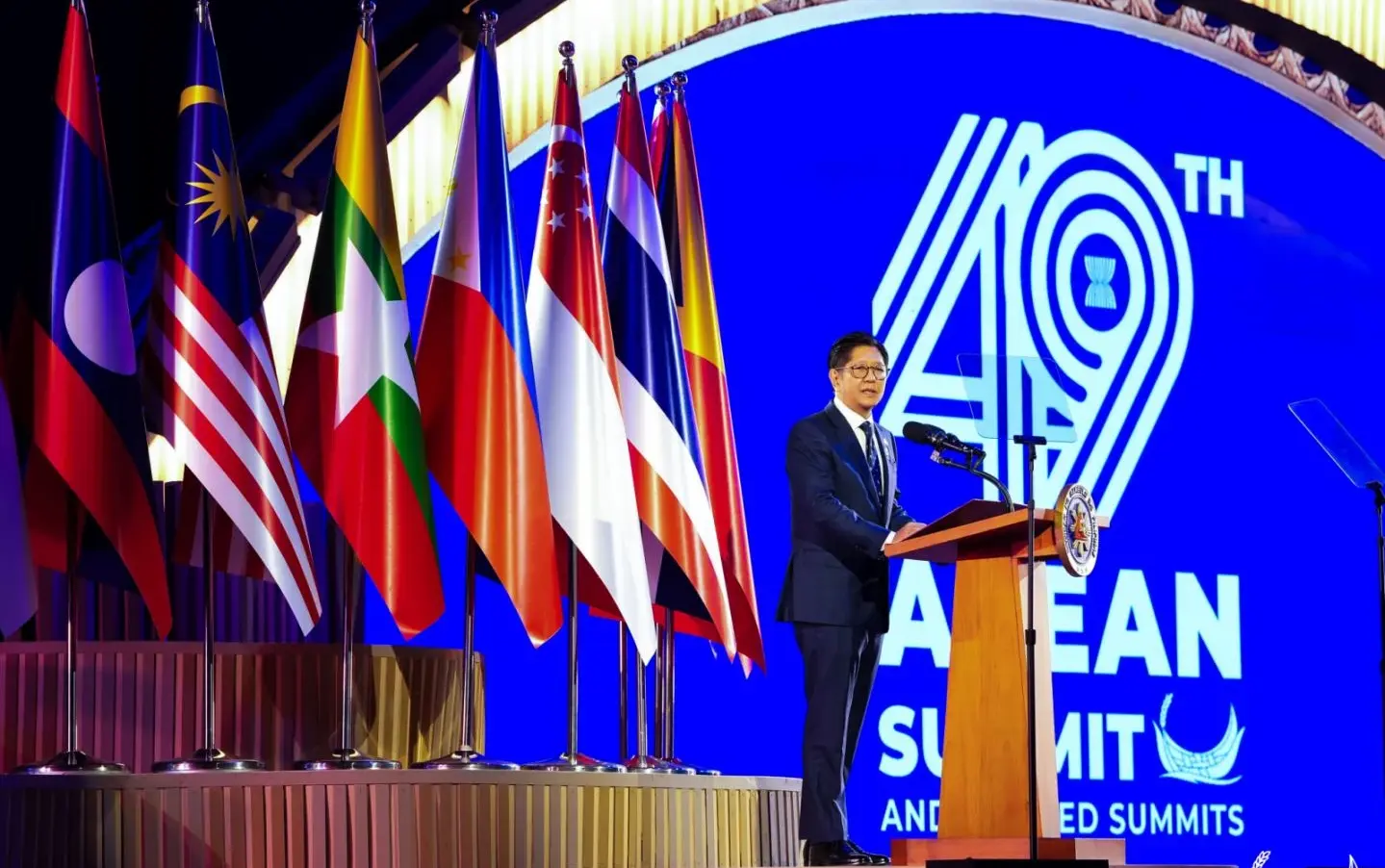
President Ferdinand R. Marcos Jr. led the turnover ceremony during the closing of the 49th ASEAN Summit and Related Summits at the Philippine International Convention Center in Pasay City.
Marcos expressed confidence that Singapore, as ASEAN chair in 2027, would lead with “a clarity of purpose, steadiness, and commitment to regional cooperation.”
“Today marks the ceremonial transition of the ASEAN chairship to Singapore for 2027. To Prime Minister (Lawrence) Wong and the people of Singapore, we have the utmost confidence. We offer our friendship and our full and complete support,” he said.
“As one of ASEAN’s founding members, Singapore has been a hand that has helped shape this community from creation. Its story reflects the value of openness, connection, discipline, and cooperation. As ASEAN enters its 60th year, it is proper that Singapore should now take its helm.”
With Singapore set to assume the chairship in 2027, Marcos reaffirmed the Philippines’ commitment to actively participate in regional initiatives and support the incoming chair’s priorities.
“Today, the helm passes from one chair to the next, and ASEAN’s journey remains as it has ever been one that we travel together. Let us in ASEAN always be navigating our future together,” Marcos said.
The turnover reaffirmed ASEAN’s tradition of collective leadership and continuity in pursuing regional peace, stability, and shared prosperity.
The handover marked the culmination of the Philippines’ 2026 ASEAN chairship, anchored on the theme “Navigating Our Future, Together.”
Singaporean Prime Minister Lawrence Wong accepted the gavel from Marcos, signaling Singapore’s assumption of the ASEAN chairship for 2027.
In his speech, Wong said Singapore would lead the regional bloc toward “deeper integration (and) wider partnerships” under its chairship.
“Deeper integration because we can do much more to realize the full potential of ASEAN. This includes strengthening our links in finance, digital technologies, and energy,” he said.
“Wider partnerships because ASEAN must continue to be open and outward-looking. At a time when the world is becoming more divided, our response is to keep building bridges, to strengthen ties with our partners, many of whom are here.”
Under its leadership, the Philippines pursued three strategic priorities: peace and security anchors, prosperity corridors, and people empowerment.
These priorities guided the country’s initiatives to strengthen regional stability, promote economic integration, and ensure that ASEAN cooperation translates into tangible benefits for its people.
Among the key areas advanced during the Philippine chairship were maritime cooperation, efforts to combat transnational crimes, digital economic integration, energy security, and stronger regional connectivity.
The Philippines also pushed for progress in negotiations for a Code of Conduct in the South China Sea, which seeks to establish rules and mechanisms to prevent disputes from escalating.
Marcos earlier emphasized that ASEAN’s collective strength lies in the ability of its member states to work together despite their differences. (PNA)