
By Hilda Austria
MALASIQUI, Pangasinan – Inflation rates in Pangasinan and La Union accelerated in September compared with their August levels, according to the Philippine Statistics Authority (PSA).
During a forum on Tuesday, PSA-Pangasinan Officer-in-Charge Verna Palsimon said the province’s inflation rate rose from 3.3 percent in August to 5 percent in September.
The food and non-alcoholic beverages commodity group was the main contributor to the acceleration, accounting for 77 percent of the increase, particularly vegetables, tubers, plantains, cooking bananas, and pulses.
This was followed by the transport commodity group, specifically passenger transport by road, which accounted for 11 percent; and the restaurant and accommodation services commodity group, particularly full-service restaurants, cafes, and similar establishments.
In La Union, PSA chief statistical specialist Dr. Danites Teñido said the province’s inflation rate accelerated from 7.4 percent in August to 9.4 percent in September.
Among the commodity groups, food and non-alcoholic beverages were the main contributor to the acceleration, accounting for 63.2 percent of the increase, particularly vegetables, tubers, plantains, cooking bananas, and pulses.
This was followed by restaurant and accommodation services, specifically full-service restaurants, cafes, and similar establishments, with a 16.8 percent share; and transport, particularly gasoline, with a 4.5 percent share.
Other major contributors to inflation in both provinces included rice, gasoline, and liquefied petroleum gas. Eggplants also contributed to inflation in Pangasinan, while other pelagic fish, whether live, fresh, chilled, or frozen, contributed to inflation in La Union.
Both officials said inflation increased in other commodity groups, except for housing, water, electricity, gas, and other fuels, which recorded a decrease. Inflation in information and communication and financial services remained unchanged in both provinces, while education services inflation remained steady in La Union.
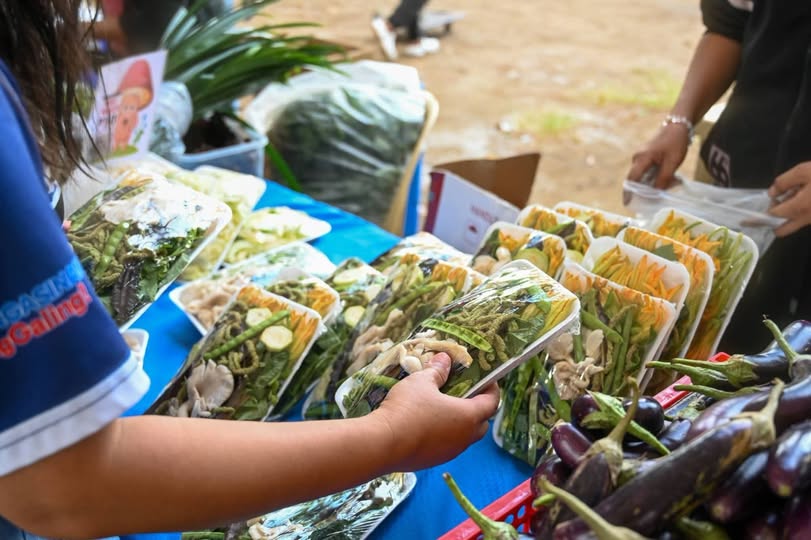
Department of Agriculture (DA) – Ilocos Region project evaluation officer Milagros Dela Rosa said during the same forum that the agency was implementing measures to help ease the impact of rising inflation, including market interventions, support for farmers and fisherfolk, and the expansion of the Kadiwa ng Pangulo Program.
“The Kadiwa ng Pangulo is giving opportunities to farmers and cooperatives to sell directly to consumers. By cutting (out) the middlemen or traders, it can help reduce the prices of goods for the consumers while increasing the income of the producers,” she said.
The PHP20 Rice Program also provides eligible sectors access to cheaper rice, while registered farmers and fisherfolk can benefit from reduced food expenses, she said.
Dela Rosa added that the DA provides quality seeds, fertilizers, farm machinery, and irrigation facilities to help farmers increase food production and supply in the region.
“We are continuously monitoring crop damage and immediate recovery assistance. We are also preparing for El Niño and other weather disturbances. This is important to strengthen the production in areas that are not vulnerable to calamity,” she said.
The DA also continues to monitor the prices and supply of basic commodities to identify areas experiencing shortages and those where prices have yet to increase, allowing the agency to determine whether additional supply or importation is necessary, Dela Rosa added. (PNA)
KADIWA PROGRAM. Residents buy packed vegetables during the Kadiwa sa Kapitolyo in Pangasinan in this undated photo. Kadiwa caravans are among the measures implemented by the Department of Agriculture to help cushion the impact of rising inflation in the Ilocos Region. (Photo courtesy of the Province of Pangasinan)