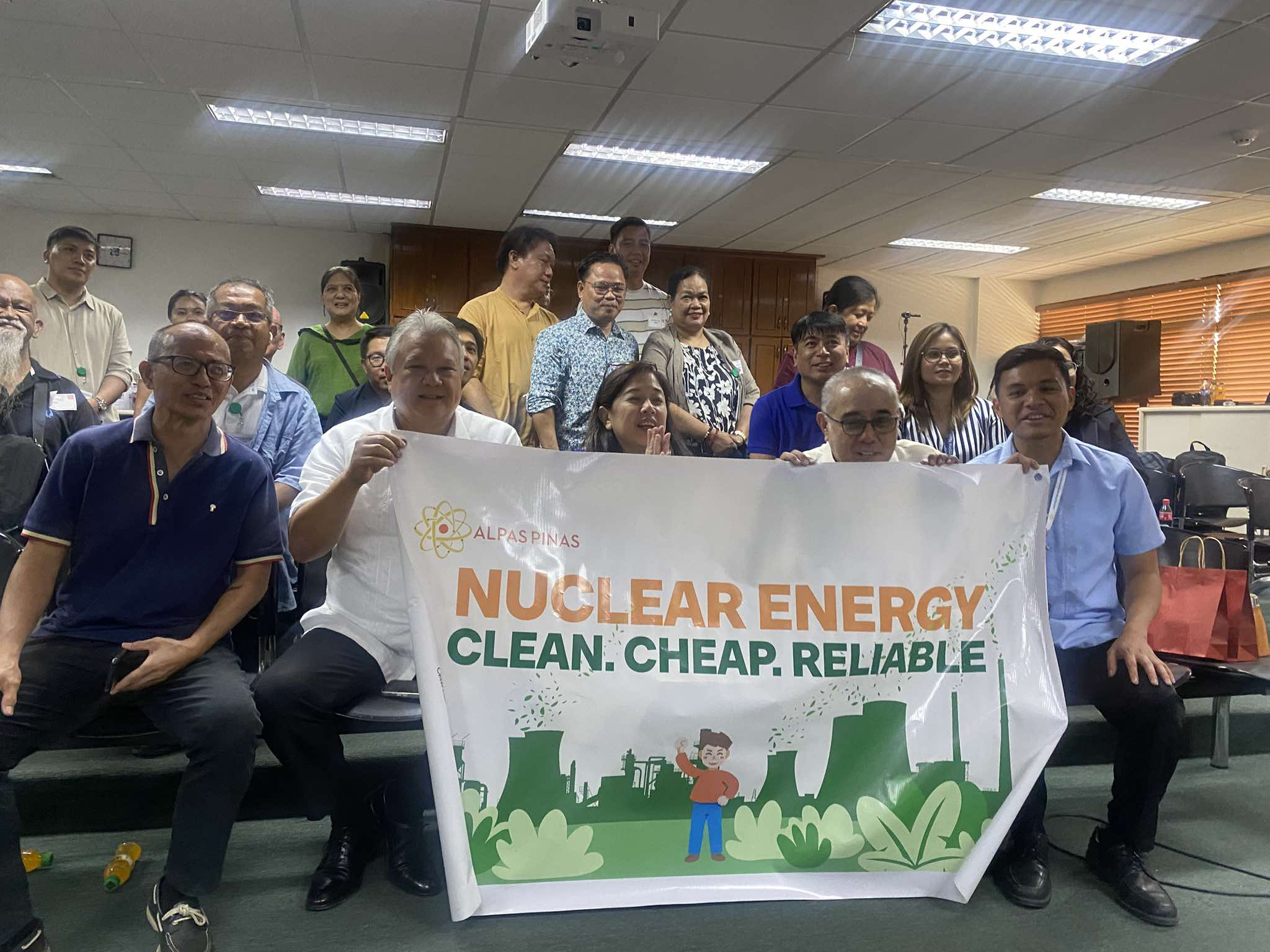

Nuclear energy advocate Alpas Pilipinas hopes to “change the narrative of the old and antiquated ideology sowing fear against the use of nuclear power and instead wants to focus on the positive impact of the technology for the Filipino people and the country’s economy.
In a pivotal move that could transform the Philippines’ energy future, the Manila Electric Company (Meralco) has launched its Nuclear Energy Strategic Transition (NEST) program. The initiative is drawing widespread support from key lawmakers, scientists, and advocacy groups, who hail it as a long-overdue game changer.
Spearheaded by Meralco chairman and CEO Manuel V. Pangilinan, the NEST program aims to incorporate nuclear energy into the country’s energy mix, offering a sustainable, long-term, and low-carbon solution to the Philippines’ growing electricity demands.
The program received resounding support during the Giga Summit 2025: The Fusion of Power and Intelligence, hosted by the Meralco Power Academy. The event brought together industry leaders, policymakers, and experts to explore innovative approaches to powering the nation.
A vision for a stronger, cleaner Philippines
Among the most vocal supporters of Meralco’s nuclear initiative is Pangasinan 2nd District Representative Mark O. Cojuangco, a longtime advocate of nuclear energy. Cojuangco praised Meralco’s bold step, especially the potential revival of the long-dormant Bataan Nuclear Power Plant (BNPP).
“Tama sila—Meralco is right,” Cojuangco said. “It’s about time we embrace nuclear power. I commend Manny Pangilinan and Meralco for pushing this forward. If we had activated the BNPP in 1986, our economic growth would have taken a different upward path.”
According to Cojuangco, the country may have lost at least 1% of GDP growth yearly since the BNPP was mothballed. A study by the Asian Development Bank supports this, citing the energy crisis from 1989 to 1993, which resulted in a 6% GDP decline and a $7.94 billion loss in potential income. Other estimates peg the economic cost of the BNPP’s non-operation at over $13 billion.
Meralco’s influence sparks momentum
Dr. Carlo Arcilla, Director of the Philippine Nuclear Research Institute (PNRI), echoed Cojuangco’s sentiments. He emphasized that Meralco’s participation in the nuclear transition is a game-changing signal to the rest of the energy sector.
“This is no longer a fringe conversation,” Arcilla said. “With Meralco stepping up, nuclear power becomes a serious part of the mainstream energy dialogue. And let’s be honest—coal continues to dominate because some oligarchs prefer it, despite its high cost and heavy contribution to global warming.”
Arcilla added that nuclear power, unlike coal, emits nearly zero greenhouse gases, making it one of the cleanest energy sources available.
Climate crisis underscores urgency
The Philippines remains highly vulnerable to climate change, with fossil fuels still accounting for 78% of the country’s electricity supply. The environmental consequences are becoming harder to ignore. In 2024 alone, the country endured six typhoons in under a month, including the devastating Super Typhoon Pepito, which displaced over 200,000 Filipinos.
Worse yet, 2024 was the hottest year on record, with extreme heat prompting class suspensions in Metro Manila as early as March 2025. Climate experts warn that these conditions are no longer anomalies—they’re becoming the norm.
In this context, the push for nuclear energy is gaining traction as an economic imperative and a climate solution.
Advocates push for cleaner, cheaper, healthier energy
Leading the grassroots charge is Alpas Pinas, a non-profit organization advocating for clean, affordable, and reliable energy. Its lead convenor, Gayle Certeza, underscored the everyday benefits of nuclear power:
“Nuclear energy isn’t just clean—it’s cost-effective. Lower power costs mean families have more resources for essentials. And as air quality improves, we’re also investing in the respiratory health of our fellow Filipinos.”
Cojuangco reinforced the case for nuclear energy as both an environmental and economic necessity.
“Coal must be burned to generate power, which releases huge emissions. In contrast, nuclear power produces next to none. This is the path forward if we want energy security and environmental responsibility.”
A turning point for Philippine energy
Meralco’s NEST program is a bold leap into a cleaner, more secure energy future for the Philippines. With mounting climate pressures and a growing consensus among experts and policymakers, the nuclear option is no longer a distant dream—it is fast becoming a national priority.
As Earth Day 2025 reminded us, the time to act is now. With Meralco’s leadership, the country may finally be ready to make that critical shift toward a future that is not only brighter but also cleaner, safer, and more resilient.