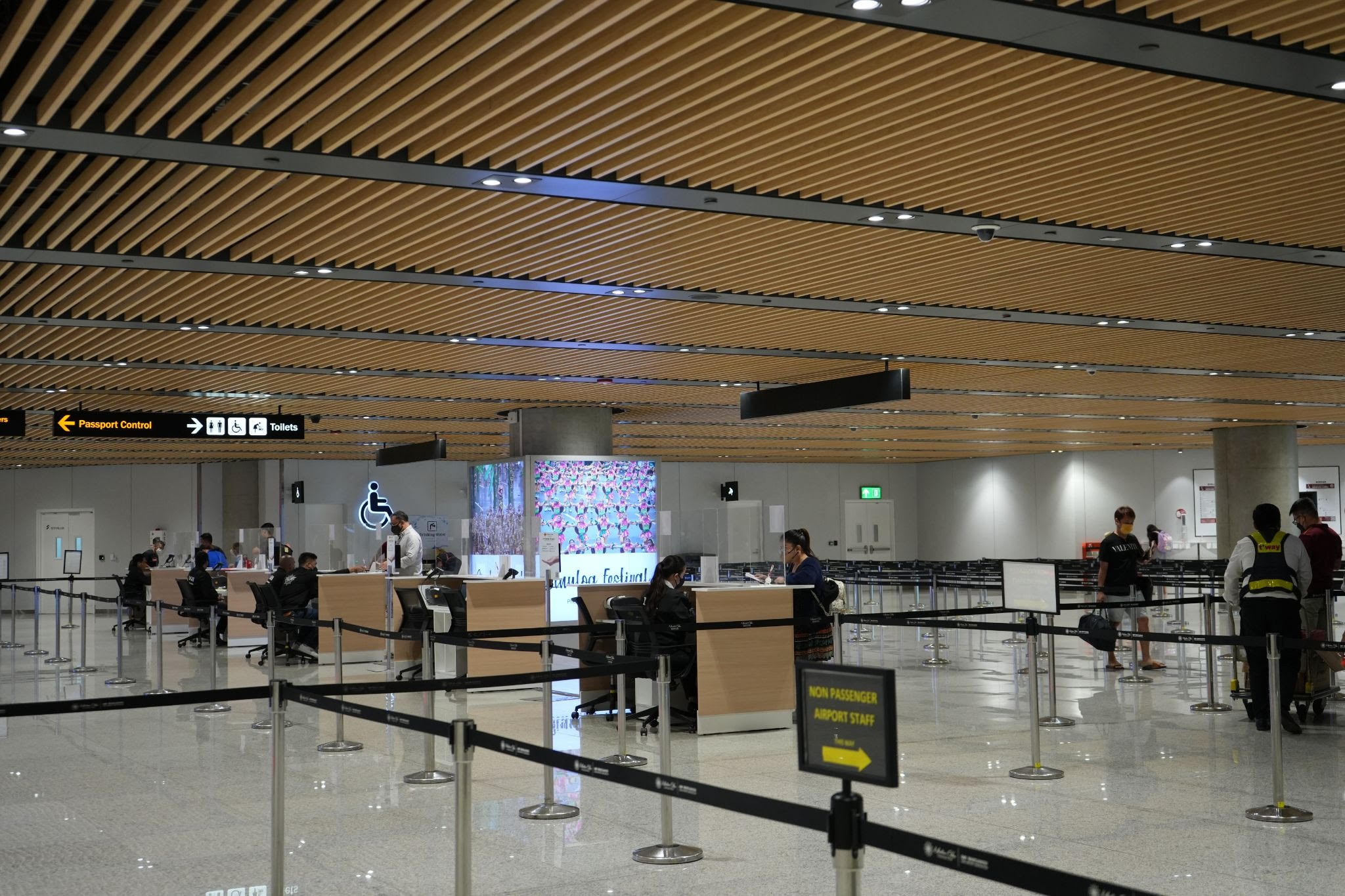

Mactan-Cebu International Airport is reinforcing its position as the country’s leading gateway outside Metro Manila, spotlighting its expanded connectivity across the Visayas and Mindanao as the Philippines ushers in visa-free entry for Chinese nationals beginning 2026.
The renewed focus on MCIA comes on the heels of the Philippine government’s announcement allowing Chinese travelers visa-free access for up to 14 days for tourism and business purposes through select airports, including Cebu. The policy is expected to inject fresh momentum into inbound travel, with MCIA poised to absorb and distribute a growing volume of international arrivals beyond traditional entry points.
As the busiest airport outside the capital, MCIA has steadily evolved into a strategic hub for travelers seeking seamless onward connections to key domestic destinations. With the new visa arrangement in place, Chinese visitors arriving in Cebu can already tap into a robust network of direct domestic flights and integrated transfer programs designed to simplify movement across the archipelago.
Central to this effort is CEB Connects, MCIA’s dedicated air-to-air transfer service, which cuts connection times to as little as 60 minutes for international flights and 35 minutes for domestic transfers. The streamlined process allows travelers to move swiftly from arrival to departure, reducing friction and enabling quicker access to island destinations.
Complementing this is CEB+, the airport’s upcoming airport-to-seaport connectivity program, which will soon allow passengers to combine air and sea travel for easy access to nearby islands once officially launched.
“Improving connectivity allows travelers arriving in Cebu to move more efficiently to other parts of the country, whether by air or sea. These initiatives are designed to support tourism growth while helping distribute visitor traffic across the regions,” said Aboitiz InfraCapital Vice President and Head of Airports Rafael M. Aboitiz.
Tourism data underscores the opportunity. Of the 5.6 million tourists who visited the Philippines last year, 262,144 came from China, a number widely expected to rise following the visa-free policy.
With Cebu as an entry point, travelers can now enjoy faster access to destinations such as Bohol via high-speed ferry services, or extend their journey to Northern Mindanao through Laguindingan International Airport in Misamis Oriental.
This expanding connectivity is reshaping how foreign visitors experience the country, making it easier to combine business, leisure, and cultural exploration in a single, uninterrupted trip anchored around MCIA.
Both MCIA and Laguindingan International Airport have been operated by Aboitiz InfraCapital since October 2024 and April 2025, respectively. Together with Bohol-Panglao International Airport, they form the backbone of the AIC Airports platform, a growing network designed to strengthen national connectivity and elevate regional gateways.
Unified under a single development vision, AIC Airports is on track to collectively serve around 16 million passengers by the end of 2025, accounting for more than 20 percent of the country’s total passenger traffic. Major modernization and expansion works at Bohol-Panglao and Laguindingan are already underway, following multi-year concession agreements awarded by the government in 2024.
Beginning in 2025, AIC Airports, in coordination with the Department of Transportation and the Civil Aviation Authority of the Philippines, has rolled out further modernization initiatives aimed at enhancing passenger experience, improving operational efficiency, and positioning Philippine airports to compete on a global stage.
As Cebu welcomes a new wave of international travelers, MCIA’s growing role as a Visayas-Mindanao gateway signals a broader shift toward more balanced, region-driven tourism growth—one seamless connection at a time.