The Department of Transportation (DOTr) announced it is eyeing the first demonstration run of the Metro Manila Subway Project (MMSP) within the first quarter of 2028, signaling a major milestone for the country’s first underground railway system.
Transportation Secretary Jaime Bautista shared the updated timeline, noting that while full commercial operations for the entire 33-kilometer line are projected for 2032, the agency is working to showcase the system’s viability before the end of the current administration.
“We are looking at a demo run by the first quarter of 2028. This will allow the public to see the progress and experience the technology of our first subway,” Bautista said.
The demonstration is expected to take place on the project’s “Partial Operability” section, which includes the northern stations starting from Valenzuela City.
The DOTr has previously identified the East Valenzuela, Quirino Highway, Tandang Sora, and North Avenue stations as the initial segment for early testing and limited service.
Undersecretary for Railways Timothy John Batan explained that the demo run will serve as a technical validation of the subway’s systems, including the rolling stock (trains) and the signaling infrastructure provided by Japanese contractors.
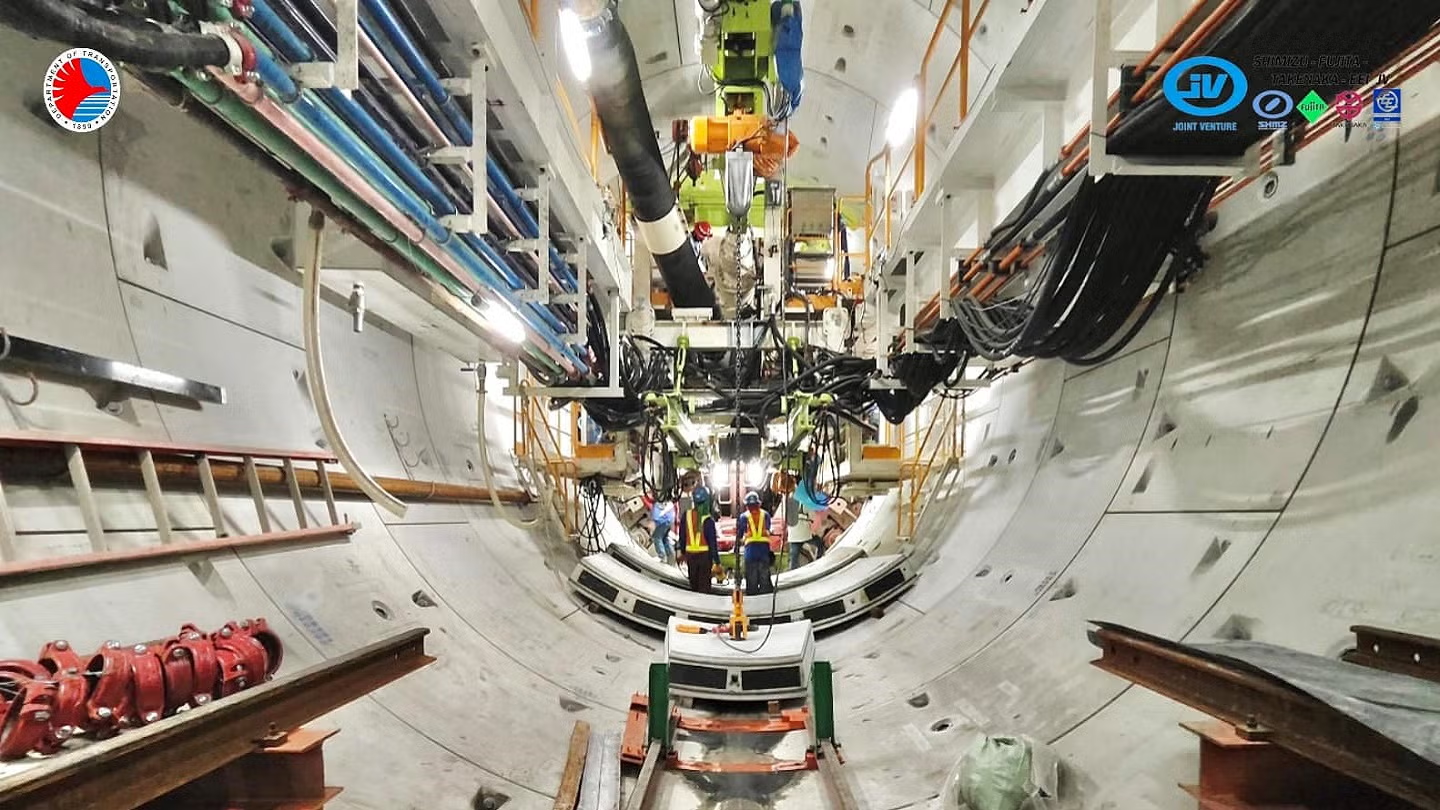
As of early 2024, the project has maintained a steady construction pace, with tunnel boring machines (TBMs) actively excavating the route between Valenzuela and Quezon City.
The DOTr also reported significant progress in right-of-way acquisitions, which had previously hampered the project’s timeline.
Once fully operational, the Metro Manila Subway will feature 17 stations connecting Valenzuela City to Bicutan, with a spur line to Ninoy Aquino International Airport (NAIA) Terminal 3.
The system is designed to reduce travel time between Quezon City and the airport from the current average of over an hour to just 35 minutes, with a capacity to serve up to 370,000 passengers daily.
The P488-billion project is funded through official development assistance (ODA) from the Japan International Cooperation Agency (JICA).