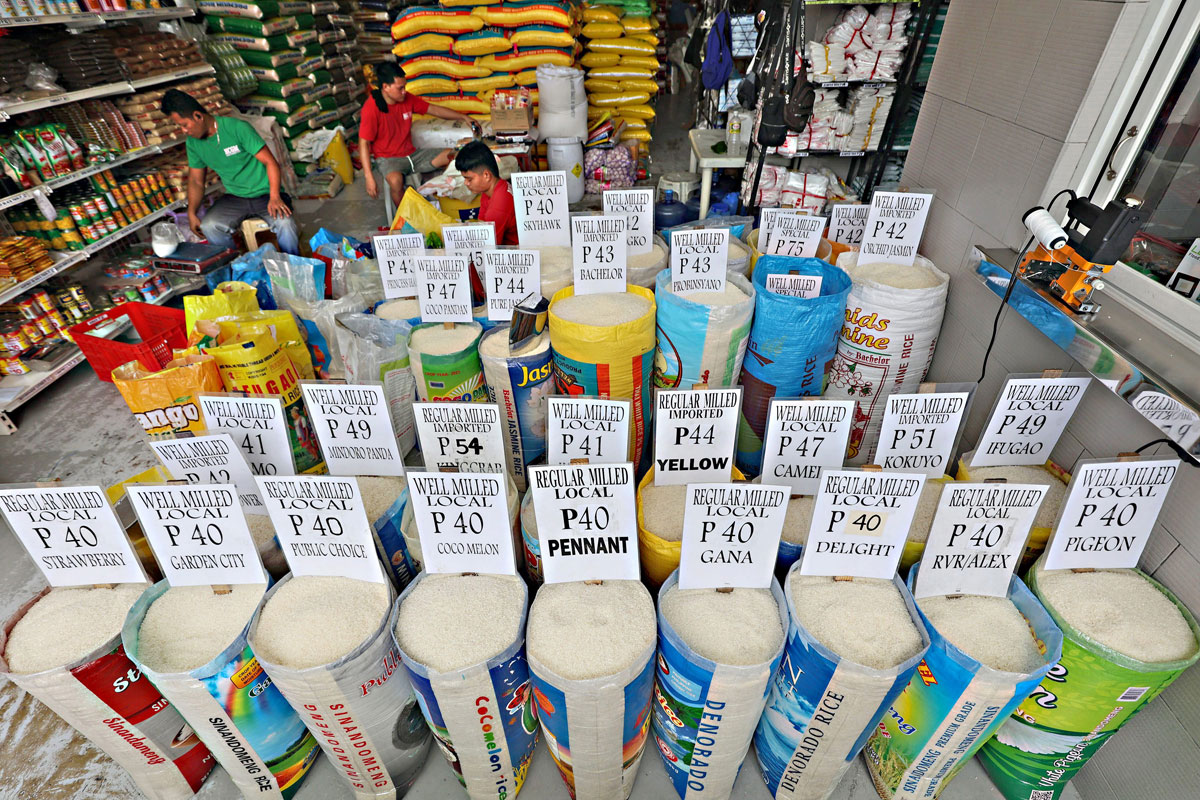

President Ferdinand “Bongbong” Marcos Jr. is betting big on affordable rice as a key to food security and public welfare, announcing the nationwide rollout of the government’s P20 per kilo rice initiative during his fourth State of the Nation Address (SONA) on Monday.
Backed by a massive P113 billion budget, the program will extend the availability of low-cost rice to hundreds of KADIWA centers across the country. Marcos said the government is ready to scale the program from pilot areas to national implementation, with the goal of helping vulnerable sectors cope with rising food costs.
“KADIWA stores will soon offer P20 rice nationwide,” Marcos said, listing provinces like Pangasinan, Cavite, Occidental Mindoro, Cebu, Bacolod, Guimaras, Siquijor, and Davao del Sur as current beneficiaries. “With the Department of Agriculture’s programs getting a P113-billion boost, we’re expanding this effort to every corner of the country.”
Currently, the discounted rice is accessible only to selected groups — including senior citizens, solo parents, persons with disabilities (PWDs), and beneficiaries of the 4Ps cash assistance program. With the expanded rollout, millions more are expected to benefit from what the administration sees as a major tool against hunger and inflation.
But the plan has hit a nerve among rice traders and middlemen.
Farmers across various provinces have raised red flags, saying the program is being weaponized by unscrupulous traders to force palay (unhusked rice) prices downward, under the pretense that retail prices must remain low. Some have warned that this could discourage production and harm long-term food security.
Marcos did not mince words in response to such reports. “To those manipulating rice prices and exploiting this program to shortchange our farmers — we will hunt you down,” he said in Filipino. “What you’re doing is economic sabotage, and we won’t tolerate it.”
Agriculture groups have cautiously welcomed the program’s intent, but urged the government to implement parallel support systems for farmers, such as better irrigation, post-harvest facilities, and fair market oversight.
Critics have also questioned the sustainability of the P20 rice initiative, saying it could lead to market distortions if not handled carefully. Government officials, however, insist that the plan is being calibrated to balance affordability for consumers and fairness to producers.
As Marcos doubles down on his promise to lower rice prices — a campaign pledge that resonated with millions — all eyes are now on how this ambitious subsidy-driven push will play out across a complex and often volatile agricultural supply chain.
Whether it becomes a breakthrough or a burden will depend on what happens beyond the rollout — especially in the fields where farmers are still fighting for fair value.