
(Photo courtesy of PCO)
MANILA – President Ferdinand Marcos Jr. pursued a series of government initiatives this week focused on youth development, education, public accountability, economic growth, agricultural productivity, water security, and the welfare of overseas Filipino workers (OFWs).
Marcos began the week by joining Filipino tennis star Alex Eala during her homecoming celebration in Pasig City on Tuesday, encouraging young Filipinos to participate in sports and develop their athletic potential.
The President emphasized the importance of reintegrating sports into school programs to provide students with more opportunities to discover and hone their talents.
On Wednesday, Marcos led the Philippine Multisectoral Nutrition Project (PMNP) Alagang Pinas Summit 2026 in Clark, Pampanga, where he reaffirmed the administration’s commitment to combating child malnutrition, particularly during the first 1,000 days of life.
He called for stronger collaboration between national and local governments to sustain nutrition interventions beyond the completion of the four-year program.
As of September 30, the PMNP had reached 6.17 million beneficiaries across 245 participating municipalities, with approximately 549,000 children under five years old monitored and served.
Tourism investments, agricultural development
On Thursday, Marcos welcomed the reopening of Mandarin Oriental Makati, describing the return of the international luxury hotel brand as a sign of confidence in the Philippines’ economic prospects and tourism industry.
Accompanied by First Lady Liza Araneta-Marcos, the President led the ceremonial reopening of the hotel, which features 275 rooms and suites, five dining and bar outlets, event facilities, and a spa.
Marcos said the investment would generate employment and business opportunities while showcasing Filipino craftsmanship, culture, and hospitality to domestic and international visitors.
The President also witnessed the signing of a memorandum of understanding for a public-private partnership aimed at planting 10 million coconut trees in Mindanao by 2030, benefiting approximately 100,000 smallholder farmers.
The initiative brings together the Philippine Coconut Authority, Metro Pacific Agro Ventures Inc., Vita Coco Community Foundation, Century Pacific Food Inc., and HOPE.
Once the trees become productive, the project is projected to generate an additional 400 million coconuts annually and provide participating farmers with supplementary income ranging from Php 30,000 to Php 65,000 per year for approximately 50 years.
Marcos said the partnership would help revitalize the coconut industry, strengthen food security, increase agricultural productivity, and improve farmers’ livelihoods.
Nearly 29 million coconut trees had already been planted as of October under the government’s ongoing replanting program, which targets 100 million trees.
Strengthening governance and public accountability
Marcos also administered the oaths of office to newly appointed officials of key government institutions.
On Tuesday, he swore in Commission on Audit (COA) Chairperson Douglas Michael Mallillin and Maharlika Investment Corporation (MIC) President and Chief Executive Officer Ma. Angela Ignacio during separate ceremonies at Malacañang Palace.
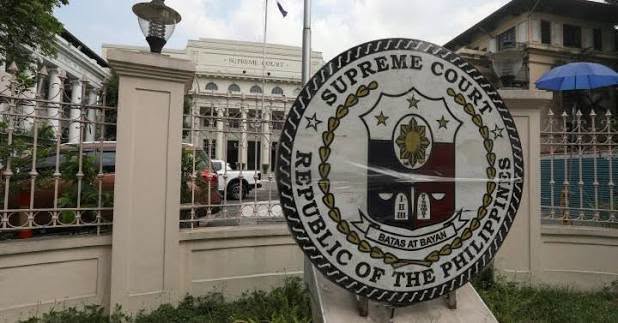
On Thursday, the President administered the oaths of Supreme Court Associate Justice Gamaliel Cordoba and Deputy Ombudsman for Luzon Nicholas Felix Ty.
Supporting military personnel
Marcos reaffirmed his commitment to the welfare and professional development of military personnel during the annual traditional boodle fight with the Armed Forces of the Philippines Council of Sergeants at Camp Aguinaldo in Quezon City.
The gathering marked the council’s 57th anniversary and provided an opportunity for the President to hear the concerns of senior enlisted personnel.
Marcos recognized the important role of non-commissioned officers (NCOs) in maintaining military discipline, operational effectiveness, and coordination between senior officers and enlisted personnel.
He also directed the immediate completion of the NCO Development Center to strengthen professional training and institutional capabilities within the military.
Expanding water security in Iloilo
On Friday, Marcos led the groundbreaking of the Php 2.2-billion Metro Iloilo Bulk Water Supply Project in Santa Barbara, Iloilo, as part of government preparations to mitigate the potential effects of a strong El Niño phenomenon.
The project, a partnership between the National Irrigation Administration (NIA) and the Metro Iloilo Water District (MIWD), will utilize 86 million liters per day of excess raw water from the Jalaur River Multipurpose Project Stage II.
Once completed, the facility is expected to increase water supply capacity from 50 million to 136 million liters per day and expand household connections from 52,000 to 150,000 by 2029.
Marcos directed concerned agencies to accelerate the project’s implementation to provide a more reliable water supply to Iloilo City and the municipalities of Cabatuan, Leganes, Maasin, Oton, Pavia, San Miguel, and Santa Barbara.
He also emphasized the potential of irrigation dams to supplement bulk water supply systems, particularly in underserved communities.
Modernizing public education
During his visit to A. Mabini Elementary School in Iloilo City, Marcos led the distribution of 300 laptops to teachers from 22 public schools under the Department of Education’s Computerization Program.
The President underscored the importance of improving teachers’ digital literacy and providing modern technological resources to enhance classroom instruction and learning outcomes.
He also monitored the implementation of the Philippine Health Insurance Corporation’s Yaman ng Kalusugan Program (YAKAP), which provides free medical consultations, selected laboratory tests, and medicines to teachers, learners, and school personnel.
Bringing government services closer to OFWs
Marcos concluded his engagements in Iloilo City by inspecting and inaugurating facilities dedicated to the welfare of overseas Filipino workers and seafarers.
The facilities are intended to improve access to government assistance in Western Visayas, reducing the need for OFWs and their families to travel to Metro Manila to obtain essential services.
Available services include medical and legal assistance, educational scholarships, livelihood programs, and other welfare support.
From January to October, the Overseas Workers Welfare Administration (OWWA) recorded 63,839 public assistance contacts and processed 3,782 memberships.
The President’s engagements throughout the week covered a range of government priorities, from addressing immediate public service needs to pursuing long-term investments in education, agriculture, infrastructure, and economic development.