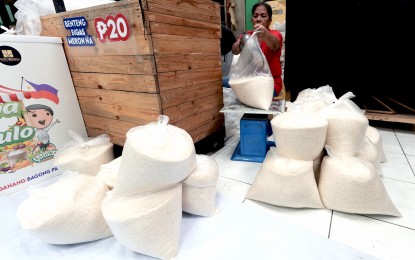
The Marcos administration has earmarked ₱256.5 billion for the agriculture sector under the proposed 2026 National Expenditure Program (NEP), with ₱10 billion set aside for the Department of Agriculture’s (DA) “Rice for All” initiative to expand access to affordable rice.
President Ferdinand R. Marcos Jr. said the allocation will “strengthen our Agriculture sector in 2026,” highlighting ₱153.9 billion for the DA and its attached agencies, ₱45.1 billion for the National Irrigation Administration (NIA), and ₱17.4 billion for the Department of Agrarian Reform.
According to the Department of Budget and Management (DBM), the proposed funding supports the Philippine Development Plan’s goal of modernizing agriculture and securing food supply amid inflation and climate challenges.
Rice Programs
The ₱10-billion “Rice for All” program, including the Benteng Bigas Meron Na (BBM Na) initiative, will expand low-cost rice distribution through Kadiwa outlets and public markets. Supplies may come from farmers’ cooperatives, the National Food Authority (NFA), NIA, local suppliers, or “strategic importation if necessary.”
An additional ₱11.2 billion is allocated for rice buffer stocking. Of this, ₱9 billion will procure 300,000 metric tons of palay for emergencies, while ₱2.177 billion covers milling, transport, and distribution.
The National Rice Program’s budget will rise to ₱29.9 billion, a 38% jump from 2025, while the Rice Competitiveness Enhancement Fund remains at ₱30 billion for mechanization, seeds, and productivity support.
Other Farm Programs
Key allocations include ₱3.8 billion for livestock, ₱9.3 billion for fisheries, ₱1 billion for sugarcane, ₱6.7 billion for corn, ₱2.1 billion for high-value crops, ₱1 billion for organic agriculture, and ₱391 million for urban/peri-urban farming.
To improve market access, ₱16 billion will fund 1,067 km of farm-to-market roads, while ₱2.1 billion is set for an agricultural food hub in Clark, Pampanga. The Philippine Rural Development Project Scale-Up will receive ₱9.98 billion for post-harvest and cold chain infrastructure, and the Kadiwa ni Ani at Kita program is allotted ₱250 million.
Marcos has repeatedly emphasized that rice access and price stability are central to managing inflation and driving economic recovery, with bigger agriculture investments seen as key to cushioning global supply shocks and supporting rural livelihoods.