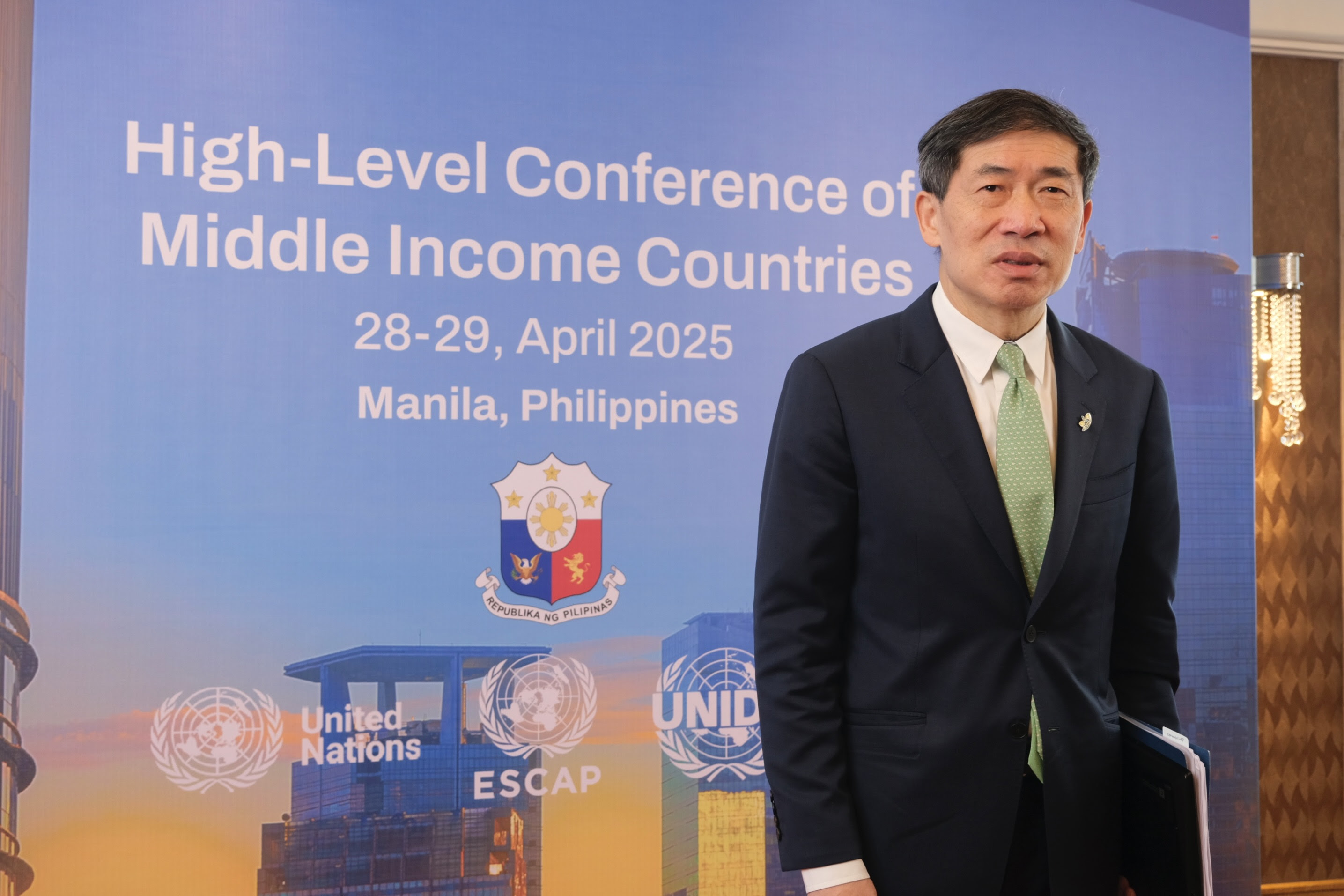

A new chapter in global development was set in motion as the Philippines hosted the High-Level Conference of Middle-Income Countries (HLC-MICs), a landmark event that brought together leaders from 24 nations and international organizations.
Spearheaded by the Like-Minded Group in support of Middle-Income Countries (LMG-MICs), the two-day conference culminated in the adoption of the Makati Declaration, a bold call to reimagine global development systems to better serve MICs.
More than just a convening of policymakers, the event served as a strategic platform to unlock the full potential of MICs — nations that house over 70% of the world’s population and generate one-third of global GDP, yet often remain overlooked in global financing and policy structures.
At the heart of the conference was the transition of LMG-MICs chairmanship from Morocco to the Philippines — a symbolic and strategic handover underscoring the country’s emerging leadership in regional and global development discourse.
Elevating MICs on the global stage
United Nations Under-Secretary-General and UNDP Associate Administrator Hao Liang Xu, who attended the conference, emphasized the central role MICs play in tackling today’s most urgent global issues, from climate change to digital transformation.
“Middle-Income Countries are not peripheral players. They are drivers of innovation, solutions, and resilience. This conference showed the world what’s possible when MICs are empowered through partnership and vision,” Xu stated.
The Makati Declaration lays the groundwork for a Strategic Program of Action, with a focus on building inclusive and sustainable development models that reflect the diverse realities of MICs. Key priorities identified include:
- Expanding access to equitable and innovative financing
- Reforming debt sustainability and eligibility frameworks
- Investing in digital public infrastructure and emerging technologies
- Accelerating climate resilience and adaptation efforts
- Promoting South-South cooperation and knowledge exchange
Tangible benefits and actionable commitments
The conference served as a catalyst for new partnerships, funding strategies, and policy commitments. It signaled a shift away from income-only metrics in global development frameworks and toward a more comprehensive approach that values resilience, innovation, and long-term capacity-building.
Xu reiterated UNDP’s commitment to supporting MICs through tailored, in-country strategies, including governance reform, access to concessional finance, and the responsible deployment of artificial intelligence and digital tools.
“We are not here to simply acknowledge the challenges,” Xu said. “We are here to co-create solutions that enable MICs to lead in a new era of global development.”
Strengthening the Philippines’ global role
Xu concluded his visit with high-level discussions with Philippine government officials, reaffirming UNDP’s support for the country’s leadership within the LMG-MICs. The Philippines is now positioned to play a central role in fostering South-South solidarity and spearheading inclusive policy dialogues.
With nearly six decades of partnership in the Philippines, UNDP continues to support the country’s pursuit of the Sustainable Development Goals through democratic governance, natural resource management, climate action, and peacebuilding.
A launchpad for collective action
Far from being a symbolic gesture, the Makati Declaration is a launchpad for concrete action. It marks a renewed commitment from the international community to reshape development cooperation in a way that acknowledges the evolving needs and strengths of MICs.
“The Makati Declaration is our shared compass,” Xu said in closing. “It’s a starting point for a new compact — one that centers inclusion, ambition, and long-term development for middle-income countries.”