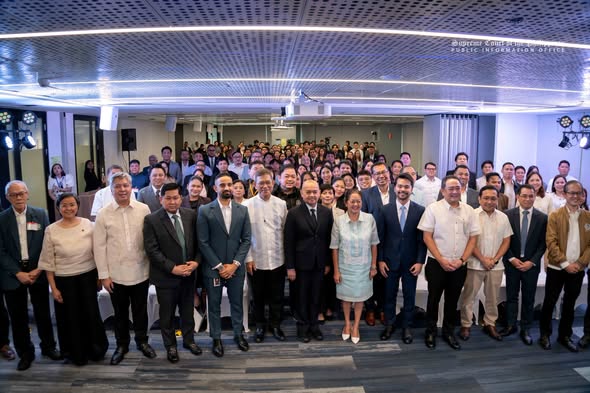

Supreme Court Senior Associate Justice Marvic Leonen emphasized the importance of using technology to make legal and judicial services more accessible, particularly to Filipinos in remote and underserved communities.
Speaking at the eNotary and Digital Trust: Twala Legal Tech Forum 2026 in Taguig City on October 19, Leonen said digital innovation must promote fairness, inclusion, and accountability while addressing barriers to justice.
Leonen, who chairs the Supreme Court committees on Access to Justice and Underserved Areas and Human-Centered Augmented Intelligence in the Judiciary, highlighted ongoing efforts to modernize court procedures through digital solutions.
He cited the Remote Hearing and Equal Access to Law and Justice (REAL Justice) Program launched in Tawi-Tawi in 2024 as an example of how technology can bring judicial services closer to geographically isolated communities.
According to Leonen, digital platforms can reduce the financial and logistical burdens of seeking legal assistance by allowing remote hearings, electronic filing of pleadings, and online notarization of documents.
He noted that these innovations could help individuals access legal services without traveling long distances or sacrificing a day’s work.
The forum, organized by Filipino legal technology company Twala, marked the first day of electronic notarization in the Philippines. Twala is a Supreme Court-accredited electronic notarization facility and an official partner of the Integrated Bar of the Philippines.
Leonen said the Judiciary’s modernization efforts align with the Strategic Plan for Judicial Innovations 2022–2027, which prioritizes improving public access to justice.
He stressed, however, that technological advancement alone is insufficient, underscoring the need for legal empowerment programs that help individuals and communities understand and exercise their rights.
The Supreme Court continues to pursue digital reforms aimed at making judicial processes more efficient, inclusive, and accessible to all Filipinos.