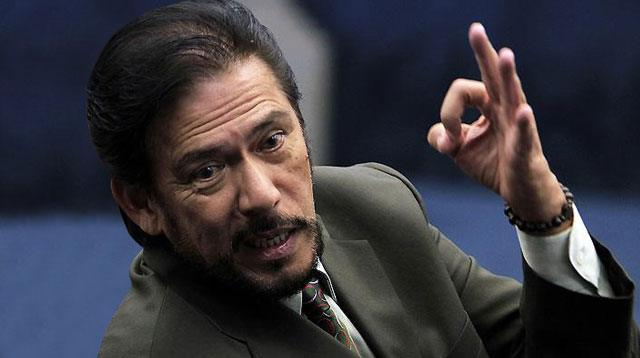

A group of lawyers has formally asked the Supreme Court of the Philippines to cite Senate President Vicente “Tito” Sotto III in indirect contempt, escalating tensions between members of the legal community and the veteran lawmaker over his public criticism of the Court’s ruling on the impeachment case against Sara Duterte.
The petitioners, led by lawyer Ferdinand Topacio, argue that Sotto’s recent statements crossed the line from protected political commentary into remarks that allegedly undermine public trust in the judiciary. According to Topacio, the Senate President’s pronouncements risk eroding institutional credibility at a time when the High Court’s authority is under intense public scrutiny.
The controversy stems from the Court’s en banc decision to deny with finality the motion for reconsideration filed by the House of Representatives. The motion sought to reverse the tribunal’s earlier ruling declaring the Articles of Impeachment against Duterte unconstitutional. With the denial, the High Court effectively closed the door on further reconsideration.
In the wake of that decision, Sotto publicly criticized the ruling, asserting that the Constitution had been “amended unconstitutionally” through what he described as judicial overreach. He further remarked that when a law is clear, there is nothing to interpret — “as any first-year law student knows” — a line that petitioners say was a veiled swipe at the justices’ competence.
Topacio maintained that the petition is not intended to silence Sotto but to draw a boundary between permissible dissent and statements that may fall within the ambit of contempt. “He’s free to express his views,” Topacio said, “as long as these do not violate the Rules on Contempt and the standards governing respect for the Court.”
Other petitioners — Manuelito Luna, Harold Respicio, Mary Catherine Diaz Binag, and Virgilio Garcia — echoed the sentiment, with Luna describing some of Sotto’s online remarks as degrading and disrespectful to the judiciary’s integrity.
Respicio pointed to historical precedent, citing a 1949 case in which Sotto’s grandfather, then a senator, was convicted of indirect contempt after criticizing and allegedly intimidating the High Court over a ruling. According to Respicio, the circumstances bear striking similarities, strengthening their confidence in the current petition.
The lawyers also contend that Sotto’s remarks are not shielded by parliamentary immunity, arguing that the privilege does not extend to statements made outside legislative proceedings. In addition to the contempt filing, they signaled plans to pursue an ethics complaint against the Senate President.
Former Negros Oriental Representative Jacinto Paras was present during the filing to express support, though he is not listed as a complainant.
As of posting, Sotto has yet to issue a formal response. The unfolding dispute places the spotlight once more on the delicate balance between free expression, legislative privilege, and judicial authority — a constitutional tension that has resurfaced in one of the country’s most politically charged legal battles in recent years.