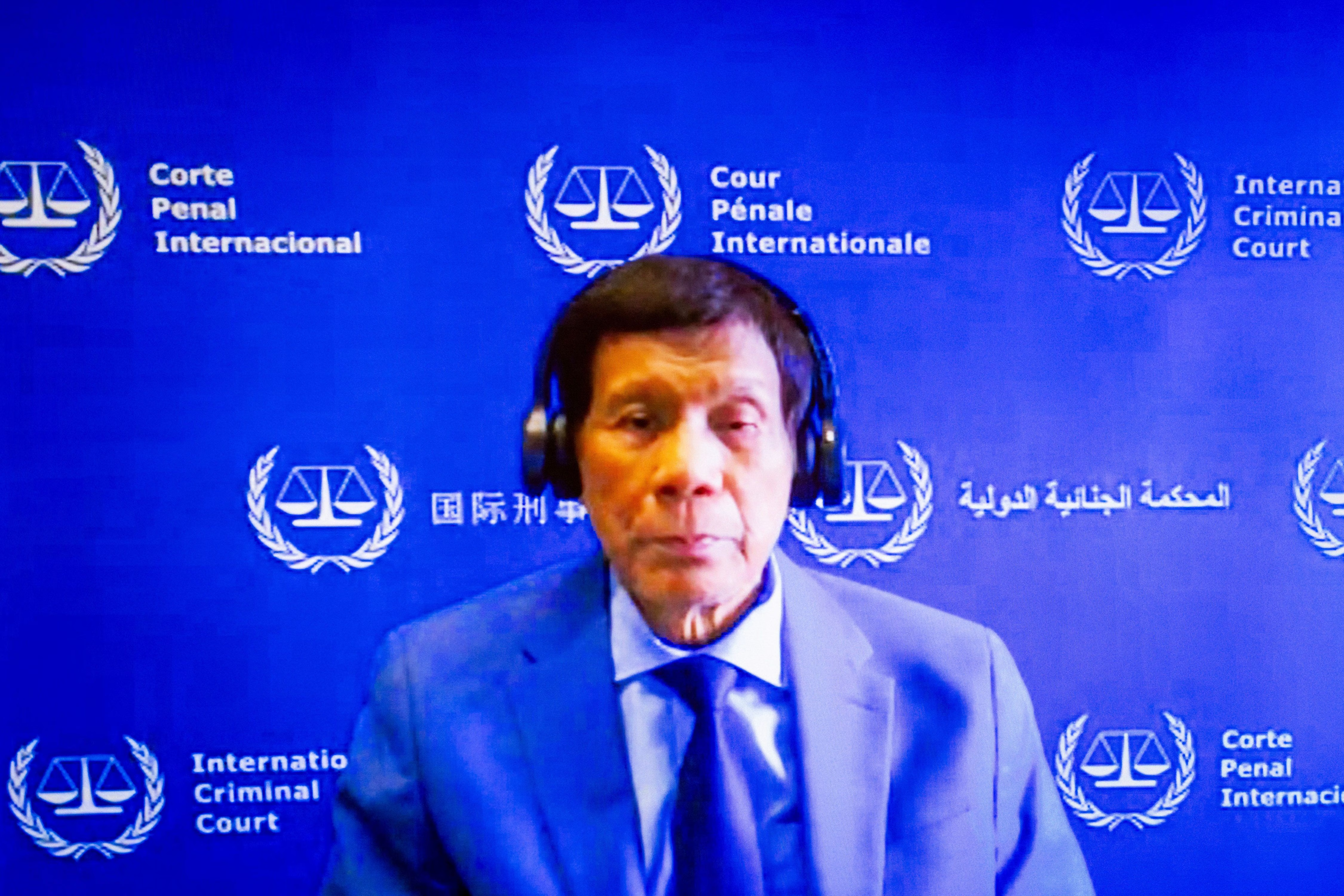
Lawyers representing families of victims killed during former President Rodrigo Duterte’s violent anti-drug campaign are set to oppose his motion for provisional release from the International Criminal Court (ICC), according to human rights lawyer Neri Colmenares.
Colmenares stated that Duterte’s release would increase the risk of harassment and attacks on victims and would facilitate his ability to evade ICC jurisdiction. “The victims and their legal representatives may still assert their right to submit their opposition to Duterte’s application,” he noted.
The legal team plans to argue that granting provisional release would violate the Rome Statute’s requirement to ensure that Duterte appears at trial and does not obstruct or endanger the investigation or court proceedings. Colmenares highlighted Duterte’s history of attacking the ICC, its judges, and its prosecutor, asserting that there is no evidence to suggest he is now willing to comply with the Court’s orders.
Duterte’s legal team is seeking his provisional release to an undisclosed country, citing his health, advanced age, and diminished power since leaving office. However, the National Union of People’s Lawyers has expressed concerns, stating that while interim release is a right of the accused, victims believe he poses a flight risk and a threat to the safety of witnesses and evidence, especially as he is running for mayor of Davao City.
Colmenares emphasized that Duterte has the resources and support network to facilitate an escape, given that his family remains influential. He pointed out that victims and their lawyers have faced attacks since Duterte’s arrest and transfer to The Hague in March. “Given the long history of threats, harassment, and even killings targeting victims, witnesses, and human rights lawyers, we assert that Duterte’s release will escalate these attacks,” he warned.
Despite claims from Duterte’s lawyer, Nicholas Kaufman, that ICC prosecutors have not objected to the motion, Colmenares stated that the application still requires debate.
In a separate statement, the rights alliance Karapatan also opposed Duterte’s motion, asserting that it aims to evade accountability. “Granting such motion would send a dangerous signal that fascists like him are afforded special treatment,” they stated, adding that victims, their families, and witnesses would face a heightened risk of reprisal if he is released, as “the political infrastructure of the Dutertes remain in place.”