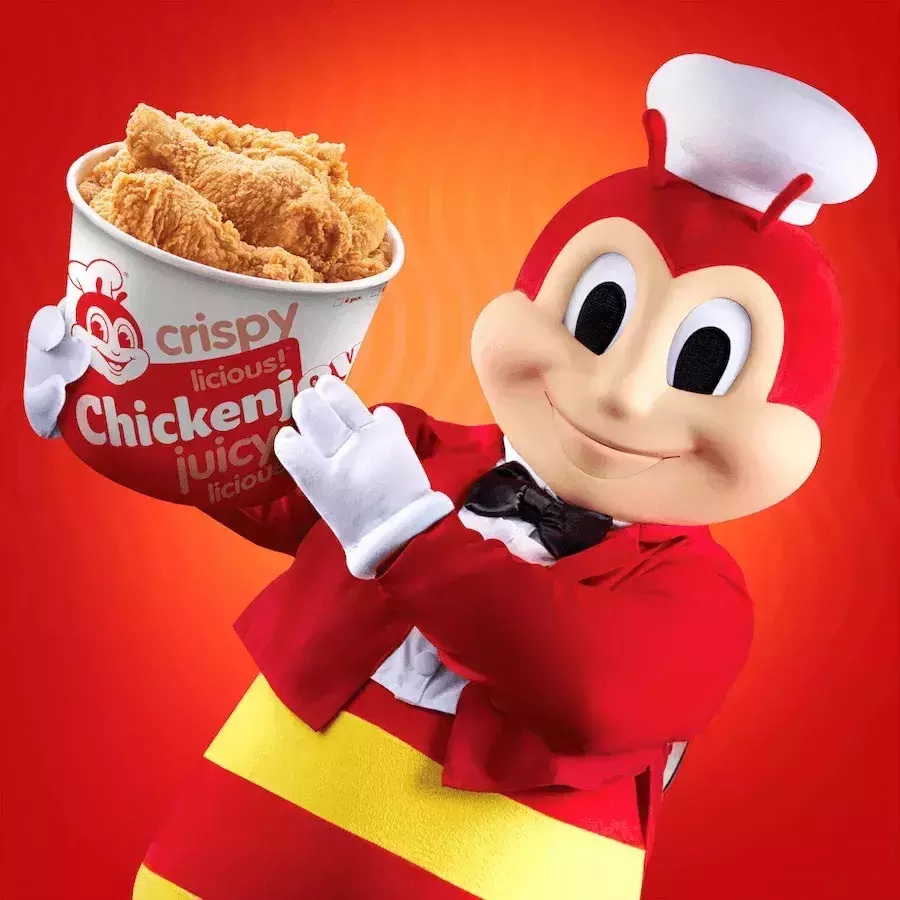

Jollibee Foods Corporation is serving up more than Chickenjoy. The Filipino fast-food giant just delivered its highest quarterly profit ever—and its overseas brands are emerging as the real growth monsters.
Jollibee Foods Corporation (JFC) posted a record ₱3.4 billion in net income after tax in the second quarter of 2026, up 5.7% year on year, as stronger sales, improving margins and explosive international growth powered the group past the cost pressures that weighed on its first-quarter performance.
And the numbers suggest Jollibee’s global expansion strategy is beginning to pay off in a much bigger way.
System-wide sales jumped 14.2% from a year earlier, while consolidated revenues climbed 10.7%, reflecting continued demand across the group’s sprawling portfolio of restaurant brands.
But the real eye-popper came from outside the Philippines.
Jollibee’s overseas business is on fire
International system-wide sales surged 25.4% during the quarter, dramatically outpacing the 5.7% growth posted by the Philippine business.
Among the biggest winners were Highlands Coffee, which soared 46.7%, Compose Coffee at 39.7%, Philippine brands in EMEAA at 25.3%, Tim Ho Wan at 23%, Jollibee North America at 21.6%, and Milksha at 12.4%.
That performance is turning JFC into an increasingly international food empire rather than simply a Philippine fast-food company with overseas outlets.
Vietnam was particularly impressive.
Jollibee Vietnam recorded a massive 47.6% jump in system-wide sales, while same-store sales climbed 17.9% in the second quarter. The company opened 19 new stores in the country during the first half, with new locations generating payback in less than four years.
From Q1 pressure to Q2 comeback
Jollibee’s second-quarter performance also delivered another attention-grabbing turnaround.
Compared with the first quarter, consolidated revenues increased 12.2%, gross profit jumped 25.3%, operating income surged 56.1%, while net income after tax skyrocketed 130.5%.
Gross profit margin improved to 18.5% from 16.5% in Q1, while operating income margin rose to 7.2% from 5.2%.
By June alone, operating income margin had reached 9.1%, while NIAT margin climbed to 6.2%, giving the company a much stronger position heading into the second half of the year.
CEO Ernesto Tanmantiong credited the results to the strength of JFC’s brands and resilient consumer demand.
“Our second-quarter results demonstrate the continued strength of the Jollibee Group’s global brand portfolio and the resilience of consumer demand across our key markets,” Tanmantiong said.
Jollibee now has more than 10,700 stores
Just how global has Jollibee become?
The group’s worldwide network has grown to 10,767 stores, including 7,251 locations outside the Philippines and 3,516 domestically.
JFC opened 461 new stores during the first half and added another 172 outlets through its acquisition of Korean hotpot chain Shabu All Day. Around 70% of its gross new store openings were franchised.
The company is also becoming increasingly aggressive with an asset-light franchise strategy.
In China, JFC’s franchise ratio has risen to 62% from only 14% in 2016. Yonghe King is already 65% franchised and aims to reach 70% by the end of 2026, with a medium-term target of as much as 95%.
Meanwhile, Jollibee is preparing for another expansion push in Canada, where new development agreements could add 26 restaurants in British Columbia and Edmonton. If completed, the deals would nearly double its Canadian network within five years.
There’s one catch
Despite its blockbuster quarter, Jollibee isn’t getting carried away.
The company maintained its full-year system-wide sales growth target of 8% to 12% and store network growth target of 5% to 10%, but lowered its same-store sales growth guidance to 3% to 4%.
It also revised its gross new-store opening target to between 1,000 and 1,100 locations.
JFC now expects capital expenditures of ₱13 billion to ₱15 billion and operating income growth of 10% to 15%, taking into account updated expansion plans, transition costs and continuing volatility in commodity, logistics and supply-chain expenses.
The group also absorbed ₱239 million in transition-related expenses tied to store closures and lease terminations as it restructures Smashburger and Yonghe King toward predominantly franchised models.
Still, the headline is difficult to ignore: Jollibee just posted the biggest quarterly profit in its history—and much of its fastest growth is now happening thousands of kilometers away from home.
What started as a Philippine fast-food success story is increasingly looking like something much bigger: a global restaurant powerhouse with more than 10,000 stores and some of its hottest brands growing at double-digit—and in some cases nearly 50%—rates overseas.