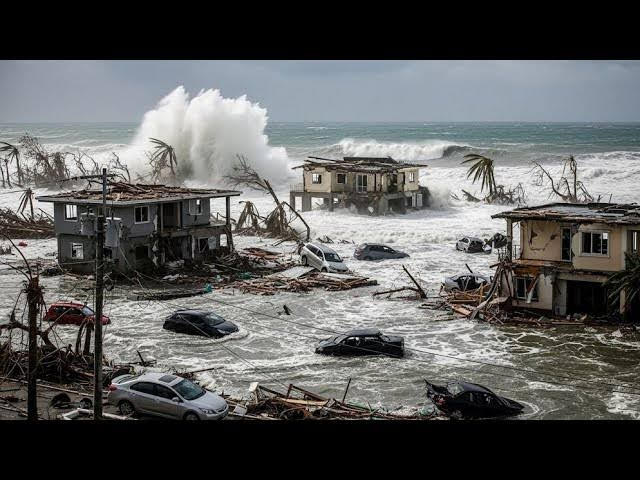

Severe weather disturbances like tropical storm Crising is said to be induced by the impacts of climate change. (Photo from YouTube)
Noting that in this time of worsening impacts of the climate crisis, when disaster risk management and resilience-building plans would benefit greatly from the formulation and establishment of more inclusive strategies, several Iloilo-based groups called for community-based disaster response to the impacts of global warming and climate change.
Just recently, the groups joined hands in launching the first-ever ‘Community Climate Response Hub (CCRH)’ along with a citizen science-led urban heat report that called for broader people participation in climate action.
According to Homeless People’s Federation Philippines Inc. (HPFPI) youth leader Naomi Alaban Basay, the CCRH aims to mobilize community-led climate change mitigation, adaptation and disaster risk preparedness and response to help build climate-resilient communities not only in Iloilo but in all provinces across the Philippines.
To guarantee it’s success, Basay added that it would be powered by a broad multisectoral coalition of locally based youth groups, civil society organizations and people’s initiatives that would foster inclusive partnerships and enabling conditions to promote their continuing growth.
She noted that with the alarming and undeniable impacts of climate change, especially at the community level, it is essential to involve communities in the solution to ensure sustainability.
“This is where the CCRH should step in by providing capacity-building initiatives and resources to empower individuals not just as recipients of aid but as active agents of change. As a youth-led, youth-centered organization, we in Homeless People’s Federation Philippines Inc. Youth Iloilo, see CCRH as aligned with our mission to mobilize and lead youth in strengthening community preparedness and resilience,” Basay pointed out.
In support, Greenpeace Philippines explained that the CCRH can act as a network of groups within a community-driven center for people-led climate-resilience and response initiatives. It will also serve as a platform and space for local action and collaboration to prepare for and respond to climate impacts.
For his part, Jerol Kim Tanaliga, another youth leader from Green Eco-Warriors, asserted that the CCRH emerges as a critical initiative in addressing the multifaceted challenges posed by the ongoing climate crisis.
“It represents a synergistic collaboration across diverse sectors, demonstrating a unified commitment to mitigating climate change impacts within urban environments and extending its influence beyond,” Tanaliga cited.
The core group behind the CCRH included Greenpeace Philippines, Greenpeace Iloilo Volunteers Local Group (GIVLG), Green Eco-Warriors, Green Forum Panay Guimaras, HPFPI, Alerto Ako E-Yusay Memorial School, CurrentShift, and Navallasca Farmers Rise Against Hunger and Malnutrition Incorporated.
According to the groups, the hubs will function as citizen-led platforms for delivering support to affected communities while facilitating the participatory identification and co-designing of initiatives toward community climate resilience, including supporting climate change adaptation (CCA), and disaster risk reduction and management (DRRM) projects.
Greenpeace Philippines likewise stated that over time, the hubs are intended to evolve into strategic platforms for aggregating community-based data and articulating policy recommendations. They will also inform and influence CCA and DRRM planning and governance at local and national levels as they have been designed as platforms for urgent calls for the government to pursue climate action and climate justice.