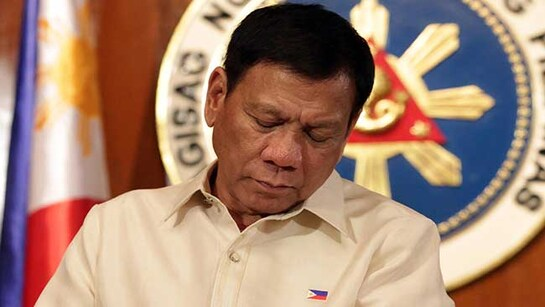

The International Criminal Court (ICC) has firmly rejected former Philippine President Rodrigo Duterte’s bid for interim release, citing serious concerns over security, logistics, and the reliability of the host country proposed by his defense team.
In a filing released Tuesday, ICC prosecutors pushed back against claims made by Duterte’s lawyer, Nicolas Kaufman, that the prosecution had not objected to the plan and that a host country had already agreed to accept the embattled ex-leader. The prosecutors clarified that “no agreement whatsoever was reached” and that Duterte’s legal team had unilaterally assumed approval where none existed.
A host country in question
The country offered by the defense as Duterte’s interim host—its name withheld from public documents—was deemed unsuitable by the prosecution on multiple fronts. In its formal opposition, the prosecution noted that the proposed nation lacks a solid record of cooperation with the ICC, raising doubts about its ability—or willingness—to enforce stringent conditions tied to interim release.
“The logistical hurdles and security risks posed by the proposed location are not only significant—they are prohibitive,” the prosecutors said.
The court is currently preparing for a confirmation of charges hearing scheduled for September 23, 2025. The prosecution emphasized that moving Duterte to a distant, less cooperative country would hinder their ability to ensure his physical presence, potentially disrupting or delaying court proceedings.
Security risks and witness intimidation
Beyond logistics, the prosecution underscored concerns that Duterte’s release could embolden efforts to intimidate witnesses and undermine the court’s credibility. The filing described the defense’s assurance that Duterte would not abscond out of embarrassment to the host country as “highly unpersuasive.”
“In fact, Mr. Duterte’s public track record—marked by openly hostile remarks toward foreign leaders—does not support the defense’s portrayal of him as deferential or respectful to host nations,” the court document read.
Legal observers and victims’ rights advocates have echoed these concerns. ICC-accredited lawyer Joel Butuyan warned that any move toward releasing Duterte—especially to a foreign location—would likely trigger fear and reluctance among potential witnesses.
“It would send a chilling message to families of victims and undermine efforts to hold perpetrators accountable,” said Butuyan.
Kristine Conti, assistant to counsel for several parties in the ICC case, also raised alarms, noting Duterte’s “enormous influence and financial power,” which she said could be used to silence or coerce witnesses if he were allowed to move freely outside detention.
ICC remains resolute
While interim release is theoretically available under the Rome Statute, it is granted under strict conditions. These include assurances regarding the individual’s behavior, ability to appear for hearings, and the host country’s capacity to guarantee compliance.
In Duterte’s case, prosecutors concluded that the proposed arrangement fell far short on all counts.
With the clock ticking toward his September hearing, the court has made clear it won’t risk the integrity of the trial for the convenience of the accused—especially one facing allegations tied to thousands of deaths under a violent anti-drug campaign.
As Duterte’s legal team scrambles for alternatives, the ICC’s message is unambiguous: accountability will not be sacrificed to expediency.