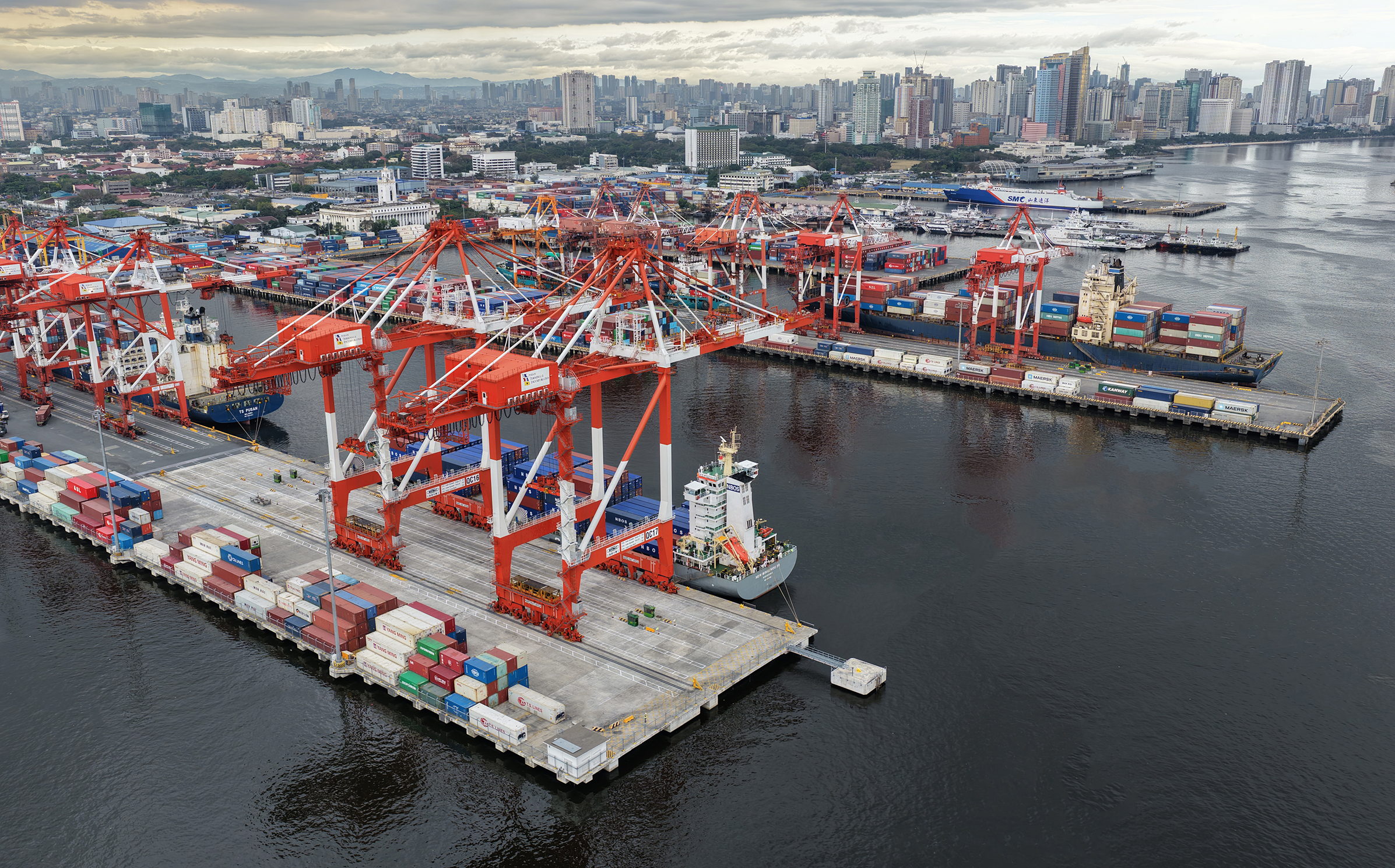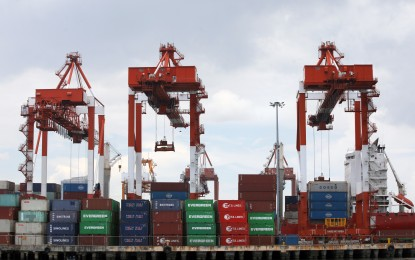

Container vans at the Manila South Harbor in this photo taken on May 8, 2025. From 5.9 percent in May, S&P Global Ratings on Tuesday (June 24) revised upwards to 6.1 percent its growth forecast for the Philippine economy this 2025, saying strong domestic demand is seen to counter the impact of the tariffs policies of the United States. (PNA photo by Yancy Lim)
Strong domestic demand and economic resilience are expected to sustain growth in several Asian economies—including the Philippines—despite global trade tensions and the lingering effects of U.S. tariff policies, S&P Global Ratings said on Tuesday.
In its latest report, the credit rating agency raised its 2025 gross domestic product (GDP) growth forecast for the Philippines to 6.1 percent, up from 5.9 percent in May. The upward revision reflects optimism over improved trade dynamics and steady local demand.
Vincent Conti, senior lead economist at S&P Global Ratings, pointed to the “sharp reduction of bilateral tariffs between the U.S. and China” as a key factor in reducing uncertainty. This shift followed a recent pause in the U.S.’s use of targeted “reciprocal” tariffs.
“These changes have eased some of the uncertainty surrounding global trade and growth,” said Conti. “However, we still anticipate global trade uncertainty to remain much higher than it was before January, which may weigh on investment activity in the Philippines.”
The Philippine economy grew by 5.4 percent in the first quarter of 2025, slightly up from 5.3 percent in the previous quarter but below the 5.9 percent growth recorded a year ago.
In April, the U.S. imposed sharply higher tariffs on select imports—particularly from China, where rates surpassed 100 percent. However, by May, Washington and Beijing agreed to scale back the increases, a move S&P described as “welcome but not decisive” in reducing global economic uncertainty.
S&P also flagged inflation and monetary policy as ongoing challenges. The agency expects Philippine inflation to stay within the government’s 2–4 percent target through 2026. For 2025, inflation is projected to average 3.2 percent, while this year’s average is forecast at 2.3 percent.
On interest rates, S&P predicts the Bangko Sentral ng Pilipinas (BSP) will lower its Reverse Repurchase (RRP) rate from the current 5.25 percent to 5 percent by the end of 2025, and further down to 4 percent by 2028.
The expected easing comes as domestic inflation slows, opening the door for the BSP to consider gradual rate cuts in the coming months.