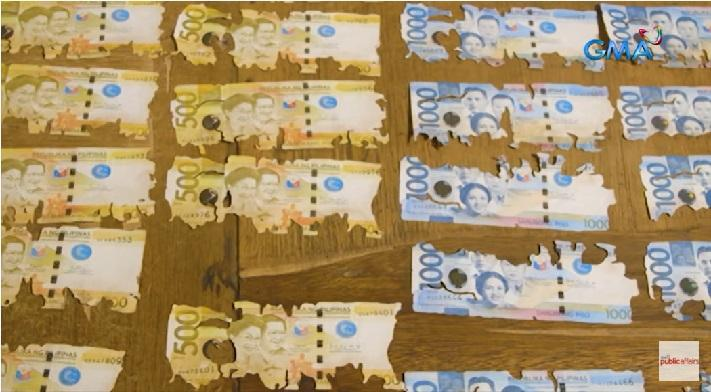

Money destroyed by fire, pests, or everyday wear does not always mean a total loss.
The Bangko Sentral ng Pilipinas has clarified that damaged or mutilated banknotes may still be exchanged for new ones, offering relief to individuals and businesses who discover that their cash savings have been partially destroyed.
According to the Bangko Sentral ng Pilipinas, banknotes are classified as “mutilated” when they are physically damaged by incidents such as fires, floods, termites, or animal bites. While these bills are no longer fit for circulation, they can still retain monetary value if key features remain intact.
The central bank applies clear technical standards when evaluating whether a damaged bill can be replaced. At least 60 percent of the original banknote must still be present.
In addition, a minimum of 65 percent of the printed signature of either the BSP governor or the President must be visible. The bill’s security thread, a core anti-counterfeiting feature, must also remain clearly identifiable.
These safeguards allow the BSP to distinguish genuine currency from counterfeits while ensuring that legitimate holders of damaged cash are not unfairly penalized. The process reflects a balance between consumer protection and the integrity of the country’s currency system.
Individuals and businesses who find themselves holding mutilated banknotes are advised to bring them to authorized banks for initial assessment. These institutions coordinate with the BSP, which conducts the final evaluation and determines whether the bills qualify for replacement.
The policy is particularly relevant for small businesses, households, and informal savers who often store cash at home or in non-bank containers, leaving it vulnerable to environmental damage. By understanding the rules on banknote replacement, Filipinos can avoid unnecessary financial loss and make informed decisions about cash storage and handling.
In an economy where cash remains widely used, the BSP’s guidelines serve as a reminder that even damaged money may still hold value—provided its essential features survive.