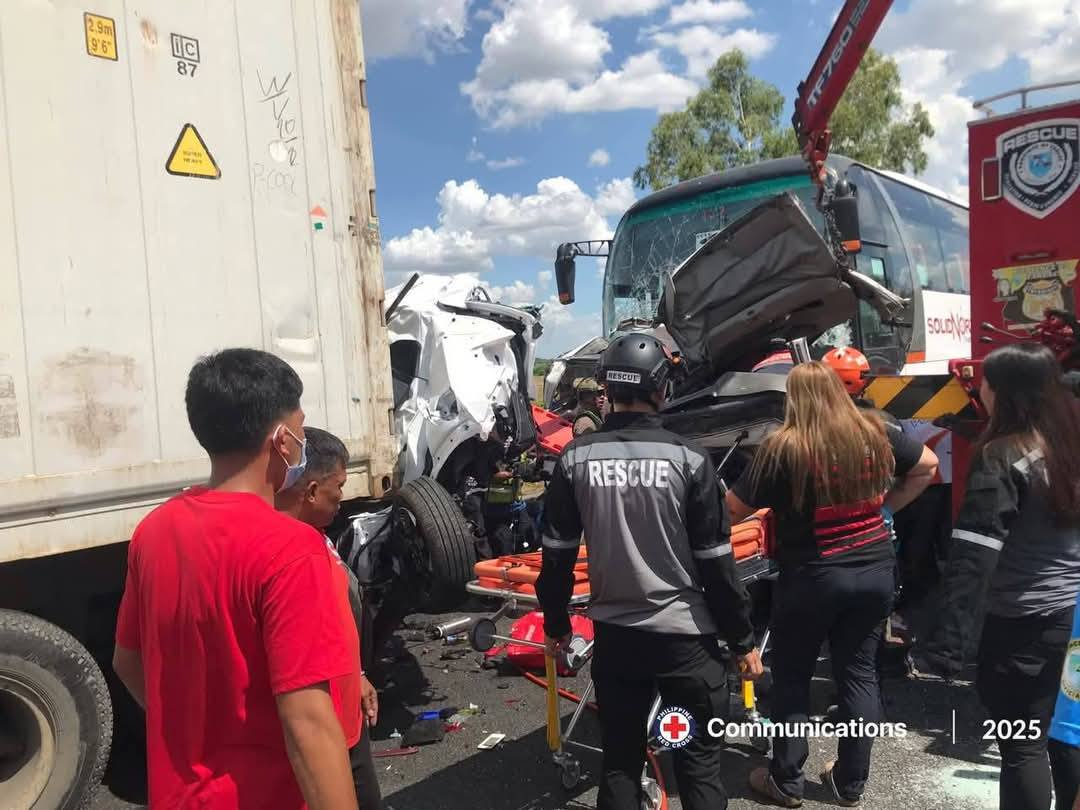

A peaceful midday drive turned into a nightmare for dozens of families after a horrific five-vehicle collision at the SCTEX Tarlac Toll Plaza on Thursday, May 1. The crash, which claimed at least 10 lives and injured 37 others, has left not only a trail of wreckage but also a deep emotional scar on an entire community.
Medical responders say the most devastating consequence of the crash was traumatic brain injury, which was the likely cause of death for most of the fatalities. “These weren’t just ordinary injuries. The victims suffered severe trauma to the head, which sadly proved fatal for many,” said Dr. Jasper Carpio, a surgeon at the Tarlac Provincial Hospital.

Among the deceased were eight passengers in a van and a married couple traveling in an SUV. One of the youngest victims was only four years old, turning a tragic incident into an unimaginable loss.
For Emir Shun Añonuevo, the grief is personal. His mother and sibling, who were on their way to a children’s camp in Pangasinan, never made it. “I wish they had left later. Maybe then they wouldn’t have been in the wrong place at the wrong time,” he said through tears. “But I have to stay strong—for my father and younger sibling.”

The chaos at the crash site was overwhelming even for seasoned rescuers. Marvin Guiang, head of the Tarlac Provincial Disaster Risk Reduction and Management Office, described the scene as one of the worst he had witnessed. “The van was crushed like a tin can. People were packed inside so tightly that we had to be careful not to hurt anyone more during the extrication. It took us two hours just to retrieve everyone.”
Of the 37 injured, most suffered minor wounds—cuts, bruises, and abrasions. However, three individuals, including a two-year-old boy, are still under observation for potential brain injuries.
Initial investigations by the Philippine National Police in Tarlac suggest that driver fatigue played a pivotal role in the crash. The bus, which originated in Cubao and was en route to Pangasinan, was reportedly being driven by someone who briefly fell asleep at the wheel. “The driver admitted to our investigator that he dozed off, and by the time he woke up, it was already too late,” confirmed Police Lt. Col. Romel Santos.
The incident has reignited concerns about road safety, particularly regarding long-haul drivers and the enforcement of rest periods. Road safety advocates are urging stricter policies and better fatigue management protocols for commercial drivers.
As families begin to bury their loved ones, and survivors attempt to piece their lives back together, one thing is clear: this tragedy was preventable. The question now is—will it lead to lasting change?