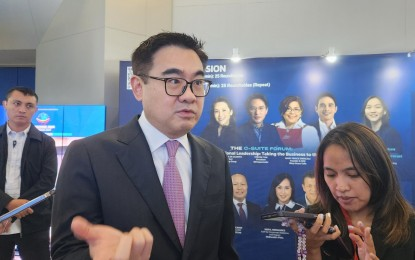

Special Assistant to the President for Investment and Economic Affairs Secretary Frederick Go (PNA File photo)
Frederick Go, the Special Assistant to the President for Investment and Economic Affairs, is confident that the Subic-Clark-Manila-Batangas (SCMB) cargo railway project will move forward as additional nations show interest in joining the Luzon Economic Corridor (LEC).
Go expects the United States to continue its backing of the LEC, maintaining a crucial trilateral partnership with Japan and the Philippines—even after some financial aid cuts implemented by the Trump administration.
He noted, “We need to inquire from the Trump administration what their plans are for that [LEC]. Although we’re still very positive, we’re still very hopeful. You know we have been a very good ally of the United States. I believe that they will reciprocate that with tangible economic benefits for our country.”
The SCMB cargo railway, a flagship project within the LEC framework, has already secured $2.5 million from the US Trade and Development Agency (USTDA) to fund a feasibility study, in collaboration with the Swedish government.
Go mentioned that the LEC steering committee has not yet met again to discuss the corridor’s future direction under the current U.S. policy. He stressed that government support is vital for projects like the SCMB cargo railway, which require sovereign funding.
“You really need the government to roll it out,” Go explained. “Then once you put up the infrastructure, the private sector can come in and operate and maintain it.”
Despite ongoing challenges with right-of-way issues, the Bases Conversion and Development Authority (BCDA) has begun securing land for the project. In December 2024, the BCDA reported that 43 landowners in Porac and Floridablanca in Pampanga agreed to allocate their properties for this key initiative, with a total of 68 Transfer Certificates of Titles issued.
Furthermore, Go shared that South Korean Ambassador to the Philippines Lee Sang-hwa has expressed his nation’s interest in joining the LEC. Earlier, the United Kingdom, Sweden, and Australia had also signaled their intent to support the corridor.