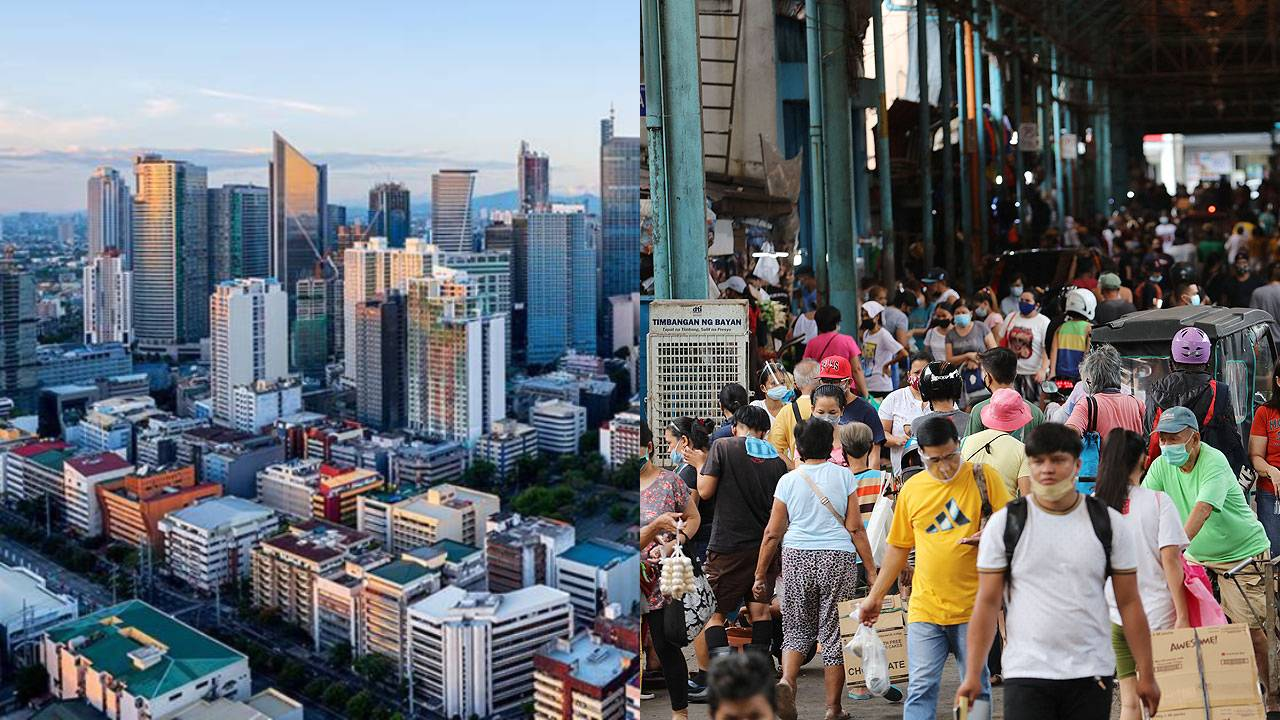

The Philippines’ long-anticipated rise to upper middle-income status will take longer than originally projected, according to the latest assessment from the World Bank. Instead of crossing the threshold in 2025 or 2026 as previously targeted by the government, the country is now likely to achieve this milestone by 2027.
World Bank lead economist Gonzalo Varela confirmed during the recent Philippine Economic Briefing that, while 2026 remains a possibility, growing global economic volatility is increasingly making 2027 a more realistic estimate.
“We’re seeing mounting external pressures—from fluctuating trade policies to geopolitical risks—that are affecting the momentum of the Philippine economy,” Varela explained. “These challenges are tempering expectations and extending the timeline.”
The World Bank projects the country’s gross domestic product (GDP) to expand by 5.3% in 2025—slightly down from the estimated 5.6% in 2024. This falls short of the government’s 6–8% annual growth target needed to fast-track income status elevation.
External shocks stalling growth
World Bank senior country economist Jaffar Al-Rikabi pointed to weakening exports, sluggish industrial activity, and a deceleration in services as key contributors to the slowed growth. “The external environment has become increasingly complex, and that is weighing heavily on performance. Uncertain trade dynamics, especially U.S. tariff policies, along with geopolitical frictions, are disrupting momentum,” Al-Rikabi said.
Although the recent flare-up of tensions between Israel and Iran has not been factored into the Bank’s projections, analysts warn that further escalation could intensify supply chain disruptions, spike commodity prices, and ripple through global shipping and logistics—indirectly affecting the Philippine economy.
A call for domestic reforms
In light of these headwinds, the World Bank urged the Philippines to accelerate structural reforms that will strengthen its economic foundation and resilience. These include:
- Implementing comprehensive tax reforms and improving public spending efficiency
- Reducing fiscal deficits
- Investing in infrastructure that generates jobs
- Streamlining regulatory processes to foster a more competitive business environment
- Mobilizing private capital for long-term development
Varela emphasized that while global uncertainty poses challenges, it also opens opportunities for the Philippines to focus inward. “The country should double down on domestic reforms and take advantage of regional trade opportunities. The more open and efficient the Philippine economy becomes, the better positioned it will be to withstand global shifts.”
The World Bank also advised that the country continue pursuing regional trade integration to hedge against volatile global markets. “Pushing for free trade agreements and reducing trade costs will help the Philippines become more agile in responding to evolving international dynamics,” said Varela.
Regional context: Still a top performer
Despite the downward revision, the Philippines remains among the top growth performers in Southeast Asia. Its projected 5.3% expansion for 2025 surpasses that of Indonesia (4.7%), Cambodia (4.0%), Malaysia (3.9%), Lao PDR (3.5%), Thailand (1.8%), and crisis-hit Myanmar (-2.5%). Only Vietnam, with a 5.8% growth forecast, is expected to outpace the Philippines.
The road to upper middle-income status may be longer than hoped, but the Philippines continues to demonstrate resilience amid global uncertainties. The World Bank’s latest projections serve not as a setback, but as a strategic wake-up call to intensify reform efforts and future-proof the economy in an increasingly unpredictable world.