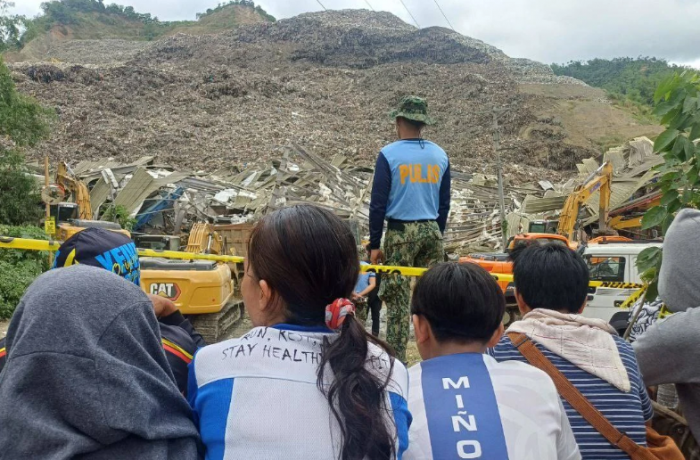

On January 8, 2026, a garbage landslide occurred at a sanitary landfill at Barangay Binaliw, Cebu City, leaving 36 people dead and 18 others injured. (Photo from AsiaNews)
After more than two decades since the legislation and enactment of Republic Act 9003, or the Ecological Solid Waste Management Act of 2000, environmental group EcoWaste Coalition is calling on government agencies to reinforce the implementation of the waste management law as seen in several disasters like the landfill tragedy in Cebu recently.
According to the group, RA 9003, which marked its 25th anniversary this past January, the need to reinforce the law is currently becoming more pronounced as the latest developments cite the “growing waste volume and toxicity challenges” that the country faces every year.
In a statement posted on its website, environment experts have noted that the recent landfill tragedy in Barangay Binaliw, Cebu City, “underscored the risks associated with unsafe waste disposal practices and the importance of sustained compliance with ecological solid waste management principles and practices.”
“These incidents remind us that the full promise of RA 9003 can only be realized through consistent and effective implementation,” EcoWaste Coalition national coordinator Aileen Lucero emphasized as she underscored that the law should be upheld without compromise, requiring the prioritization of prevention-based and community-centered approaches to waste management.
Lucero stressed the importance of establishing a careful evaluation of waste managing schemes that includes thermal waste-to-energy projects which, while excluding waste incineration, should strictly monitor waste hierarchy as well as RA 9003’s core principles that prioritize waste reduction, reuse, recycling, composting and other ecological approaches.
For her part, EcoWaste alternate representative to the National Solid Waste Management Commission (NSWMC) Carmela Santos disclosed that “compliance with the law (should) also mean staying focused on waste reduction and prevention, particularly by addressing plastic pollution and moving away from a disposal- and end-of-life mentality.”
Santos also gave a reason why waste-to-incineration (WtE) was not included as a solution, debunking the belief that it is “a silver bullet to the waste crisis.
“It undermines the ecological principles of the Ecological Solid Waste Management Act, the incineration ban under the Clean Air Act, the Renewable Energy Act and the goals of genuine climate action,” she spelled out.
In the meantime, the group’s program manager Jove Benosa enthused that RA 9003 already has a clear road map: “By strengthening zero waste systems at the barangay and local government levels, we can reduce waste at source, minimize environmental risks, and build more resilient and sustainable communities.”