
(Photo courtesy of Anadolu))
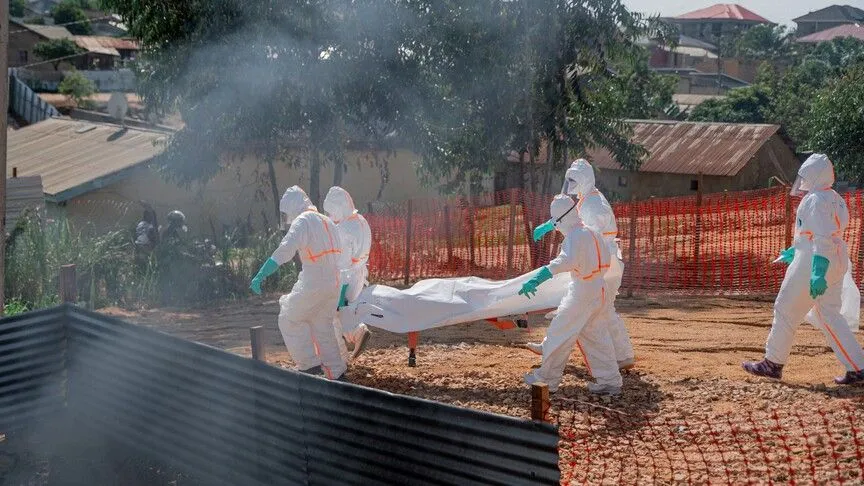
KINSHASA – The Ebola outbreak in the Democratic Republic of Congo (DR Congo) has reached an eighth province, with health authorities reporting new infections as efforts continue to contain the country’s deadliest recorded epidemic.
The Congolese Health Ministry announced Sunday that North Ubangi province, located in the country’s northwest near the Central African Republic, recorded two confirmed cases, including one death.
Both patients were men in their 20s from the Wapinda health zone, which borders Bas-Uele province.
Before the latest cases, the outbreak involving the Bundibugyo strain of the Ebola virus had been reported in seven provinces: Haut-Uele, Ituri, North Kivu, South Kivu, Bas-Uele, Tshopo, and South-Ubangi.
According to the World Health Organization (WHO), transmission patterns vary significantly across affected areas, with Ituri remaining the outbreak’s main hotspot.
North Kivu and Haut-Uele also continue to report substantial transmission.
Official figures show that confirmed Ebola infections have exceeded 9,400, with 4,536 deaths recorded since the outbreak was declared in May.
Health authorities identified community resistance and deaths occurring outside medical facilities as major obstacles to controlling the disease.
The WHO reported that approximately two-thirds of Ebola-related deaths have occurred at home, raising concerns about delayed treatment and continued community transmission.
WHO Regional Director for Africa Mohamed Yakub Janabi emphasized Sunday the critical role of community leaders in strengthening public trust, encouraging local participation, and improving outbreak response efforts.
The epidemic has been described as the largest and deadliest Ebola outbreak in DR Congo’s history and the second-largest worldwide, following the 2014–2016 West African Ebola epidemic.
Meanwhile, Kenya’s Health Ministry reported another confirmed Ebola infection on Sunday, bringing the country’s total to eight cases this month.
Health officials urged increased vigilance, stronger disease surveillance, and coordinated preventive measures to reduce the risk of further cross-border transmission.