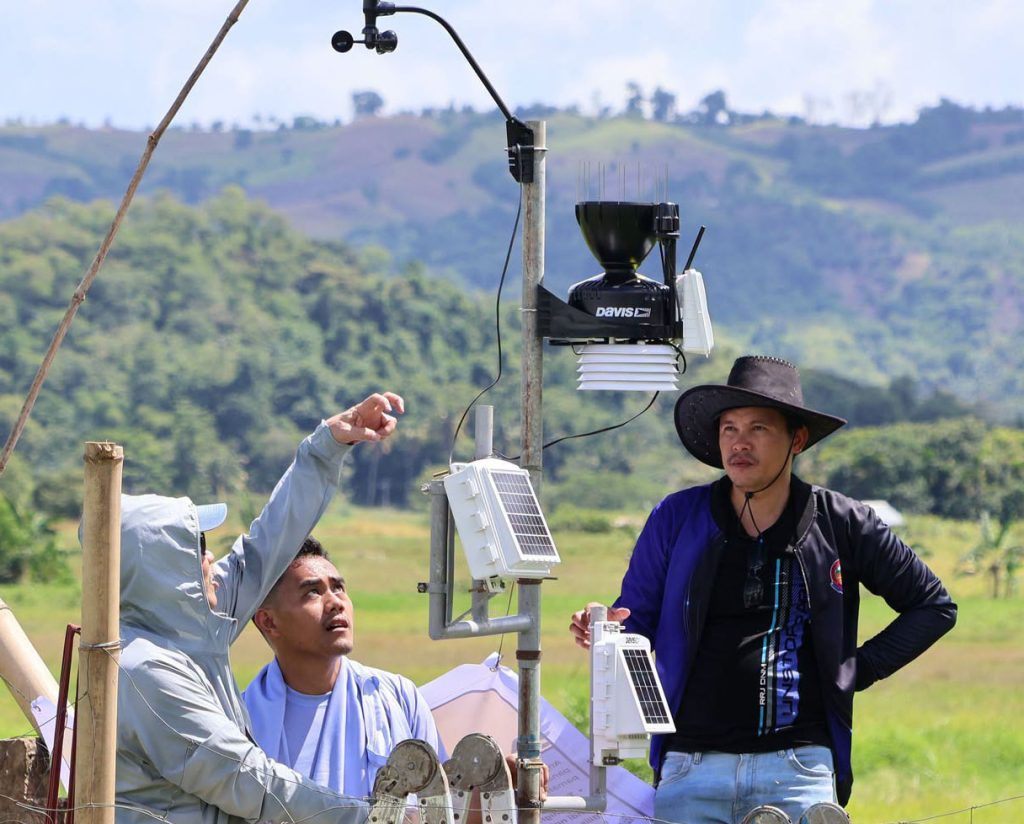

(Photo courtesy of PIA)
BANGUED, Abra – The Department of Science and Technology (DOST) has rolled out weather monitoring systems, smart agricultural technologies, and water management solutions across the Cordillera Administrative Region (CAR) to help communities prepare for the anticipated effects of El Niño.
DOST-CAR Regional Director Nancy Bantog said the agency is strengthening disaster preparedness and promoting climate-responsive technologies as the region braces for possible dry conditions from the last quarter of 2026 through the first quarter of 2027.
Among the key interventions is the adoption of GeoRiskPH, a digital platform that allows local government units (LGUs) to monitor natural hazards and improve disaster risk assessment and planning.
Bantog said the department is encouraging local governments to integrate the platform into their disaster preparedness and response systems.
“We encourage local government units to adopt the systems. Number one is GeoRiskPH, a platform which the LGUs can use to monitor natural hazards,” she said.
Weather information gathered from monitoring instruments will also be consolidated through the Disaster Resilience through Enhanced Analytics and Management (DREAM) platform.
The system provides localized weather data to help LGUs make informed decisions and issue timely weather advisories.
To support the agricultural sector, DOST is implementing the Smart Approaches to Reinvigorate Agriculture as an Industry (SARAI) program, which uses weather monitoring technologies to improve farm planning and operations.
Under the initiative, automated weather stations have been provided to selected municipalities to help farmers and agricultural officials monitor weather conditions and adjust farming activities accordingly.
Bantog said the agency recently signed a memorandum of agreement for the implementation of the SARAI project in Bangued and other areas of Abra.
The initiative is expected to strengthen agricultural planning by providing weather information that can guide planting schedules, irrigation management, and other farming decisions.
Aside from agricultural monitoring, DOST is promoting water resource management technologies to address possible shortages during prolonged dry conditions.
These include Safe Water Treatment Systems designed to improve the quality of water collected from alternative sources, such as springs.
The technology uses filtration and ultraviolet treatment to remove impurities and help make water suitable for domestic use.
Bantog emphasized the importance of identifying alternative water sources as communities prepare for possible reductions in water availability during El Niño.
In urban areas, including Baguio City and La Trinidad, DOST has deployed water-harvesting technologies such as artificial groundwater recharge facilities.
These systems are designed to replenish groundwater supplies while helping reduce urban flooding by allowing collected water to infiltrate underground.
Agricultural communities have also received drip irrigation systems that deliver water directly to plant roots, reducing water consumption and improving irrigation efficiency.
Bantog said some of the irrigation systems are solar-powered, allowing farmers to operate them while minimizing dependence on conventional energy sources.
The technology is particularly useful during dry periods when water conservation becomes increasingly important for sustaining agricultural production.
Beyond technological interventions, DOST continues to conduct capacity-building activities to strengthen community awareness and preparedness for El Niño.
The agency recently held an information and training activity in Abra, where scientists discussed the El Niño phenomenon and practical measures to manage its effects.
Through these initiatives, DOST aims to help local governments, farmers, and communities improve their preparedness, conserve water resources, and reduce the potential impact of prolonged dry conditions on agriculture and daily livelihoods.