
(Photo courtesy of DMW Facebook)
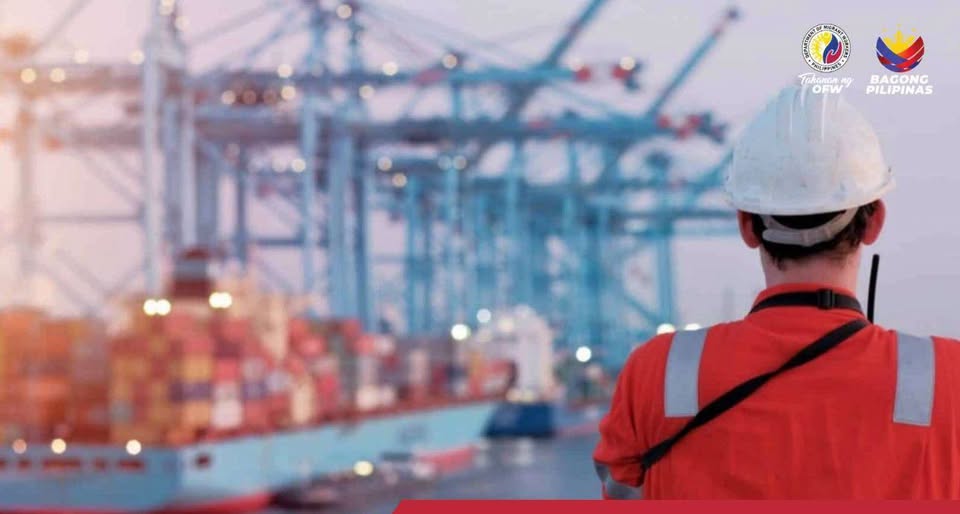
MANILA – The Department of Migrant Workers (DMW) has directed shipowners and licensed manning agencies to avoid deploying Filipino seafarers to high-risk maritime areas following attacks on commercial vessels in the Strait of Hormuz.
Migrant Workers Secretary Hans Leo Cacdac said the agency is closely monitoring the security situation and enforcing measures to protect Filipino crew members from potential attacks.
In a statement released Tuesday evening, November 17, the DMW reported that approximately 150 Filipino seafarers aboard 15 vessels had been affected by attacks in the Strait of Hormuz.
Of those affected, around 60 to 70 percent have already been repatriated to the Philippines.
“Patuloy ang ating pagmamanman sa sitwasyon. Ang malinaw nating direktiba sa mga shipowner at manning agencies ay huwag ilagay sa alanganin ang ating mga kababayan,” Cacdac said.
He stressed that shipping companies must prioritize the safety of Filipino crew members and avoid assigning them to routes where the threat of armed attacks remains high.
“Hangga’t maaari, dapat iwasan ang pagpapadaan o pagtatalaga ng mga Filipino seafarers sa mga lugar na may mataas na banta ng pag-atake,” he added.
The directive is reinforced by DMW Advisory No. 62, series of 2026, issued on October 31, which instructs shipowners and licensed manning agencies to avoid deploying Filipino seafarers to areas classified as dangerous.
The advisory updates the official list of maritime Warlike and High-Risk Areas based on the amended risk classifications adopted by the International Bargaining Forum (IBF) Warlike Operations Area Committee on October 15.
It also establishes mandatory safety protections and wage benefits for Filipino seafarers assigned to affected maritime zones.
Under the advisory, Filipino seafarers have the right to refuse deployment or passage through designated high-risk areas without facing penalties.
Those who exercise this right are entitled to full repatriation at the shipping company’s expense.
Cacdac said the DMW continues to coordinate with shipowners, manning agencies, Migrant Workers Offices, Philippine embassies, and consulates to monitor affected vessels and facilitate the safe return of Filipino crew members.
However, the agency acknowledged that commercial shipping operations in the affected waters have not completely stopped, with vessels continuing to enter and leave the region.
Because of navigational and operational requirements, Cacdac said some ships may find it difficult to avoid passing through areas exposed to security threats.
In such cases, the DMW requires shipping companies to implement stricter onboard safety and security protocols to minimize risks to crew members.
These measures include identifying vulnerable sections of vessels that could become targets during attacks and establishing designated safe areas where seafarers can immediately seek shelter.
Crew members must also be properly informed of emergency procedures and the locations of protective areas aboard their vessels.
“Kung hindi talaga maiiwasan ang pagdaan sa mga lugar na ito, kailangang doblehin ang pag-iingat. Dapat may malinaw na safety protocols, may nakatalagang safe areas sa barko, at alam ng mga tripulante kung saan sila dapat pumunta sakaling magkaroon ng pag-atake,” Cacdac said.
The DMW reiterated that the protection of Filipino seafarers remains its priority as maritime security threats continue to affect international shipping operations.
The agency urged shipowners and manning agencies to comply with existing deployment restrictions, safety requirements, and repatriation obligations to prevent further risks to Filipino maritime workers.