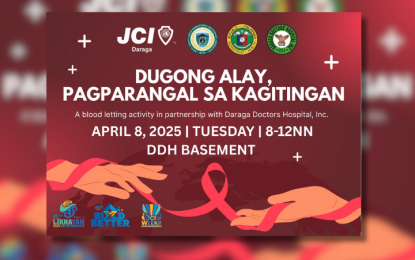
The Department of Health in Bicol (DOH-5) has called on the public to voluntarily donate blood, highlighting the importance of saving lives and supporting the community.
In an interview on Thursday, Nicole Anne Bejo, a registered nurse and donor recruitment officer from the DOH’s Bicol South Luzon – Sub National Reference Laboratory, stated, “One blood donation can save up to three lives. We might think we are saving just one person, but a single unit of blood can help multiple individuals.”
Bejo noted that there is a significant demand for blood in the region, leading to shortages, especially during the lean months when donations tend to decrease. She emphasized the need for regular donors, saying, “We encourage the public not just to donate once but to become regular donors, as we need more consistent blood donations due to the increasing demand.”
The blood center requires 3,000 to 3,500 blood units per month to meet the needs of patients undergoing surgeries, trauma victims, cancer patients, and others requiring transfusions. Bejo clarified that the regional blood donation statistics include contributions from the Bicol Regional Blood Center, the Philippine Red Cross chapters in Bicol, and the Bicol Medical Center.
She also mentioned that collected blood undergoes screening for various conditions, including hepatitis B, hepatitis C, HIV, syphilis, and malaria, to ensure safety.
Individuals between the ages of 18 and 60 are eligible to donate blood. Those aged 16 to 17 may donate with parental consent, while regular donors aged 60 to 65 can continue to donate. Donors must weigh at least 50 kg, and people of all genders are welcome to participate. Men can donate every 12 weeks, while women can donate every 16 weeks.
Bejo concluded by urging everyone to participate in mobile blood donation activities and to coordinate with local blood service facilities to schedule donations. She emphasized that regular blood donation is crucial to help save lives and maintain a sufficient blood supply in the region.