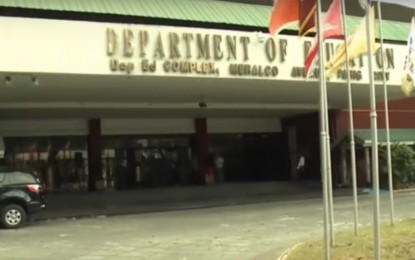
The Department of Education (DepEd) has identified more than 24,000 schools nationwide that are highly vulnerable to flooding and rain-induced landslides as Severe Tropical Storm Uwan (international name: Fung-wong) continues to intensify and move closer to the Philippine Area of Responsibility (PAR). The revelation comes as government agencies activate emergency protocols for the potential Super Typhoon.
According to data compiled by the DepEd’s Disaster Risk Reduction and Management Service (DRRMS), hazard mapping shows that 11,968 schools across 120 divisions are specifically vulnerable to flooding. An additional 12,747 schools spread across 110 divisions face the serious threat of rain-induced landslides, highlighting the immense geographical risk posed by the powerful cyclone.
The regions projected to have the highest concentration of schools exposed to these dual hazards include major areas in the northern, central, and southern Philippines. Among the regions facing the greatest risk are Regions II (Cagayan Valley), III (Central Luzon), IV-A (Calabarzon), V (Bicol), VI (Western Visayas), VII (Central Visayas), VIII (Eastern Visayas), and the Cordillera Administrative Region (CAR).
As of the 4 a.m. Friday bulletin, the center of Uwan was tracked outside the PAR, approximately 1,500 kilometers east of Northeastern Mindanao. It currently packs maximum sustained winds of 95 kilometers per hour (kph) and gustiness of up to 115 kph, moving northwestward. Forecasters warn that the system is expected to rapidly intensify into a potential Super Typhoon over the weekend.
DepEd-DRRMS officials have issued a severe warning regarding the cyclone’s extensive wind circulation, which spans up to 720 kilometers from its center. This massive reach is expected to significantly enhance rainfall across a wide area, leading to localized flooding that will particularly impact low-lying areas and upland school facilities.
In response to the escalating threat, the agency has urged all School Division Offices and local school administrators to activate their respective School Disaster Risk Reduction and Management (SDRRM) teams. They are instructed to immediately coordinate with local disaster councils, preposition emergency supplies, and prioritize ensuring the safety of all learners, teachers, and non-teaching personnel.
“The Department of Education is committed to ensuring the safety and well-being of all learners and staff,” the DepEd-DRRMS stated. It emphasized that comprehensive preparedness measures are already being carried out in close coordination with local government units. The school administrators were also directed to safeguard learning materials and equipment and finalize contingency plans for inevitable class disruptions.