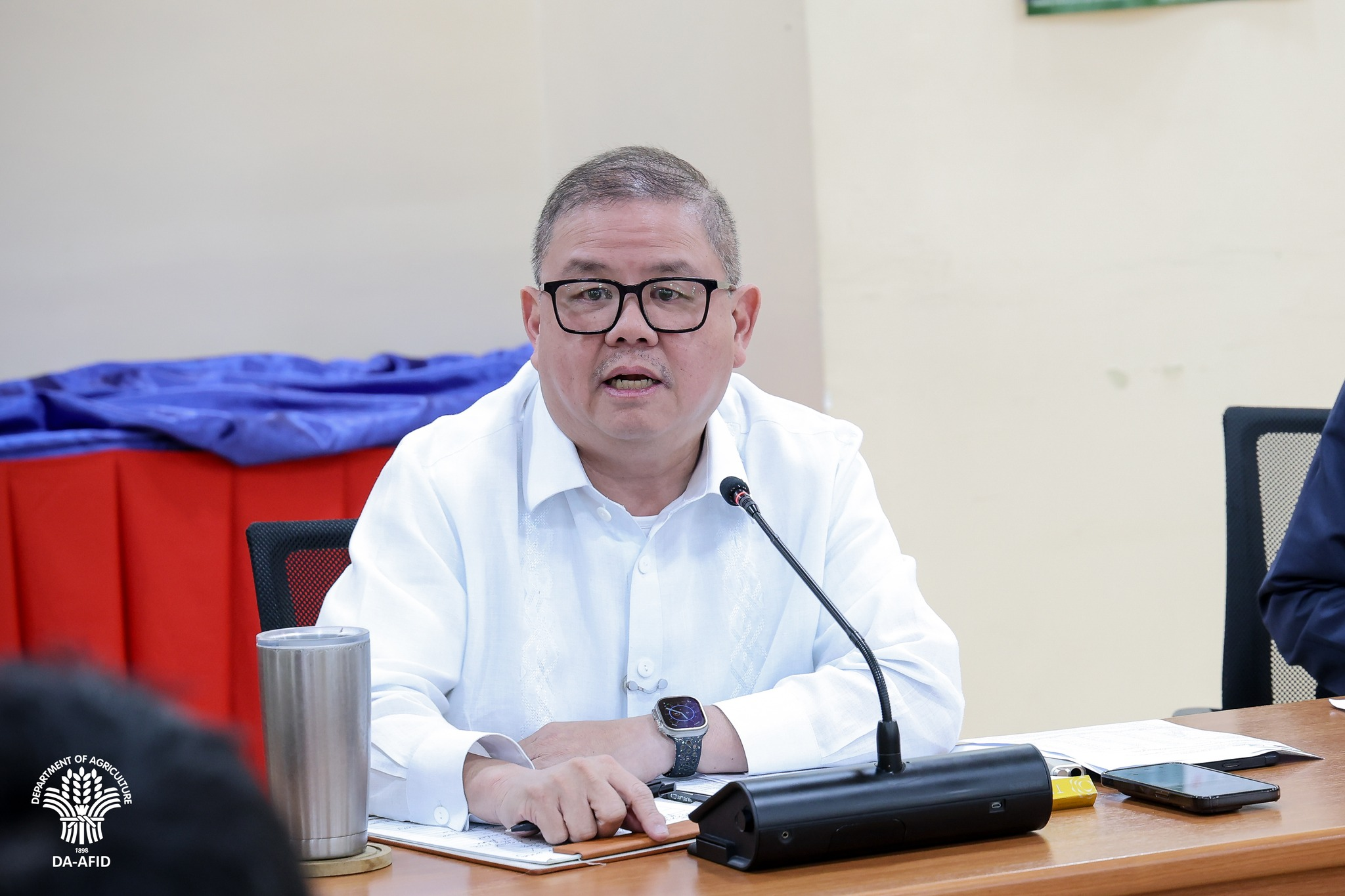

DA Sec. Francisco Tiu Laurel Jr. – Photo courtesy of Department of Agriculture/Facebook.
Central Luzon is poised to receive the largest share of funding for farm-to-market roads under the proposed 2026 national budget, underscoring its economic weight in the agriculture sector.
The enrolled General Appropriations Bill (GAB) allocates P4.89 billion to the region from the P33.9-billion fund for new and rehabilitated farm roads.
Eastern Visayas ranks second with P4.3 billion, followed by Cagayan Valley, Soccsksargen, and Calabarzon, reflecting regional priorities in agricultural logistics and connectivity.
Data from the Philippine Statistics Authority (PSA) show Central Luzon generated the highest value of agricultural output in 2024, strengthening the case for increased infrastructure investment.
However, budget watchdog People’s Budget Coalition flagged a majority of the nearly 870 road projects for carrying uniform cost estimates, raising questions about pricing accuracy and project valuation.
The group estimated that close to P15 billion worth of projects may be exposed to cost risks, citing repeated figures such as P15 million, P20 million, and P30 million per project.
Lawmakers previously disclosed that more than P10 billion worth of similar projects in earlier budgets were overpriced, some by as much as 70 percent, heightening scrutiny over current allocations.
In response, the Department of Agriculture (DA) has ordered a comprehensive audit of farm-to-market road projects implemented from 2021 to 2025.
Agriculture Secretary Francisco Tiu Laurel Jr. said construction costs could be reduced by up to 20 percent through tighter management controls and the use of new building technologies.
Under the 2026 budget, the Department of Agriculture assumes full responsibility for implementing farm-to-market roads, a shift aimed at improving transparency, cost discipline, and delivery efficiency in rural infrastructure spending.