
The Department of Tourism (DOT) in Central Visayas has identified several of Cebu’s centuries-old churches and heritage landmarks among the sites heavily damaged by the magnitude 6.9 earthquake that jolted the province on September 30.
Initial assessments by the Archdiocese of Cebu’s rapid response team—conducted in coordination with the National Historical Commission of the Philippines (NHCP) and the National Commission for Culture and the Arts (NCCA)—found structural and cosmetic damage in at least five major heritage churches.
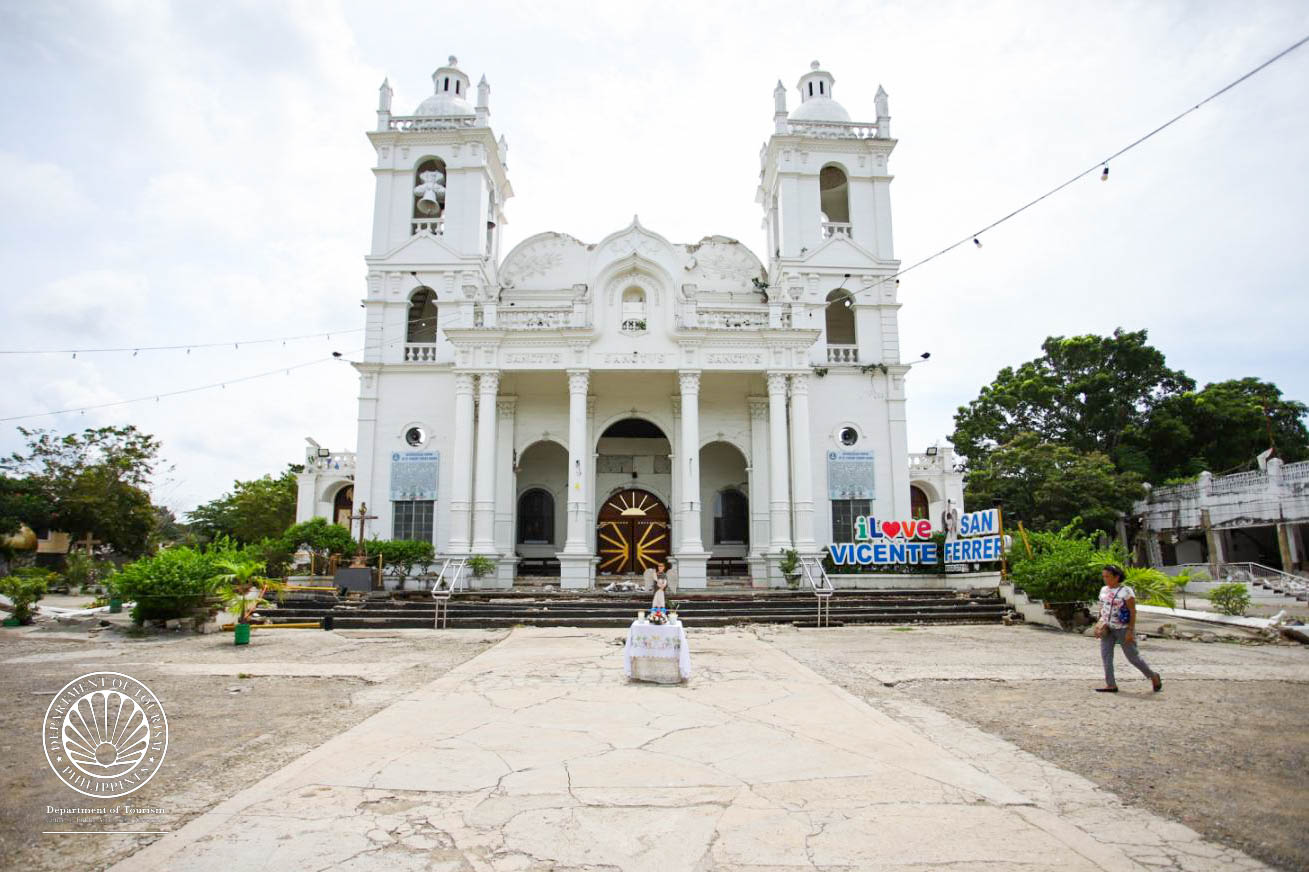
These include the Archdiocesan Shrine of Sta. Rosa de Lima in Daanbantayan (built in 1858 with coral stone), Sts. Peter and Paul Parish Church in Bantayan (1863), San Isidro Labrador Church in Tabogon (1954 structure, parish founded in 1851), San Juan Nepomuceno Parish in San Remigio (1864), and the Archdiocesan Shrine of San Vicente Ferrer in Bogo City (originally 1858, rebuilt after World War II).
Other heritage and parish churches in San Remigio, Medellin, Bogo City, and Tabogon also reported damage, including Capelinha de Fatima Replica, San Ignacio de Loyola Church, Holy Family of Nazareth Parish, and St. Martin de Porres Church.
President Ferdinand R. Marcos Jr., together with Tourism Secretary Christina Garcia Frasco and members of the Cabinet, visited the Archdiocesan Shrine of San Vicente Ferrer in Bogo City—considered the quake’s epicenter—on October 2.
Frasco said teams from the Tourism Infrastructure and Enterprise Zone Authority (TIEZA) have already been dispatched to assess the extent of the damage and coordinate rehabilitation efforts with cultural agencies.
“We have deployed TIEZA teams to conduct rapid inspections in coordination with the NCCA and other heritage bodies,” Frasco said. “Together, we aim to ensure the restoration and rehabilitation of these living symbols of faith and culture so that they may rise again.”
Cebu, often called the cradle of Christianity in Asia, is home to some of the Philippines’ oldest and most significant religious structures—many built from coral stone and other native materials that embody centuries of devotion and local craftsmanship.
Following the President’s directive, the DOT and its partners are prioritizing the rehabilitation of damaged heritage and tourism sites. The DOT-Central Visayas office also confirmed that five popular tourist attractions in Cebu City—the Kabilin Center, Museo Sugbo, National Museum of the Philippines – Cebu, Yap-Sandiego Ancestral House, and Casa Gorordo—remain temporarily closed pending safety assessments.
Frasco likewise reported that around 1,206 tourism workers across Cebu have been displaced due to the earthquake’s impact on tourism establishments.
“We are coordinating with the Department of Social Welfare and Development to provide immediate relief, cash aid, and alternative livelihood assistance for affected workers,” she said.
Cebu remains one of the country’s most visited destinations, having welcomed over 5 million local and foreign tourists in 2024. The DOT assured that efforts to restore its heritage and tourism infrastructure are being fast-tracked to sustain its recovery and preserve its cultural identity.