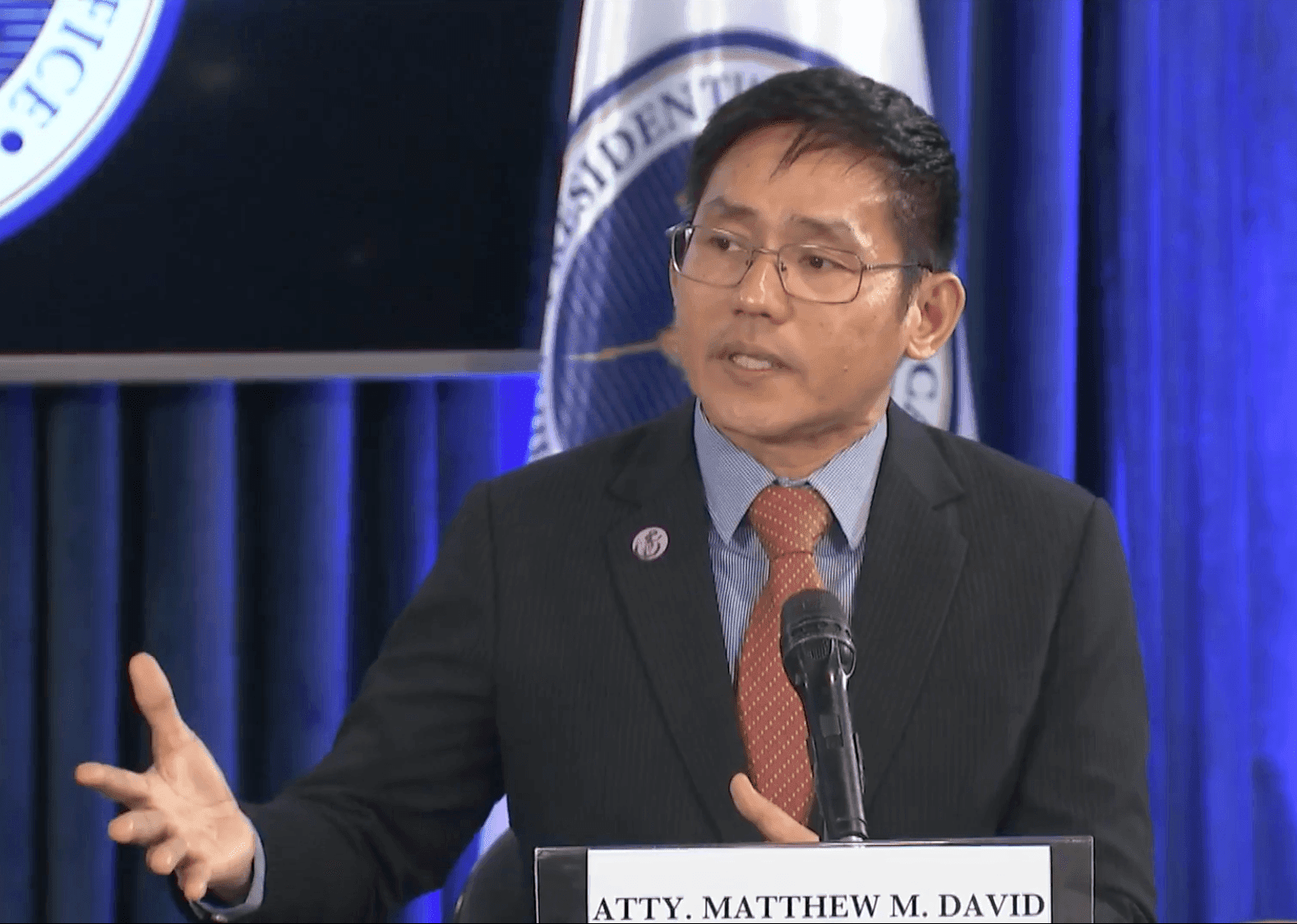

AMLC executive director Atty. Matthew David. (Photo from the Philippine News Agency)
To expand its probe into anomalous flood control projects, the Anti-Money Laundering Council (AMLC) has expanded its investigation by including the assets and financial transactions abroad of those linked in the scandal.
According to AMLC executive director Atty. Matthew David, they are currently tracing all assets linked to the corruption scandal, including those possibly held overseas by implicated individuals.
“Our financial investigation covers all assets linked to the alleged irregularities in flood control spending. This includes what we call the foreign assets of our respondents, such as offshore bank accounts, real estate, or other properties they may have acquired abroad,” David announced.
He added that the AMLC was closely coordinating with its foreign counterparts to identify and verify whether the subjects of the investigation had engaged in financial transactions outside the Philippines.
“This is being conducted through mutual legal assistance treaties that allow the Philippines to request the filing of civil forfeiture petitions in foreign jurisdictions. Once recovered, the assets will be returned to the government,” David noted.
Recently, the AMLC has secured freeze orders against 1,620 bank accounts, 54 insurance policies, 163 motor vehicles, 40 real properties and 12 e-wallet accounts said to be held by public works officials and private contractors.
The assets’ combined value is over P4 billion and David said this was expected to rise as the inquiry deepens. Among the assets seized are a luxury compound in a prime urban district, multiple high-end vehicles, virtual currencies and unit investment trust funds.
“The freeze orders were initially for only 20 days, but (this) could be extended up to six months. (This) also doesn’t mean that the assets will be returned once the orders lapse,” he cited.
“Before the six-month period ends, the AMLC will file petitions for civil forfeiture in the regional trial court. This means that if the assets are forfeited, they may be returned to the government,” he added to conclude.