
The promise of artificial intelligence has always been speed—turning hours of work into minutes. Yet for many professionals, that promise has repeatedly broken down at the visual stage, where AI-generated content arrives generic, off-brand, and in need of time-consuming cleanup. Canva is now moving to close that gap by bringing brand intelligence directly into AI assistants, starting with ChatGPT.
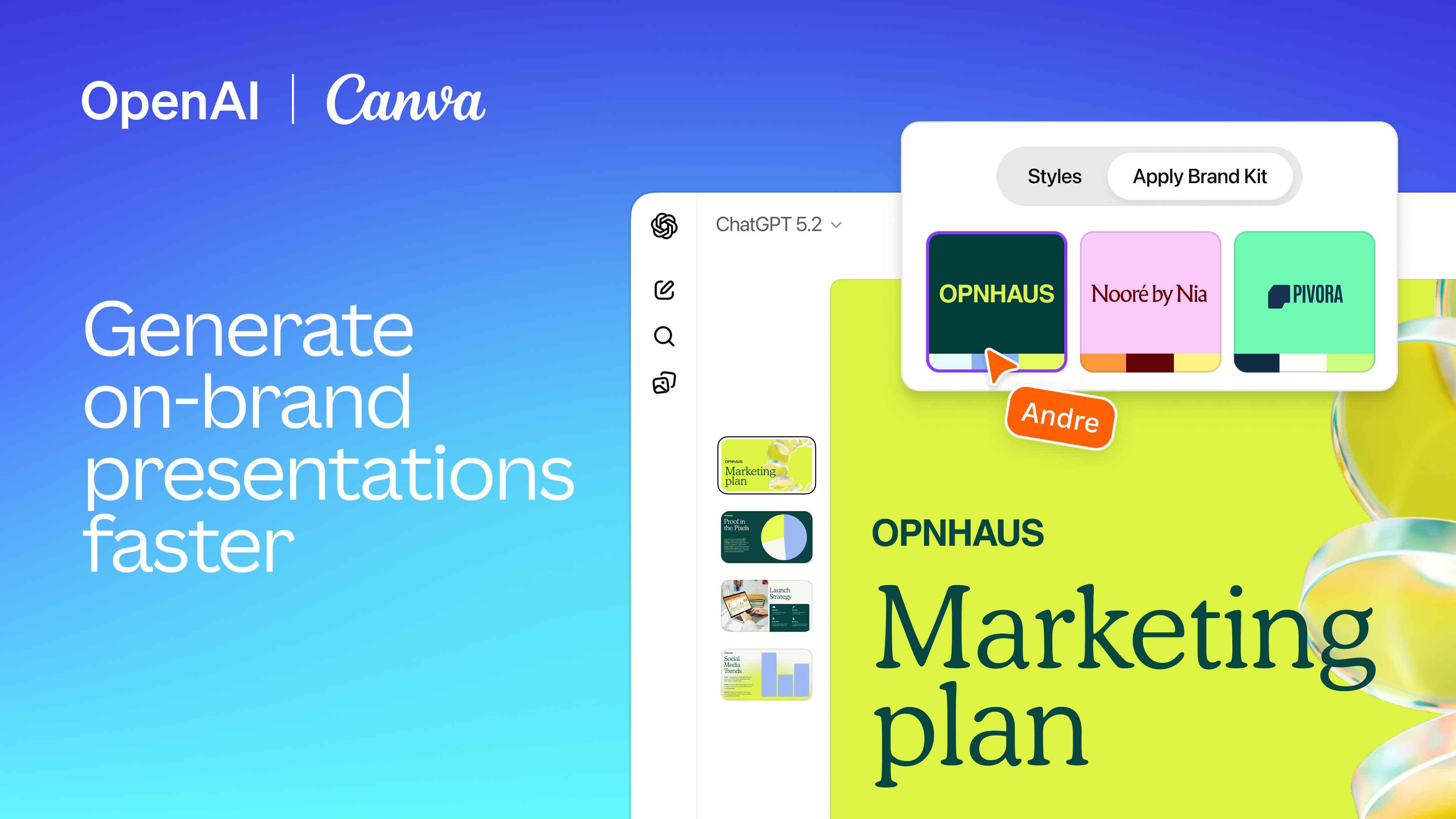
Beginning this week, designs created inside ChatGPT can instantly come to life in Canva, fully aligned with a user’s Canva Brand Kit and ready for real-world use. The update allows brands to function as an active, living element within AI workflows, rather than a static set of guidelines buried in old documents.
The integration represents a deeper convergence between Canva and ChatGPT, two platforms that have shaped how modern teams create and communicate.
From pitch decks and social media graphics to posters and client-ready presentations, users can now move seamlessly from text prompts to polished visuals without leaving the AI assistant. The goal, Canva says, is to remove friction and preserve brand integrity while accelerating creative output.
Canva’s expansion inside ChatGPT follows its recent debut in Anthropic Claude and underscores the company’s push to become the visual layer of the AI ecosystem. According to Similarweb, Canva already ranks among the top ten destinations receiving referrals from AI assistants, reflecting how often users turn to the platform to finish visual work that begins in text-based tools.
Over the past year, Canva has rolled out its Canva Design Model for editable AI outputs, Canva AI as an all-in-one design copilot, and the Canva MCP Server, which has already generated more than 12 million designs across ChatGPT, Claude, and Microsoft Copilot. Together, these tools position Canva as what the company describes as the “design brain” behind AI-powered workflows, capable of understanding and applying a brand’s fonts, colors, logos, and layouts automatically.
“The soul of a brand is visual identity, yet it has been the missing puzzle piece in how AI creates,” said Anwar Haneef, Canva’s general manager and head of ecosystem. He said the integration bridges that gap by turning text conversations inside AI assistants into finished, brand-aligned visuals, marking a step change in how large language models and design systems work together.
The shift comes as 2026 shapes up to be a turning point for enterprise AI use, with teams moving beyond isolated prompts toward end-to-end workflows that deliver completed work, not just ideas. Instead of relying on static brand manuals, companies can now embed brand context directly into the tools employees use every day.
That capability is already resonating with large organizations. eXp Realty chief marketing officer Wendy Forsythe said the integration allows agents to scale their personal branding without diluting it. By accessing Canva Brand Kits inside ChatGPT, she noted, agents can jump from a text prompt to a fully branded visual in seconds, freeing them to focus more on relationships than formatting.
Once a Brand Kit is set up in Canva, users can describe what they need in plain language and generate designs that automatically follow their brand rules. They can collaborate with AI on presentation structure, preview designs live inside ChatGPT through the Canva app, and refine visuals without breaking the flow of conversation.
The Canva AI connector is now available to ChatGPT users, signaling a broader push to make AI workflows not just faster, but complete—delivering outputs that are immediately usable, on brand, and ready to share.