
MANILA – The Philippines’ push to develop its hydropower and nuclear energy sectors is expected to gain momentum from stronger trade ties with Canada, Energy Secretary Sharon Garin said Sunday.
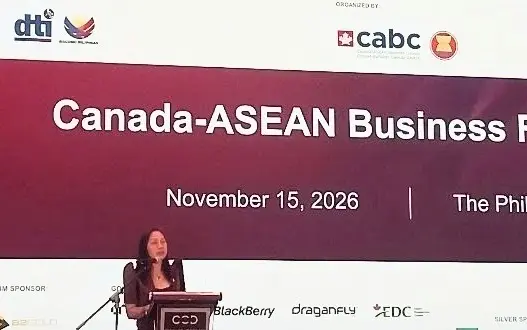
Garin, in an interview after her speech at the Canada-ASEAN Business Forum in Parañaque City, said Canada’s tie-up with the Association of Southeast Asian Nations (ASEAN) as well as the Philippines, through a free trade agreement (FTA), will help bolster the Philippines’ energy sector.
“The expertise of Canada in hydro and nuclear can be brought to the ASEAN community, and the ASEAN community is a good market in terms of needing more investments in energy, as well as needing more advanced technologies in energy,” she said.
FTA discussions between the Philippines and Canada concluded on Saturday, during the bilateral talks between President Ferdinand R. Marcos Jr. and Canadian Prime Minister Mark Carney on the sidelines of the 49th ASEAN Summit and Related Summits.
The FTA is targeted to be signed next year.
“So, we are quite hopeful that with these agreements, we will have more partnerships with Canada, not just the Canadian government or the provinces, but also the Canadian businesses,” she added.
In her speech, Garin said energy security is needed in the 11-member regional bloc, home to over 700 million people, since its energy demand in 2022 is projected to double by 2050.
“Meeting that demand will require us to navigate an evolving global landscape,” she said, citing the impact of the Middle East crisis.
This issue is targeted to be addressed by, among others, the ASEAN Plan of Action for Energy Corporation 2026-2030, she said, referring to the program aimed at integrating the region’s energy system.
She disclosed that Indonesia has signed for the proposed ASEAN Power grid, which aims to physically link the energy networks of the ASEAN member-countries by 2045.
She said improving renewable energy sources will help limit the impact of the high fuel cost on the energy sector, as well as ensuring domestic supply. (PNA)